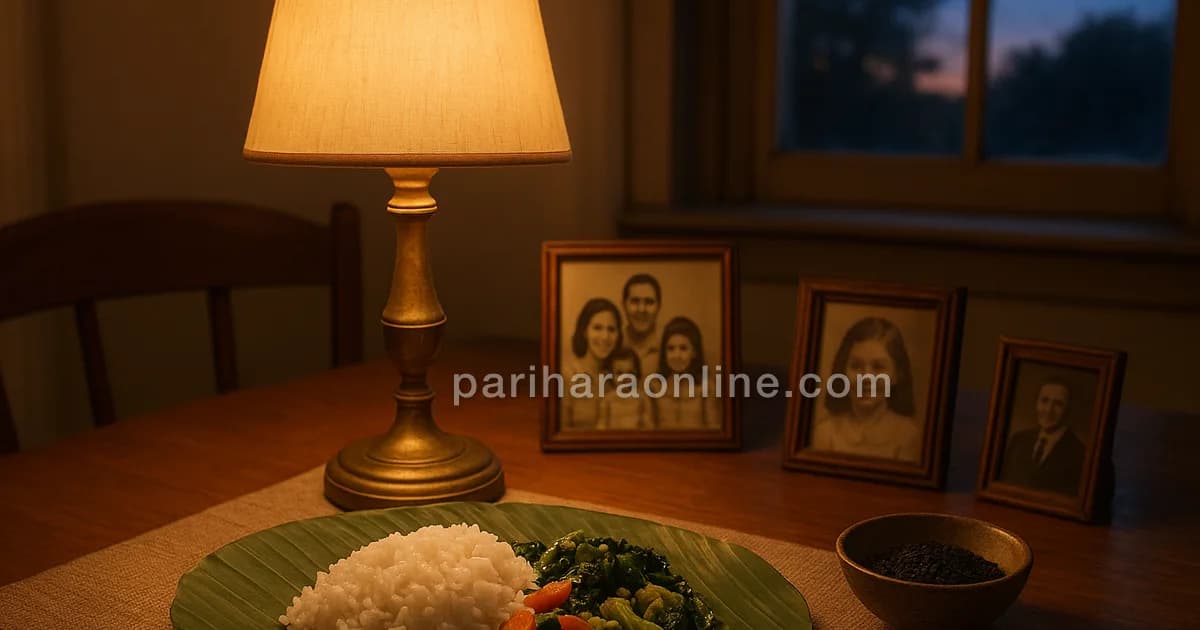
Tarpanam at Home: A Simple Offering to Ancestors
Tarpanam at home, step by step: water, black sesame, the names of your ancestors and a few quiet minutes; a simple offering anyone can learn and keep doing.
· 4 min read
In short
Tarpanam is the offering of water mixed with black sesame to ancestors, traditionally done on Amavasya, during Pitru Paksha and on death anniversaries.
At home you need only a vessel of water, black sesame and your ancestors' names; darbha grass and a priest's mantras are welcome additions, not requirements.
Many people find that pouring water slowly while naming each ancestor turns a duty into a few minutes of real remembrance.
Tarpanam, the offering of water to the ancestors, takes less time than making coffee. You need a vessel of water, a pinch of black sesame, your ancestors' names and about ten quiet minutes. That is the whole of tarpanam at home in its simplest form, and anyone in the family can learn it. What it really asks for is one thing most of us skip in an ordinary week: stopping to remember. Traditionally it is done on Amavasya, the new moon, during Pitru Paksha, the fortnight for the ancestors, and on a parent's death anniversary.
Tarpanam at home: what you need
Keep it simple. Gather these before you begin.
- A vessel of water. Copper or brass is traditional; a steel tumbler is fine.
- Black sesame. A small pinch, stirred into the water. Tarpanam with black sesame is the classic form, because sesame is associated in tradition with the ancestors and with Yama, lord of death.
- Darbha grass, if you have it. Darbha is a sacred grass used in Vedic rites; a small ring of it is worn on the ring finger. If you cannot find it, go ahead without.
- A plate or a patch of earth to receive the water. A tray, a planter, or the base of a tree in the garden.
- A quiet spot facing south. In tradition, south is the direction of the ancestors.
Write down the names of the people you are offering to. Most families begin with father, grandfather and great-grandfather, and on the mother's side as well; many also include others they loved. There is no wrong list.
How do you actually do tarpanam?
Here is how to do tarpanam at home without a priest. Families differ in details, so if yours has a custom, follow it.
- Sit. Sit on the floor or a low stool, facing south. Keep your spine easy, not rigid. Take three slow breaths.
- State who you are. Say your name and your gotra, the ancestral lineage your family belongs to, often named after a sage. If you do not know it, say your family name.
- Name the first ancestor. Say their name clearly, and their relationship to you: "my father, so-and-so."
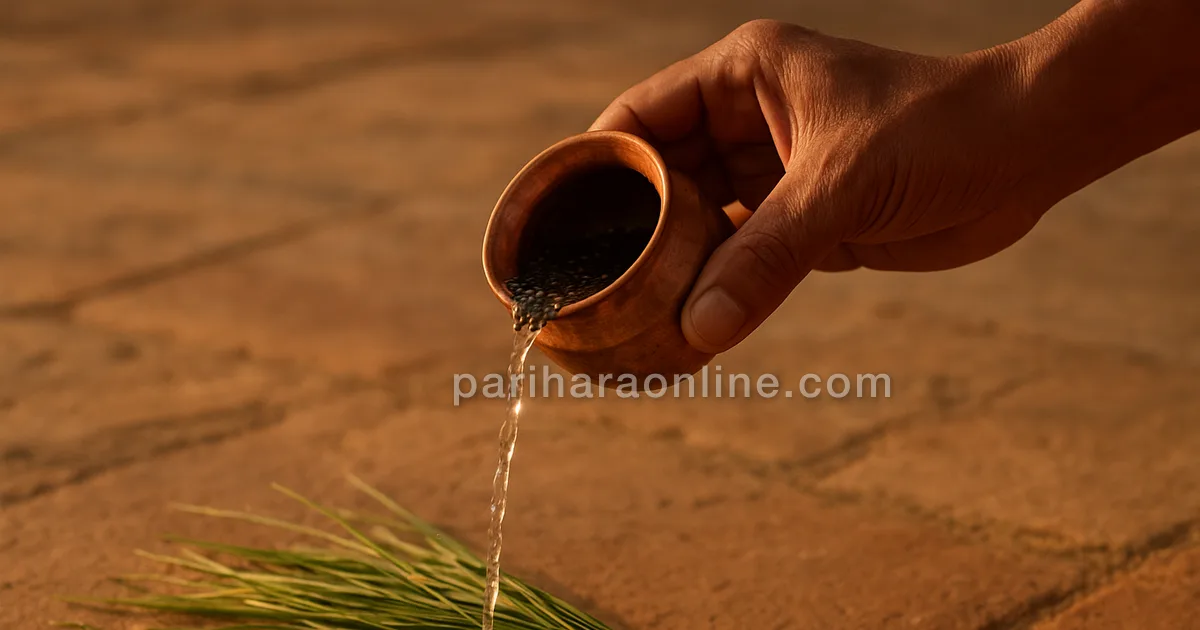
- Pour. Take a little water with sesame in the cupped right hand and let it flow out between the thumb and forefinger onto the plate. Traditionally this is done three times for each name.
- Continue. Move through each name the same way. Do not rush.
- Close. Offer a short prayer in any language, asking that they be at peace. Then sit in silence for a minute. Pour the remaining water at the root of a plant.
The Amavasya tarpanam procedure in a priest's hands includes Vedic mantras, and you can add those later if you want. The core act is this. If you want to understand why the new moon is chosen, Amavasya and the ancestors explains the lunar thinking.
What happens in you while you pour
Pay attention to what the body does during those few minutes. The hands have to go slowly, or the water splashes. The breath slows to match them. Saying a name aloud, a name you have perhaps not said for months, often brings a face with it, and sometimes grief, and sometimes a surprising gratitude.
This is why a regular Amavasya practice feels so different from a once-a-year duty. Once a year, the ritual is a task to get through. Every month, it becomes a small appointment with the people who made you. Many people find that by the third or fourth month, memories begin to surface on their own: a phrase, a smell, the way someone folded a dhoti.
You do not need to be devout for this to work on you. Even people who call themselves spiritual but not religious often find the act of pouring water for the dead quietly steadying. And if the grief is recent, when a parent dies abroad may help with the harder weeks.
For families who want a formal rite as well, the Tila homam at Rameswaram is the traditional fire offering of sesame for the departed, and understanding pitru dosha can put the whole practice in context.
Try it on the next new moon
Check a panchangam, the Hindu almanac, set to your city to find the next Amavasya. That morning, give it five minutes and three names. Pour slowly. Sit for a minute afterwards.
Then write down any memory that came up, even a small one. Keep the notes together. By the end of a year you will have a small book about the people you come from.
Questions people ask
How do I do tarpanam at home without a priest?
Sit facing south with a vessel of water mixed with black sesame. State your name and gotra, then say each ancestor's name, pouring a little water through the right hand between thumb and forefinger for each. Traditionally it is offered three times per name. End with a short prayer and a moment of silence.
When should tarpanam be done?
Tarpanam is traditionally offered on Amavasya, the new moon day, every month, throughout Pitru Paksha, on eclipse days and on the tithi of a parent's passing. Many families keep only Amavasya and the annual shraddha. Check a panchangam for your city to find the correct day and time.
Why is black sesame used in tarpanam?
Black sesame, or til, is associated in tradition with the ancestors and with Yama, and is believed to carry the offering to the departed. It is also a symbol of endurance and nourishment. That is why sesame appears in tarpanam, in the Tila homam at Rameswaram and in food offered during shraddha.
Enjoying this?
To get more Tarpanam posts like this, subscribe for free.
Written by
Writes about practice: attention, breath, the body, the lamp
Archana writes about ritual as something you do rather than something you believe: the lamp, the breath, the fast, the few quiet minutes before the day begins. Her pieces usually end with a small practice to try for a week and notice what changes.