Pitru Dosha Explained: Ancestors, Debt and Love
Pitru dosha remedies explained without fear: what the ancestral debt means in the stories, how Jyotish describes it, and simple ways families honour ancestors.
· 4 min read

In short
Pitru dosha, in Jyotish tradition, describes unresolved obligations to ancestors; it is read from the chart and framed as a call to remember, not a curse.
Traditional remedies include tarpanam, shraddha during Pitru Paksha, feeding people and crows, and the Tila homam, often performed at Rameswaram.
Scripture speaks of pitru rina, the debt to ancestors, which is repaid through remembrance, gratitude and care for the living.
The Mahabharata tells of a wandering sage named Jaratkaru who comes upon a pit in the forest. Hanging inside it, head down, are his own ancestors, clinging to a single root while a rat gnaws through it. They are falling, they tell him, because he has no children; when their line ends, they will have no one to remember them. Jaratkaru marries, and a son is born, and the ancestors are saved. That is the oldest picture of pitru dosha, the idea in Jyotish and ancestral tradition that obligations to our ancestors can remain unfinished. The ancestors needed him, yes. Look closer and it is about continuity.
What is pitru dosha?
Start with an older word: pitru rina, the debt to the ancestors. The Taittiriya Samhita of the Yajur Veda, and many later texts, say every person is born with three debts, to the gods, to the sages, and to the ancestors. The ancestral debt is repaid by remembering them, performing their rites, and continuing the family, not only by having children but by carrying forward what they valued.
Pitru dosha is how Jyotish, the Indian astrological tradition, reads a gap in that repayment. An astrologer may point to certain positions of the Sun, Saturn, Rahu or Ketu in a birth chart and say pitru dosha is present. Families often connect it with repeated setbacks: delayed marriages, lost jobs, children who struggle.
It helps to treat this as tradition rather than verdict. In Jyotish, a chart describes tendencies, not sentences. When people search for pitru dosha symptoms, they usually find a long list of misfortunes that could describe almost any family. The more useful question is not "is my family cursed?" but "have we forgotten someone?"
Pitru dosha remedies in tradition
The traditional remedies are old and gentle.
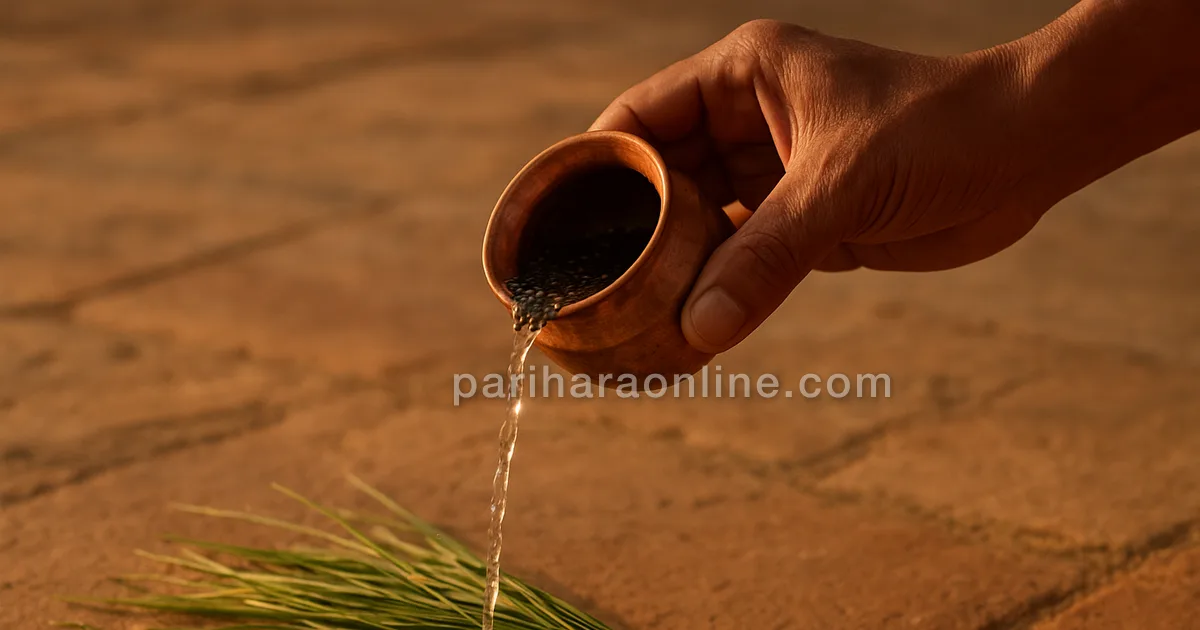
- Tarpanam, the offering of water mixed with black sesame to the ancestors, usually on Amavasya, the new moon. This is how to remove pitru dosha at home in its simplest form; tarpanam at home explains the steps.
- Shraddha, the annual rite for a departed parent, performed on the lunar day of their passing.
- Pitru Paksha, the fortnight before Navratri set aside for the ancestors. For families abroad, Pitru Paksha for NRI families covers what is possible from a distance.
- Feeding. Crows are fed because tradition sees them as messengers of the ancestors. People in need are fed in the ancestors' names; annadhanam, feeding as worship, is one of the oldest forms of remembrance.
- Tila homam. A fire ritual in which black sesame is offered for the departed, often performed at Rameswaram. The tila homam at Rameswaram has its own story.
Is it a curse?
This is where the story matters most. Look again at Jaratkaru's ancestors. They are not angry. They are not punishing him. They are frightened, and they are family. They want to be remembered.
That is how tradition imagines the pitrus, the ancestors: not as ghosts with a grudge, but as grandparents who would like a phone call. The rites are the phone call. If there is a debt, it is the ordinary debt everyone owes to the people who came before them, the language they spoke, the recipes, the stubbornness, the jokes. And it is repaid in the same ordinary currency: attention, gratitude, care for the living.
Seen this way, pitru dosha looks less like a curse and more like a reminder. It fits the wider idea of karma in Indian thought, which is less about punishment than about consequence and connection; karma explained simply is a good companion read.
The simplest remedy
Here is a reframe. Whatever an astrologer finds in your chart, the simplest remedy is remembrance, and it is available to everyone.
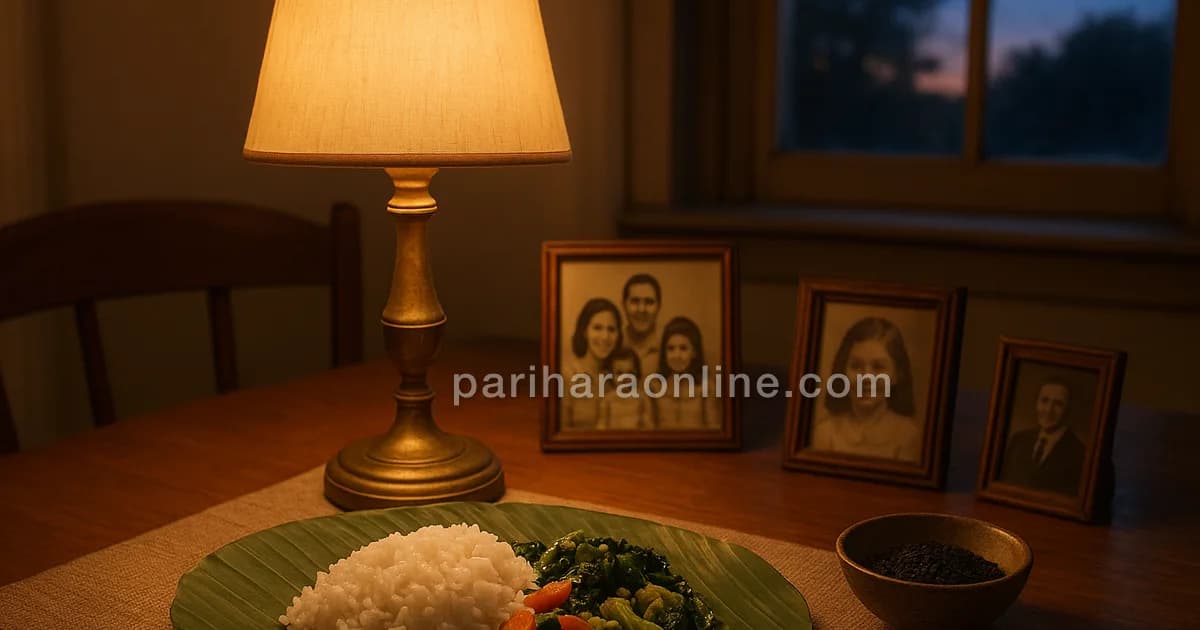
This week, say the names of your grandparents aloud. All four, if you know them. If you do not know them, ask someone who does, and write them down. Then cook one dish one of them loved, and eat it with whoever is at your table. Tell the table who it was for.
The rat in the story is still gnawing. It always is. That is time. Remembering is how we keep holding the root.
Questions people ask
What is pitru dosha in simple terms?
Pitru dosha is a concept from Jyotish and ancestral tradition describing unresolved obligations toward one's ancestors, such as rites not performed or family wrongs left unhealed. It is often linked to repeated setbacks in a family. Most traditional teachers frame it as a reminder to honour ancestors, not as a punishment or fixed fate.
What are common pitru dosha remedies?
Common remedies include offering tarpanam, water with sesame, on new moon days, performing shraddha during Pitru Paksha, feeding the hungry and crows, and donating food in ancestors' names. Families who want a formal rite often arrange a Tila homam, traditionally performed at Rameswaram, where sesame and fire are offered for the departed.
Can I do pitru dosha remedies at home?
Yes. Simple home practices include lighting a lamp on Amavasya, offering water with black sesame while saying ancestors' names, feeding a crow or a cow, and giving food to someone in need. These can be done by anyone in the family. A priest or temple rite can be added for more formal ceremonies.
Enjoying this?
To get more Ancestors posts like this, subscribe for free.
Written by
Reads the old stories for what they still mean
Hariharan writes about the myths, symbols and festival stories that most of us grew up hearing but were rarely asked to think about. He tells the story first, then asks what it is really about, and leaves the conclusion to you.