Pitru Paksha for NRI Families: Honouring Ancestors Abroad
Pitru Paksha for NRI families: how to honour ancestors from the USA with tarpanam at home, a temple rite in India in their name, and food given in memory.
· 4 min read
In short
Pitru Paksha is the waning fortnight before Navratri, usually in September or October, set aside to honour ancestors through tarpanam, shraddha and food given in their name.
NRI families can offer tarpanam at home, book a Tila homam or shraddha in India in their family's name, and donate food locally or through annadhanam.
When tithis matter, calculate them for your US city, not India; many priests will guide you on the correct day and time zone.
The voicemail from my aunt in Chennai arrived while I was walking back from a lunch meeting in a New Jersey office park. "Kanna, tomorrow is Thatha's tithi. Just so you know." Kanna is what she has called me, affectionately, since I was small. Thatha is my grandfather, and his tithi is the lunar day on which he died. It fell in the middle of Pitru Paksha, and I was nine thousand miles from the river where my father used to offer water for him. Pitru Paksha for NRI families is exactly this: a fortnight to honour the ancestors, and the nagging sense that you are doing it from the wrong place. You are not. Tarpanam at home, a rite performed in India in your family's name, and food given in memory are all complete ways to keep it.
What is Pitru Paksha and when does it fall?
Pitru Paksha, also called Mahalaya Paksha, is the waning fortnight of the lunar month of Bhadrapada, a period Tamil families know as falling in the month of Purattasi. It ends on Mahalaya Amavasya, the new moon, and the very next day Navratri begins. In the Western calendar it usually falls in September or October.
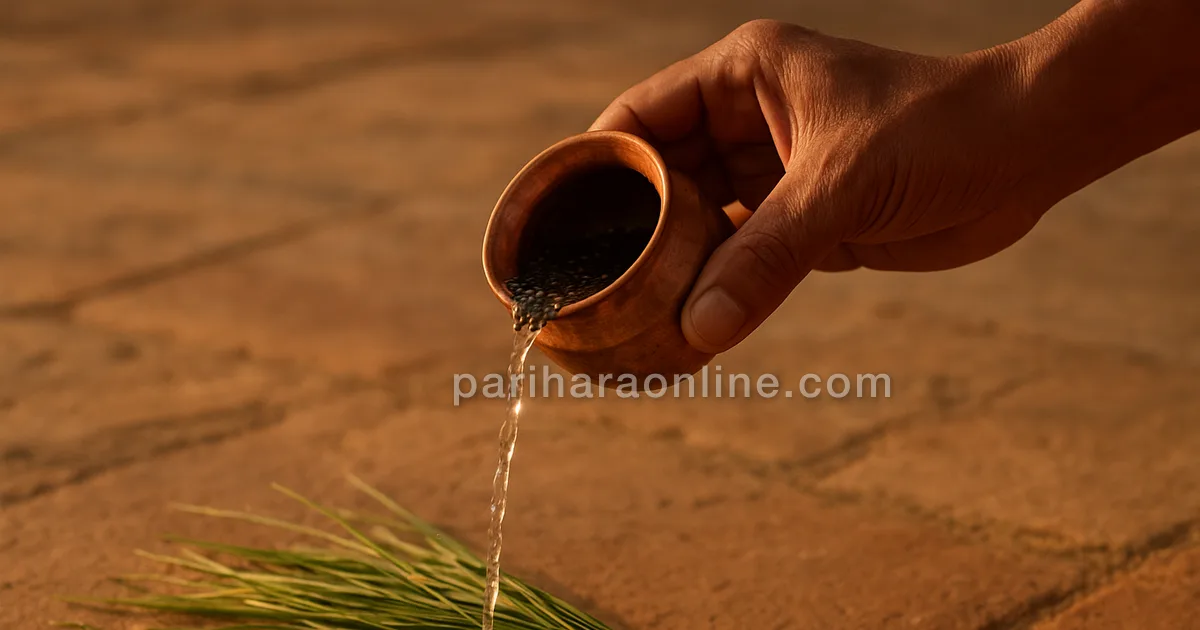
During these fifteen days, families remember the pitrus, the ancestors, through tarpanam, the offering of water and black sesame, and shraddha, a rite with food offered to the departed. Each ancestor is traditionally honoured on the tithi on which they passed away.
Because tithis are calculated by the moon's position, the date shifts every year. Check the current year's panchangam, the Hindu almanac, set to your own city rather than to India.
Pitru Paksha for NRI families, practically
Here is what my family does now, and what friends in Houston and Seattle do.
Tarpanam in a US home. A steel tumbler of water, a pinch of black sesame from the Indian grocery, a quiet corner facing south. Say your name, then each ancestor's name, and pour a little water through the right hand for each. It takes ten minutes. The step-by-step version is in tarpanam at home.
The right time zone. Shraddha from the USA raises a practical question: whose date? Traditionally the tithi is calculated for where you live, so use a panchangam set to New Jersey, not Chennai. The day can differ from India's by one. That is fine. If you book a rite in India, the priests will perform it on the Indian date, and you can do your home offering on your local one.
A rite in India. Many families arrange a shraddha or a Tila homam, a fire ritual in which black sesame is offered for the departed, at a temple in India, with a sankalpam, the spoken statement of intention, that names the family and the ancestors. Rameswaram is the traditional place; the tila homam at Rameswaram explains why. If you want to watch, joining a puja across time zones helps with the late-night logistics.
What if I can't do the full rites?
Most of us cannot. We have meetings, school pickups, and no priest within a hundred miles. But the rites were always about three things: remembering, feeding and giving. All three travel.
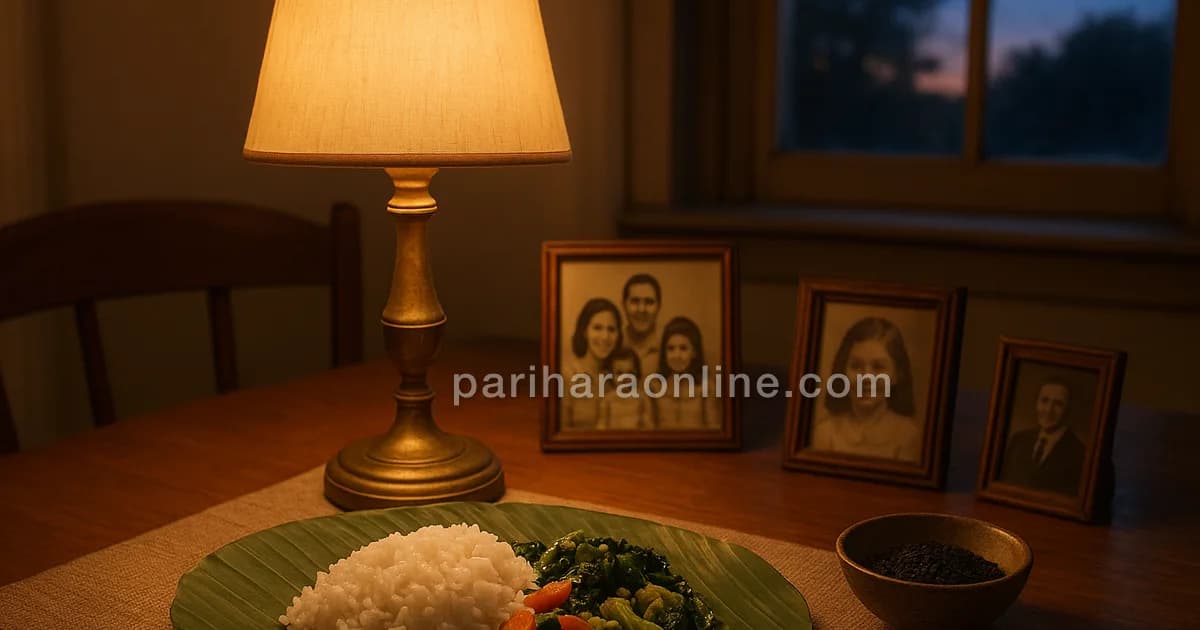
Feed someone. Cook a meal your grandfather liked and offer it at the lamp before your family eats it. Donate a meal to a shelter, or to an annadhanam, a food-giving programme, in India, in your ancestors' names.
And tell your children. The Tirukkural, Tiruvalluvar's book of couplets, lists the householder's first duties as caring for five: the ancestors, the gods, guests, kin and oneself. The ancestors come first on that list, before the gods. My son now knows his great-grandfather ran a cloth shop in Kumbakonam and refused to sell on credit to anyone except schoolteachers. He thinks that is the funniest thing he has ever heard. That, too, is tarpanam.
If you are grieving someone more recent, the quieter meaning of offerings is explored in what the homam fire teaches about letting go.
One small thing this fortnight
Choose one ancestor. Just one. Find one story about them, from a parent, an aunt, an old photograph, and share it at dinner. Say their name out loud when you do. Remembrance travels better than any courier.
Questions people ask
How can I observe Pitru Paksha while living in the USA?
Offer tarpanam at home with water and black sesame while saying your ancestors' names, cook a simple meal they liked and offer it before eating, and feed someone in need. Many NRI families also book a shraddha or Tila homam in India so the formal rite is performed by priests with a sankalpam in their name.
Should I follow Indian or US time for Pitru Paksha tithis?
Traditionally, the tithi is calculated for where you live, so a US family should use a panchangam set to their own city. The date can differ by a day from India. If you book a rite in India, the priests perform it on the Indian date, and you can observe your home offering on your local date.
Can women perform tarpanam or shraddha abroad?
Customs differ widely between communities. In many families the eldest son traditionally performs shraddha, but today daughters, wives and others often offer tarpanam or arrange the rites, especially abroad where there may be no one else. Consulting your family priest is helpful, and the intention of remembrance is what traditions consistently honour.
Enjoying this?
To get more Pitru Paksha posts like this, subscribe for free.
Written by
The Sunday column: festivals and rituals meeting ordinary weeks
Manikandan writes the Sunday column, where festivals and rituals meet commutes, hospital corridors and video calls with parents far away. Each piece closes with one small thing to carry into the week ahead.