Tila Homam at Rameswaram: Why Sesame and the Sea
Tila homam at Rameswaram, explained: why sesame, why fire, why the sea at Rama's shore, and what families hope for when they perform this rite for ancestors.
· 4 min read

In short
A tila homam is a fire ritual in which black sesame is offered with mantras for departed ancestors, traditionally to ease pitru dosha or honour those who died suddenly.
Rameswaram is favoured because, in the Ramayana, Rama worshipped Shiva there, and the sea at Agni Theertham has long been a place of ancestral rites.
Families who cannot travel often have the tila homam performed at Rameswaram in their name, with the sankalpam spoken for them.
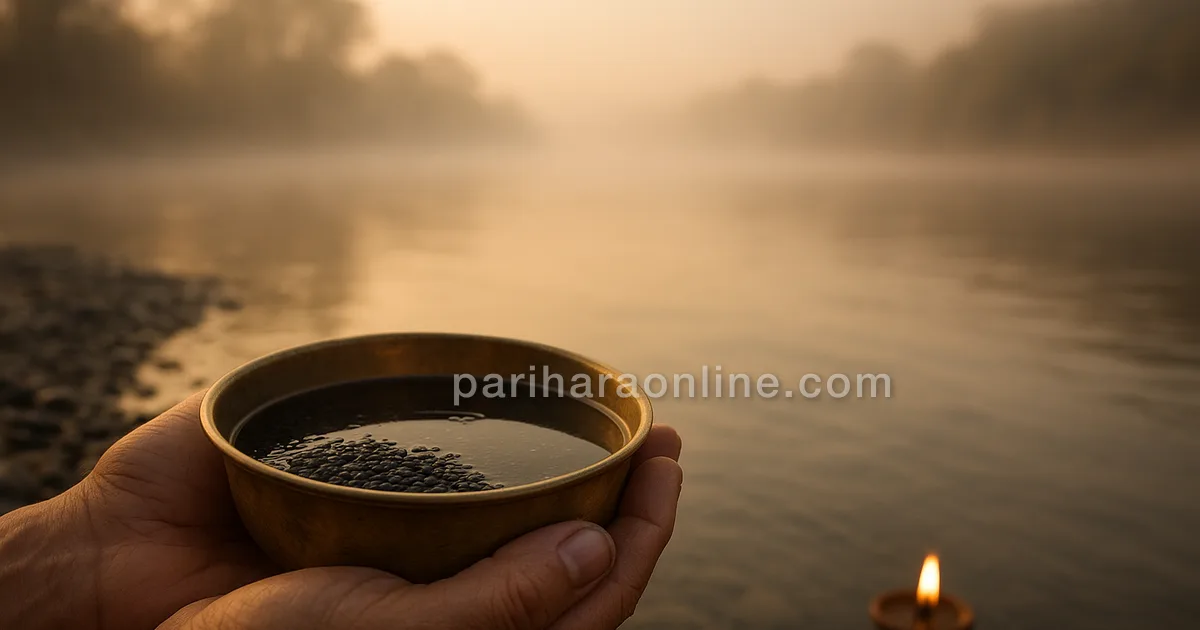
On the shore at Rameswaram, the Ramayana tradition says, Rama stopped to worship Shiva. In the version most pilgrims hear, from the Skanda Purana, the war is over, Ravana is dead, and Rama, the victor, is not celebrating. He is asking to be forgiven for the lives the war has cost. Sita shapes a lingam, the rounded stone form of Shiva, out of sand, and Rama prays. The story is about a man seeking release from what he could not undo. That is why grieving families still come to this shore, and why the tila homam, a fire ritual in which black sesame is offered for the departed, is so closely tied to Rameswaram.
Why Rameswaram for ancestors?
Rameswaram sits on an island at the southern tip of India, facing the narrow sea towards Sri Lanka. The temple of Ramanathaswamy stands on the spot where, tradition says, that sand lingam was worshipped. Some tellings place Rama's prayer before the crossing to Lanka, asking for strength; either way, the shore is where a grieving, burdened man stopped to pray.
Pilgrims begin at Agni Theertham, the stretch of sea in front of the temple, with a ritual bath. Then they move through the twenty-two theerthams, sacred wells, inside the temple complex, being doused with water from each. After that come the rites for the ancestors.
Along with Gaya and Kashi, Rameswaram is one of the places Indian families have long travelled to for ancestral rites, and for South Indian families it is often the first. If you want the wider idea behind these rites, pitru dosha explained covers the old notion of the debt to our ancestors.
What is a tila homam?
A tila homam is a Vedic fire ritual in which tila, black sesame seeds, are offered into the fire with specific mantras for departed souls. It usually begins, as every homam does, with a prayer to Ganesha and a sankalpam, the spoken statement of intention, naming the family, their gotra or ancestral lineage, and the people being remembered. Priests then offer sesame, often mixed with ghee, into the flames again and again with each mantra.
Families arrange it for several reasons. Tila homam for pitru dosha is the most common, when an astrologer has read unresolved ancestral obligations in a chart. It is also performed for someone who died suddenly or young, or when the final rites could not be done properly, as happens often when families are scattered across countries. If you are unfamiliar with fire rituals in general, what a homam is explains the structure.
When people ask about tila homam benefits, the traditional answer is peace for the departed and relief for the living. What families usually describe is simpler: the sense that something left undone has finally been done.
Sesame, fire and water: what the symbols say
Each element in this rite carries a meaning.
Sesame. In the Garuda Purana and in household tradition, black sesame is the food of the ancestors. It is small, dark and oil-rich, a seed that stores nourishment. Offering it is feeding the dead in the only way the living can.
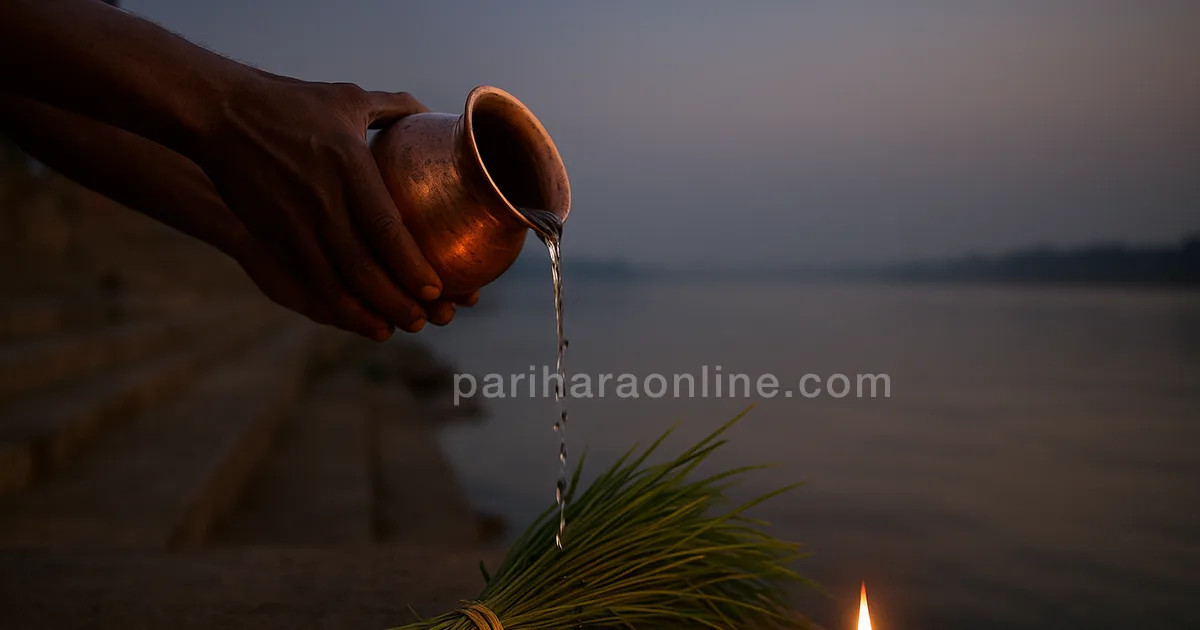
Fire. Agni, the fire, is the messenger in Vedic thought, the one who carries offerings to where they are meant to go. In the tila homam, fire carries the sesame to the ancestors.
Water. Then there is the sea. The ashes and remains of rites are often given to the waters at Agni Theertham. The sea is where every river ends up. It is the great returning, the place where separate streams stop being separate.
Put together, the rite says: we feed you, we send our love by fire, and we let you go into the larger water. The story of Rama is not about a hero who won. It is about a hero who knew that winning did not settle his accounts, and went to the shore to settle them.
"We have not forgotten"
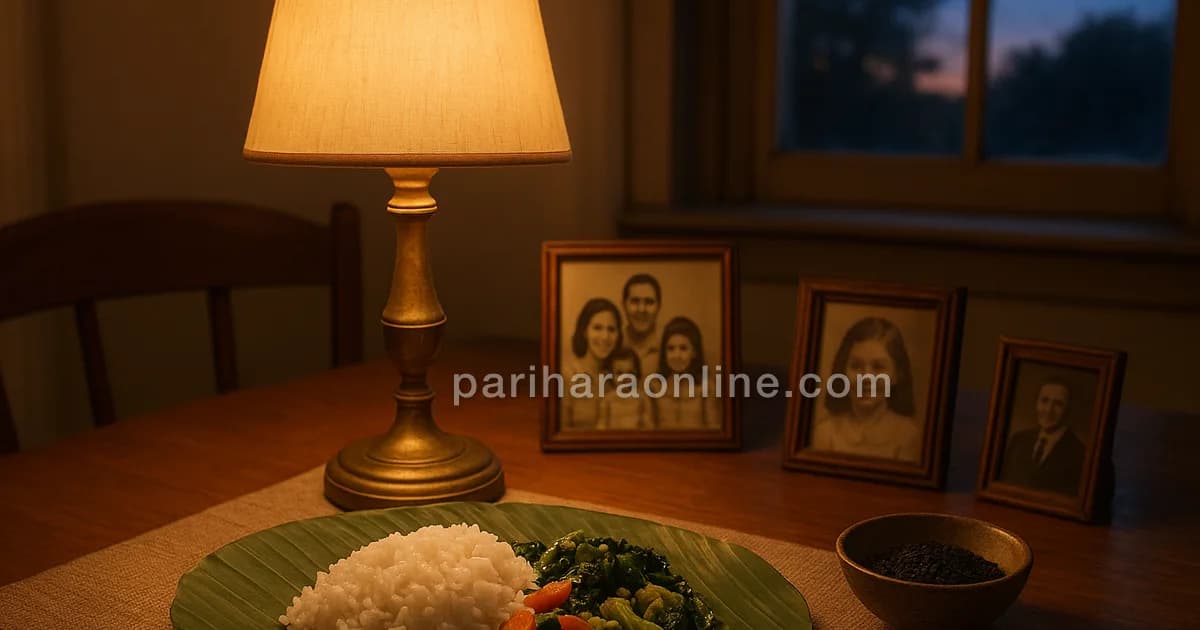
Not everyone can travel to Rameswaram. Many families, especially those living abroad, have the tila homam performed there by priests on their behalf, with the sankalpam spoken in their name. Tradition treats a sincerely arranged rite as complete. For practical guidance from a distance, Pitru Paksha for NRI families is a good start, and Amavasya and the ancestors explains the monthly rhythm of remembrance.
Whether you stand on the shore yourself or the rite is done in your name, the tila homam says one thing clearly to the people who came before you: we have not forgotten.
Questions people ask
What is tila homam and why is it done?
Tila homam is a Vedic fire ritual in which black sesame seeds are offered into the fire with specific mantras for departed ancestors. It is traditionally performed to address pitru dosha, for those who died suddenly or without proper rites, or when a family feels ancestral obligations remain unfinished. It is framed as care, not appeasement.
Why is Rameswaram important for tila homam?
Rameswaram is associated with Rama, who in the Ramayana worshipped Shiva on its shore. The town's Agni Theertham sea bath and its twenty-two temple wells have made it one of India's most important places for ancestral rites, alongside Gaya and Kashi, especially for South Indian families.
Can a tila homam be done without travelling to Rameswaram?
Yes. Many families, especially those abroad, have the tila homam performed at Rameswaram by priests on their behalf. They provide names, gotra and the relationship of the departed for the sankalpam. Some receive prasadam afterwards. Tradition treats a sincerely arranged rite as complete even if the family could not attend.
Enjoying this?
To get more Tila Homam posts like this, subscribe for free.
Written by
Reads the old stories for what they still mean
Hariharan writes about the myths, symbols and festival stories that most of us grew up hearing but were rarely asked to think about. He tells the story first, then asks what it is really about, and leaves the conclusion to you.