Mesha Rasi (Aries): Mars, Courage and Its Temples
Mesha rasi explained: the ram, Mars as its ruling planet, the nature tradition describes, and the Vaitheeswaran Koil and Murugan temples linked to it.
· 4 min read
In short
Mesha rasi is the first sign of the zodiac in Jyotish, ruled by Mangal (Mars) and symbolised by a ram; rasi means the Moon sign.
Tradition describes Mesha natives as courageous, direct and quick to begin, with impatience as the shadow.
Vaitheeswaran Koil, the Angaraka temple, and Murugan temples are traditionally linked with Mesha through its ruling planet.
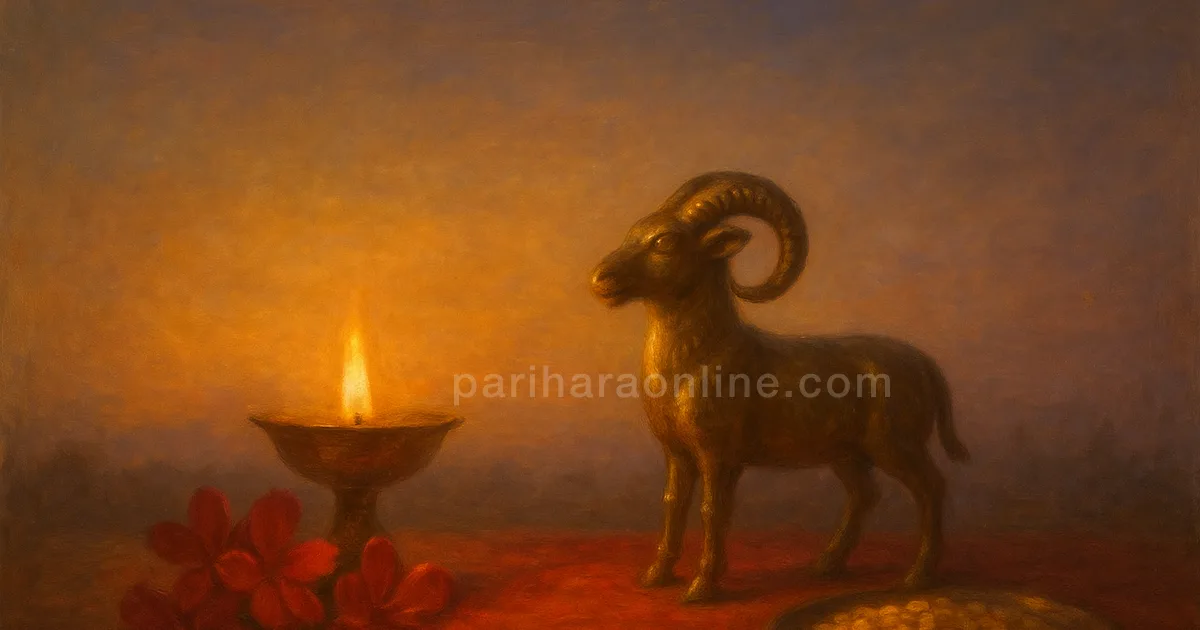
The Tamil year begins when the Sun enters Mesha, the ram, and in temple carvings the fire god Agni rides a ram. Mesha rasi, the first sign of the zodiac, is about beginnings, and the story of its animal tells you something useful about how to handle them. A ram does not circle its target. It lowers its head and goes.
What is Mesha rasi, and why the ram?
In Jyotish, the Indian astrological tradition, your rasi usually means your Moon sign: the one of twelve signs that the Moon occupied at the moment of your birth. South Indian families ask for it as readily as they ask for your star, and they mean the Moon, not the Sun. Mesha rasi is the first of the twelve.
Each rasi holds two and a quarter nakshatras, the finer lunar mansions. Mesha holds all of Ashwini, the star of the divine healers, all of Bharani, and the first quarter of Krittika. Its ruling planet is Mangal, Mars, the planet of energy and courage. Its animal is the ram, the mount of Agni, who in the Vedas is the first god addressed in the first hymn. Fire and first things go together.
Its Western counterpart is Aries, though the two rarely line up exactly: Jyotish measures the zodiac against the stars, Western astrology against the seasons, and the gap between them is nearly a whole sign. So a Western Aries may well be a Mesha, or a Meena, the sign of the two fish, depending on the degrees.
Two kinds of ram
Tradition describes Mesha natives as courageous, direct, energetic and quick to begin. Its shadow is impatience: the project started with a charge and abandoned when the ground turns soft. Grandmothers had a way of putting it: the Mesha child is the first one into the river and the first one out.
There are two rams in the old pastoral imagination. One charges; it butts heads, it breaks fences, it wins or loses in an instant. The other leads the flock. It goes first down the narrow path, and the others follow because it went. The story sounds like it is about aggression. It is really about the difference between going first and going alone. The charging ram is brave for itself. The leading ram is brave for others.
The portrait is a description, and descriptions are not sentences. Plenty of people with the Moon in Mesha are cautious, and plenty of cautious people have learned to be brave. The sign names a direction of energy, not a destiny.
Tuesdays, Murugan and the Mars temple
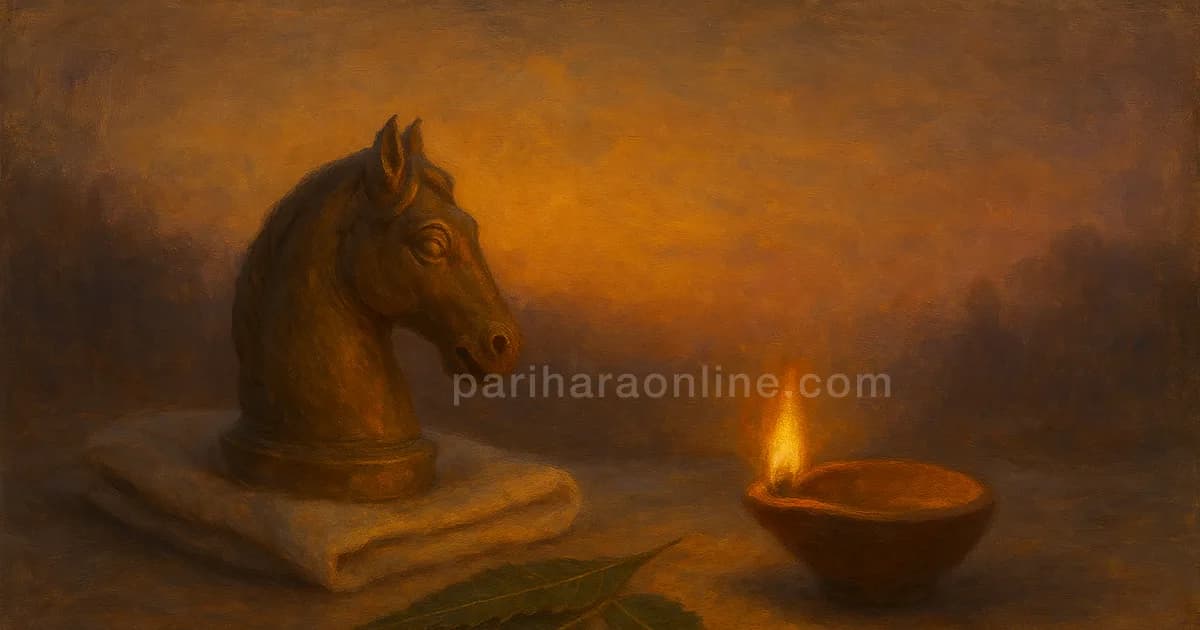
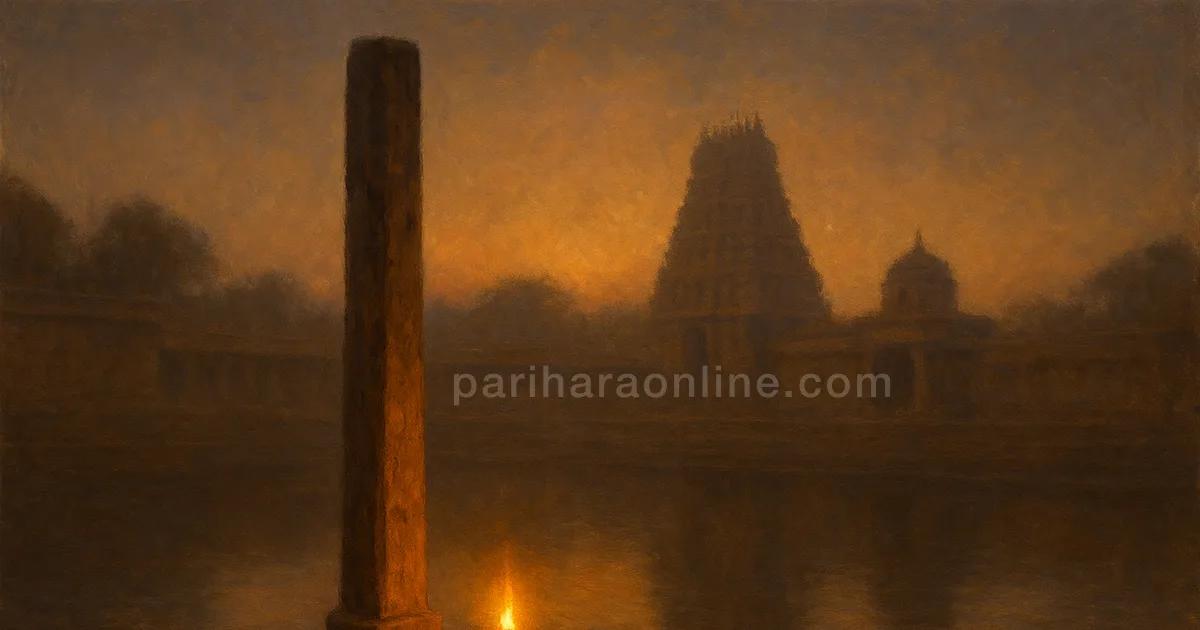
Because Mangal rules Mesha, the temples linked with the sign are the temples of Mars. Chief among them is Vaitheeswaran Koil, the Angaraka shrine among the nine Navagraha temples of the Kaveri delta, where Shiva is worshipped as the divine physician. The guide to worshipping Angaraka explains the Tuesday traditions in more detail.
Murugan is traditionally linked with Mangal, so Tuesday worship of Murugan is a natural practice for Mesha people: a lamp, a red flower, a few lines of the Kanda Sashti Kavasam. For those who want a prayer that addresses all nine planets together, the Navagraha homam, a fire ritual for the nine grahas, is the traditional choice.
And there is a festival built right into the sign. Puthandu, the Tamil New Year, falls when the Sun enters Mesha in the month of Chithirai, usually in mid-April. For families abroad, the piece on celebrating Puthandu in the USA has practical ideas. It is a natural day for a Mesha lamp, whatever your own Moon sign.
Beginning, imperfectly
The next sign, Rishabha, the bull, is the ram's opposite in temperament: where the ram charges, the bull waits. The zodiac does that on purpose. It sets a beginner beside a sustainer so that neither is mistaken for the whole of life.
The ram is brave because it goes first, not because it wins every time. If your Moon is in Mesha, begin one thing this week and let it be imperfect. Write the first paragraph. Make the first call. The second step is someone else's sign.
Questions people ask
Which god should Mesha rasi people worship?
Because Mangal rules Mesha, many families worship Murugan, who is traditionally linked with Mangal, especially on Tuesdays. Some visit Vaitheeswaran Koil, the Angaraka shrine among the Navagraha temples in Tamil Nadu. Hanuman worship is also common. Choose a form of the divine you can return to steadily; tradition offers these as supports, not requirements.
What are Mesha rasi characteristics?
Tradition describes people with the Moon in Mesha as energetic, brave, independent and eager to start things, sometimes impatient, quick-tempered or restless before finishing. These Mesha rasi characteristics come from Mangal's rulership and the ram's nature. They are traditional descriptions of the Moon sign, not certainties; the whole chart and personal choices shape temperament far more.
Which nakshatras fall in Mesha rasi?
Mesha rasi contains all of Ashwini and Bharani and the first quarter, or pada, of Krittika. Each nakshatra is divided into four padas, and the zodiac's twelve signs hold two and a quarter nakshatras each. Your Moon's nakshatra and pada together decide your rasi, which is why two people born the same day can have different signs.
Enjoying this?
To get more Rasi posts like this, subscribe for free.
Written by
Reads the old stories for what they still mean
Hariharan writes about the myths, symbols and festival stories that most of us grew up hearing but were rarely asked to think about. He tells the story first, then asks what it is really about, and leaves the conclusion to you.