Amavasya Significance: Why the New Moon Is for Ancestors
Amavasya significance for ancestors: why the new moon is set aside for tarpanam and remembrance each month, and small ways to honour family who came before.
· 5 min read
In short
Amavasya, the new-moon day each month, is traditionally set aside for honouring ancestors through tarpanam, food offerings and charity.
Three new moons stand out: Mahalaya in Bhadrapada, Aadi in Tamil summer and Thai in mid-winter.
A simple remembrance, spoken names or a meal given in their memory, keeps the practice alive anywhere.
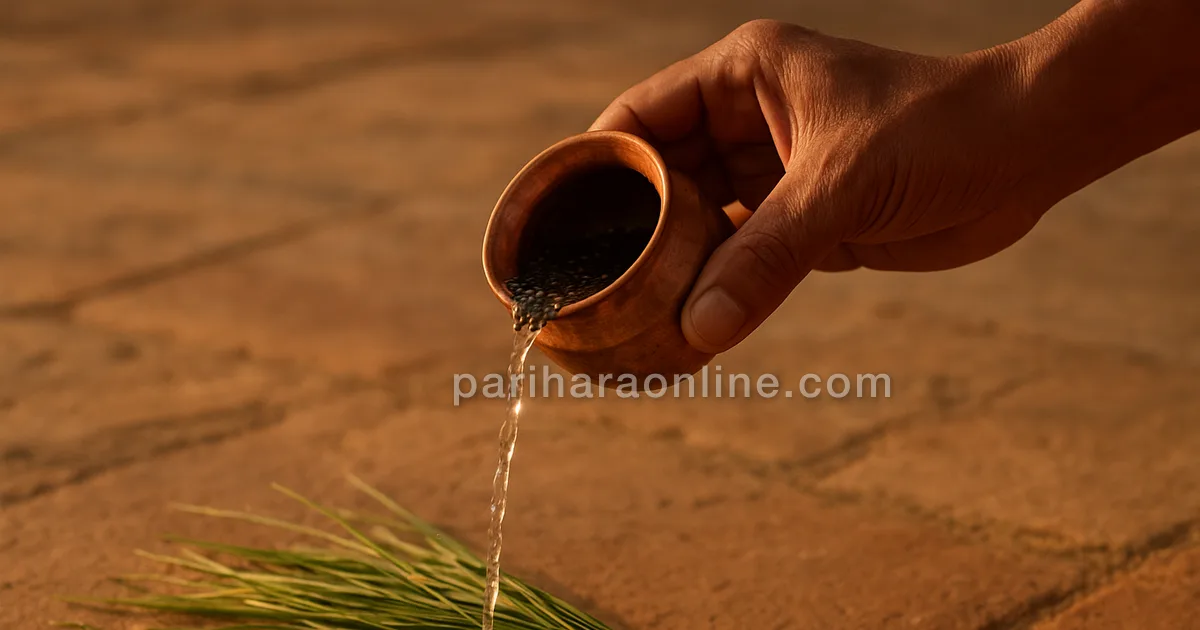
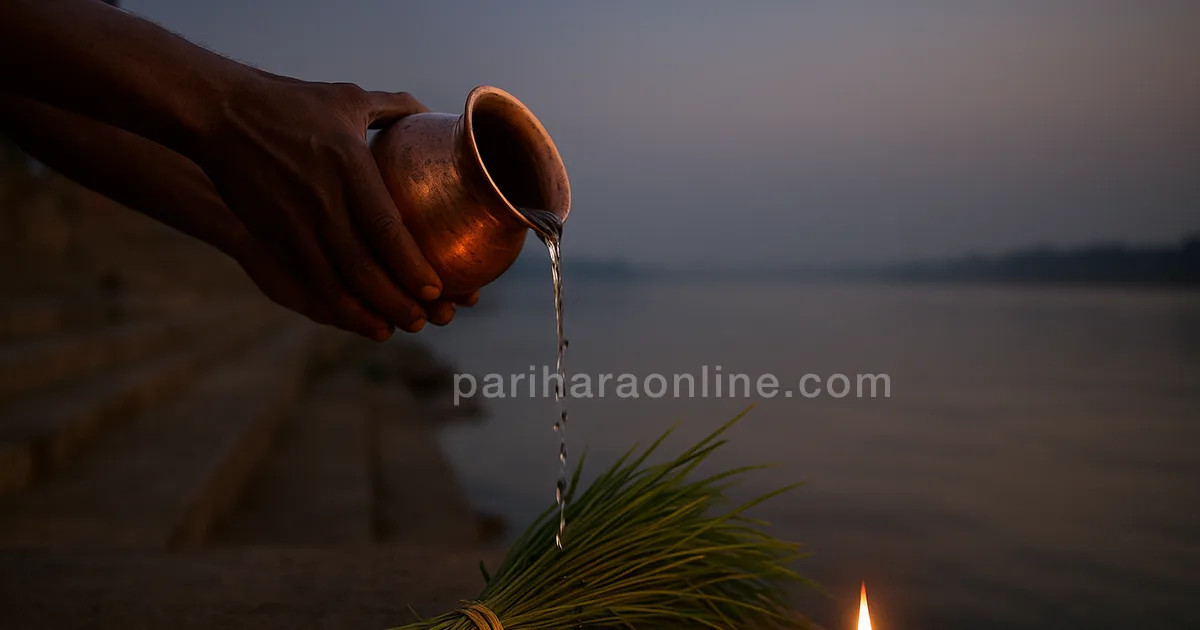
Amavasya significance is simple to say: the new-moon day of each lunar month is set aside for the ancestors, the pitrus, and families mark it with water, black sesame, food and a few quiet minutes of remembrance. My grandfather never missed one. Every new moon, after his bath, he sat on the back step with a small brass vessel, a pinch of sesame and a few blades of darbha grass, and murmured for a while before breakfast. I assumed he was praying to God. Only much later did I realise he was talking to his father.
Amavasya significance: a monthly day for the ancestors
Amavasya is the night when the moon cannot be seen at all. The Garuda Purana and the older law books describe this as the day when the ancestors are closest to us, and when offerings made in their name reach them most easily. One old image puts it gently: a whole month of our lives is a single day for the pitrus, and the new moon is the hour they sit down to eat. You do not need to take that literally to feel its tenderness. Once a month, the family lays a place at the table for those who are no longer at it.
Three new moons carry extra weight. Mahalaya Amavasya closes Pitru Paksha, the fortnight of the ancestors in the lunar month of Bhadrapada, usually in September or October; there is a fuller guide to observing Pitru Paksha as a family abroad. In Tamil homes, Aadi Amavasya in midsummer and Thai Amavasya in midwinter draw crowds to the sea at Rameswaram and to the banks of the Kaveri. For the exact day where you live, check the current year's panchangam, the traditional almanac.
What do you do on Amavasya?
The centre of the day is tarpanam, the offering of water mixed with black sesame, poured from the right hand while you say the names of the departed. Amavasya tarpanam is traditionally done after a bath, facing south, with darbha grass in the fingers, and it takes only a few minutes. If you have never done it, this walk-through of tarpanam at home, step by step is a calm place to start.
Around it sit a handful of smaller gestures. A little cooked rice is left out for the crows, long seen as messengers of the ancestors. A meal is given to someone who needs one. A lamp is lit in the evening. Many households avoid beginning new ventures on Amavasya, not out of dread, but because the day's attention faces backward, towards the people who made us. Some families see steady new-moon offerings as a gentle response to what astrologers call pitru dosha, an ancestral imbalance in the chart; others simply do it because their parents did.
Traditionally a son whose father has passed performs the tarpanam. Many families today are wider in their welcome, and daughters, spouses and grandchildren pour the water too. If you are unsure of your family's custom, ask an elder or a priest, and then do what you can with a sincere heart.
Remembering when rituals feel far away
I have no back step now. Last new moon I was on a commuter train before seven, with no sesame, no river and no brass vessel, only a window full of grey parking lots. So I said three names under my breath, my grandfather's among them, somewhere between two stations. It felt small. It also felt like the most honest prayer I had said all month.
The Taittiriya Upanishad, in its parting words to students leaving their teacher's house, says: "Matru devo bhava, pitru devo bhava." Let your mother be a god to you; let your father be a god to you. It is advice given to people about to walk out into the world, which is exactly when parents start to feel far away. Remembrance is how we keep them walking beside us.
It can take many forms. Cook a dish your grandmother made, even badly. Take a slow walk and tell your child one story about someone they never met. Give food in their name, which the tradition treats as among the highest gifts; there is more on annadhanam, feeding people as worship. And if you have ever wondered why the past seems to sit so heavily in some families, the idea of karma, explained simply, offers one way to think about what we inherit and what we can choose to pass on.
One small thing for the next new moon
On the next Amavasya, say aloud the names of three people who came before you. If you know nothing else about them, say the names anyway. Then do one kind thing in their memory: a meal shared, a lamp lit, a phone call to the oldest relative you still have. That is the whole ritual, really. The rest is detail, and detail can be learned.
Questions people ask
What is the significance of Amavasya for ancestors?
Hindu tradition regards the new moon as the day when the world of the ancestors, pitru loka, is closest to ours. Texts such as the Garuda Purana describe offerings made on Amavasya as especially satisfying to the departed. Families perform tarpanam, feed crows and cows, give food to the needy and light lamps in remembrance.
What should I do on Amavasya at home?
Keep it simple: after bathing, offer water mixed with black sesame to your ancestors while saying their names, light a lamp, and set aside a portion of food for crows or give a meal to someone in need. Many people avoid starting new ventures on Amavasya and spend a few quiet minutes in remembrance.
Who can perform Amavasya tarpanam?
Traditionally tarpanam is done by sons or male relatives whose father has passed away, following family custom. Many families today are more flexible, and daughters, spouses and grandchildren offer water, prayers and charity. If you are unsure, a priest can guide you, or a tarpanam or tila homam can be performed at a temple on your family's behalf.
Which Amavasya is most important for ancestors?
Mahalaya Amavasya, which ends Pitru Paksha in the month of Bhadrapada, is considered the most important. In Tamil Nadu, Aadi Amavasya in midsummer and Thai Amavasya in midwinter are also major days for tarpanam at rivers and seashores such as Rameswaram. Check the current panchangam for exact dates where you live.
Enjoying this?
To get more Amavasya posts like this, subscribe for free.
Written by
The Sunday column: festivals and rituals meeting ordinary weeks
Manikandan writes the Sunday column, where festivals and rituals meet commutes, hospital corridors and video calls with parents far away. Each piece closes with one small thing to carry into the week ahead.