Live Puja Online: Joining a Temple Puja From Afar
Joining a live puja online from another time zone: how to sit, what to keep beside you, and where to put your attention when the temple is far away.
· 4 min read
In short
To join a live puja from abroad, prepare as if you were at the temple: wash, sit down, light a lamp, and silence other screens.
If the live hour is impractical, watching the recording at a calm time with full attention is a sincere way to participate.
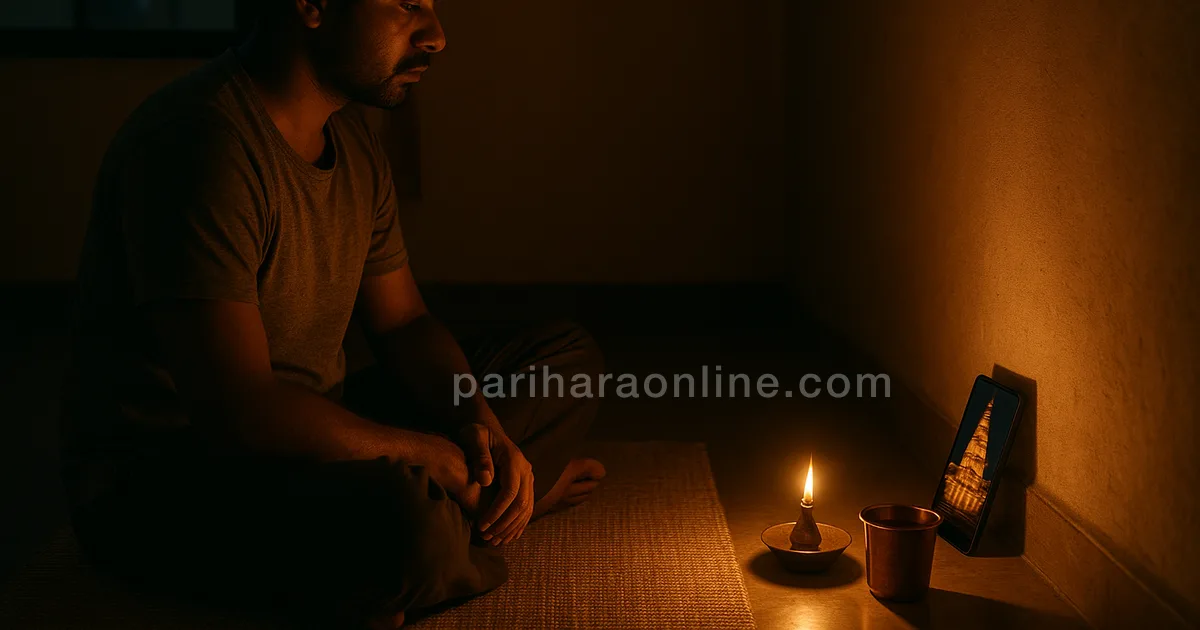
Watching a live puja online on a phone at midnight can be scrolling, or it can be worship. The screen is the same either way. The difference is what your body and your attention are doing. If you prepare as if you were standing in the temple, wash, sit down, light a lamp, silence everything else, the live stream becomes a window rather than a video. And if the live hour is impossible, watching the recording later with the same care is just as sincere.
Before the live puja online starts
Most temple rituals in India happen in the early morning, Indian Standard Time. For someone in the US that usually means late evening or the middle of the night: a six o'clock puja in Tamil Nadu is half past eight the evening before in New York, and half past five in the afternoon in California. Once American clocks fall back in November, subtract one more hour. Check the scheduled time in IST, convert it, and put it in your calendar with a fifteen-minute warning.
Use that fifteen minutes. This is the part people skip, and it matters most.
- Wash. A bath if you can, or at least face, hands and feet. You will feel the shift.
- Sit on the floor. On a mat or folded blanket, facing the screen, spine upright. The couch tells the body it is time to be entertained.
- Keep a lamp and water beside you. A small oil lamp or a tea light, a cup of water, a flower if you have one.
- Phone on do-not-disturb. If the phone is the screen, turn off every notification. Better still, cast the stream to a laptop and put the phone in another room.
Try this: before the stream begins, sit with your eyes closed for two minutes and just feel the breath at the nostrils. You are arriving. The temple is far, but your body is here, and the body is where attention lives.
What should I do while the priest chants?
This is where many people drift. The chanting is in Sanskrit, the camera angle is shaky, and after a few minutes the mind starts checking the other tabs. Give it something to do.
Follow the breath with the chant. You do not need to understand the words. Let the rhythm of the recitation set the rhythm of your breathing. Many people find the mind settles when the ear has one steady thing to follow.
Repeat the deity's name quietly. If it is a Ganapathi homam, repeat Om Gam Ganapataye Namah under your breath. If it is for Shiva, Om Namah Shivaya. There is more on how to start in chanting for beginners.
Offer at the moments of aarti. When the priest waves the lamp in the aarti, the offering of light, raise your own lamp and move it in slow circles before your altar. Fold your hands. When the flowers are offered, offer yours.
Hear your name. If it is your puja, listen for your details in the sankalpam, the spoken intention. It is a strange, good feeling to hear your own name spoken at a temple on the other side of the world.
When the hour is impossible
Sometimes it is three in the morning, or it clashes with the school run, or you are simply exhausted. Sleep. The ritual is complete when the priest performs it with your sankalpam, whether you watch or not. There is a longer explanation of how online puja from the USA works if that worries you.
Then watch the recording at a calm hour, ideally at dawn, with exactly the same preparation. Wash, sit, lamp, water, silence. The timestamp on the video does not matter; your presence does. Many people find a recording watched with full attention at six in the morning means more than a live stream half-watched at midnight.
If you booked the puja for someone else, a parent in Chennai, say, call them afterwards and watch a few minutes together. There is a separate piece on booking a puja for your parents from abroad and how to include them.
Try this for your next puja
Three rules, just once. No second screen. One lamp. Five minutes of silence after the stream ends, before you touch the phone.
The silence is the part that surprises people. Rituals end with a closing, and then comes the stillness that the whole thing was building towards. It is close to what meditation and puja share. When the prasadam arrives weeks later, you will remember that stillness, and receiving the prasadam with the same attention completes the practice.
Questions people ask
How do I participate in an online puja from home?
Treat the screen as a window, not a video. Wash your hands and face, sit on a mat facing the screen, and keep a lamp, water and a flower beside you. Repeat the deity's name quietly while the priest chants, fold your hands during the aarti, and offer your flower at the end. Afterwards, sit quietly for a few minutes.
Is it okay to watch the puja recording later instead of live?
Yes. The ritual is complete when the priest performs it with your sankalpam, whether or not you watch. Many people in the US cannot be awake at the IST hour. Watching later with the same preparation, a lamp lit and attention undivided, lets you share in it. What matters is presence, not the timestamp.
Can I light a lamp at home during a live temple puja?
Yes, and many families find it the most meaningful part. Lighting your own lamp as the priest lights the temple lamps connects your home altar with the temple. Use a stable holder away from curtains, keep it attended, and let children help. It turns watching into doing, which helps the mind settle.
Enjoying this?
To get more Online Puja posts like this, subscribe for free.
Written by
Writes about practice: attention, breath, the body, the lamp
Archana writes about ritual as something you do rather than something you believe: the lamp, the breath, the fast, the few quiet minutes before the day begins. Her pieces usually end with a small practice to try for a week and notice what changes.