What Is Sankalpam? Name, Gotra and Star Explained
What is sankalpam? The spoken intention that opens every puja: your name, gotra, birth star and purpose. What each part means and why it matters.
· 4 min read
In short
Sankalpam is the spoken statement of intention at the start of a puja, naming the person, their gotra, birth star, the time and place, and the purpose.
If you do not know your gotra, priests traditionally use Shiva gotra or Kashyapa gotra; not knowing does not block a puja.
Every puja begins with the priest locating you in the universe: which age of the world, which land, which month, which family, which person. That address is the sankalpam. So, what is sankalpam? It is the spoken statement of intention at the start of a ritual, naming who is praying, their gotra and birth star, the time and place, and what the prayer is for. It sounds cosmic. Underneath, it is about something very small and human: one person, at one moment, deciding to ask.
What is sankalpam?
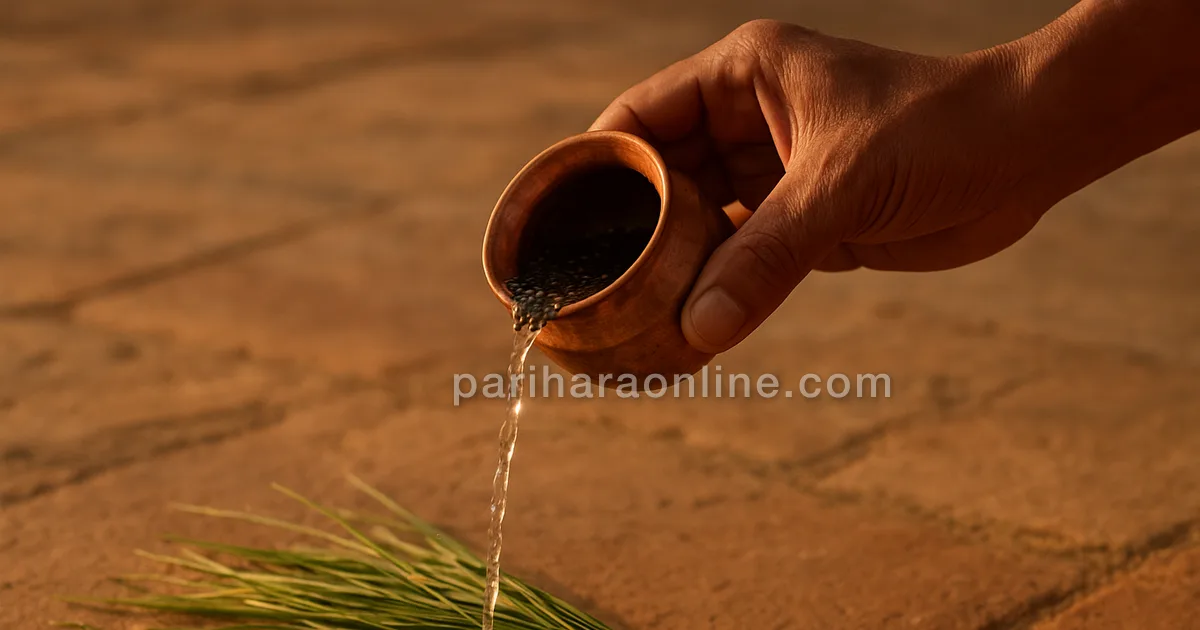
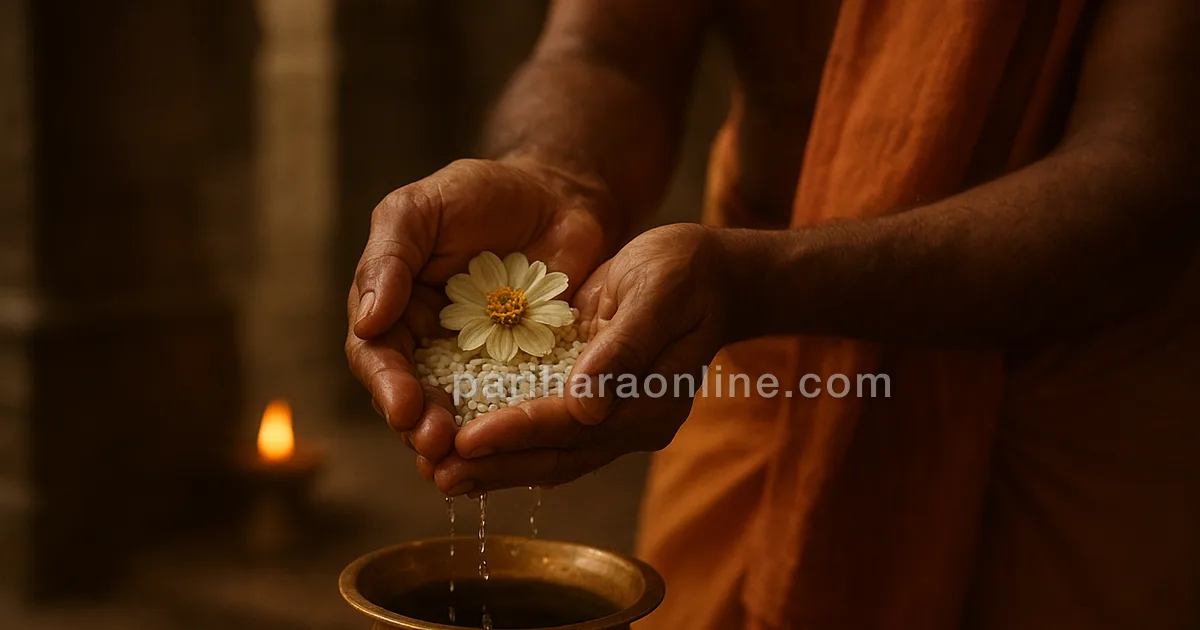
The word comes from the Sanskrit root for resolve. Before the priest lights a lamp or pours a single spoon of ghee, he takes water, a few grains of rice and a flower in his cupped hand, recites the sankalpam, and releases the water. Only then does the ritual begin.
The order matters. In Indian thought, action without intention is just movement. The Brihadaranyaka Upanishad puts it in a chain that has been quoted for centuries: as your desire is, so is your will; as your will is, so is your action; as your action is, so you become. The sankalpam places the intention at the front, spoken aloud, so that everything that follows has a direction.
This is also why an online puja works. When you book one from the US, you are not present, but your intention is: it travels in the sankalpam and is spoken in your name. There is more on that in how online puja from the USA works.
Name, gotra and nakshatra: what each part means
Your name is the easy part. The priest may ask for the names of everyone the puja is for.
Your gotra is your lineage, traced back to an ancient rishi, a seer, such as Bharadwaja, Kashyapa, Vasishtha or Atri. Traditionally it passes through the father's line. Saying it in the sankalpam is a way of saying: I did not come from nowhere. Many diaspora families have lost track of theirs, and that is fine. When the gotra is unknown, priests commonly use Shiva gotra, since everyone descends from the divine, or Kashyapa gotra, since Kashyapa is described in the Puranas as the father of so many beings that he covers almost everyone. Not knowing does not block a puja.
Your nakshatra is your birth star, the lunar mansion the moon occupied at the moment you were born. There are twenty-seven of them, from Ashwini to Revati. It is calculated from your date, time and place of birth; any astrologer or panchangam can tell you. If you truly cannot find it, the sankalpam can be made with name and gotra alone.
If you are booking for others, especially elders, it helps to collect all three in one phone call. There is a checklist in booking a puja for your parents from abroad.
Why the cosmic address?
A full traditional sankalpam begins very far away. It names the present day of Brahma, the current cycle of Manu, the Kali Yuga, the continent called Jambudvipa, the land of Bharata. Then it narrows: the Hindu year, the month, the fortnight of the waxing or waning moon, the tithi or lunar day, the weekday, the star. Only at the very end does it arrive at you, your name, your family, your wish.
It sounds grand, even a little absurd, to locate a request for a child's exam or a parent's health against billions of years. But look at what the structure does. It zooms in, like a map, from the shape of time to one house on one street. Your small worry is not denied. It is placed. It is given coordinates in something far larger than itself, which is a strange comfort. The worry is real, and it is also very small, and both things are true at once.
The same logic explains why the sankalpam is spoken before the sixteen steps of puja begin, and why it opens every homam, the Vedic fire ritual.
A sankalpam of your own
You do not need a priest to make a sankalpam. Before any task that matters, a difficult conversation, a first day at a job, a long drive, try stating plainly, aloud or on paper, what you intend and why. Name yourself. Name the moment. Name the purpose.
People now call this setting an intention, and there is an interesting comparison to be made in manifesting versus sankalpa. The old version adds one thing the new one often forgets: after you state it, you let the water go.
Questions people ask
What is gotra and why is it asked for a puja?
Gotra is a patrilineal lineage traced to an ancient rishi such as Bharadwaja, Kashyapa or Vasishtha. In a puja, it is spoken in the sankalpam to identify the family line for whom the ritual is offered. Many diaspora families have lost track of theirs. When the gotra is unknown, priests commonly use Shiva or Kashyapa gotra.
What if I do not know my nakshatra or birth star?
Your nakshatra, or birth star, is the lunar mansion the moon occupied when you were born, calculated from date, time and place of birth. An astrologer or an online panchangam can find it. If you truly cannot, the priest can perform the sankalpam with your name and gotra alone; the intention remains complete.
What does the priest actually say in a sankalpam?
A traditional sankalpam names the current cosmic era, the region, the Hindu year, month, fortnight, lunar day, weekday and star, then the devotee's name, gotra and nakshatra, and finally the purpose, such as health, harmony or removal of obstacles. It is formulaic on purpose: it sets one person's prayer precisely within time and place.
Enjoying this?
To get more Sankalpam posts like this, subscribe for free.
Written by
Reads the old stories for what they still mean
Hariharan writes about the myths, symbols and festival stories that most of us grew up hearing but were rarely asked to think about. He tells the story first, then asks what it is really about, and leaves the conclusion to you.