Rishabha Rasi (Taurus): Venus, Steadiness, Worship
Rishabha rasi as a practice: the bull's steadiness, Venus as ruling planet, the nature tradition describes, and Kanjanur and Lakshmi worship linked to it.
· 4 min read
In short
Rishabha rasi is the second sign of the zodiac, ruled by Shukra (Venus), symbolised by a bull; in Jyotish, rasi means the Moon sign.
Tradition describes Rishabha natives as steady, loyal and fond of beauty and comfort, with stubbornness as the shadow.
Kanjanur, the Sukra temple, and Friday Lakshmi worship are traditionally linked with Rishabha through its ruling planet.
Watch a bull at rest. It does not fidget. It does not check anything. It chews, it breathes, and it moves only when it has decided to move. Rishabha rasi, the bull's sign, is about that kind of steadiness, and the useful thing is that you can borrow it whatever your own chart says. Steadiness is not a gift some people are born with. It is a practice, and it starts in the body.
Why is Rishabha rasi the bull that waits?
Rishabha rasi is the second sign of the zodiac, and your rasi is simply where the Moon was when you took your first breath. It holds the last three quarters of Krittika, all of Rohini, the Moon's favourite star, and the first half of Mrigashira. Its ruling planet is Shukra, Venus, the planet of beauty, pleasure and relationships, and the Moon is said to be exalted here, at its strongest. The Western Taurus is its cousin, not its twin.
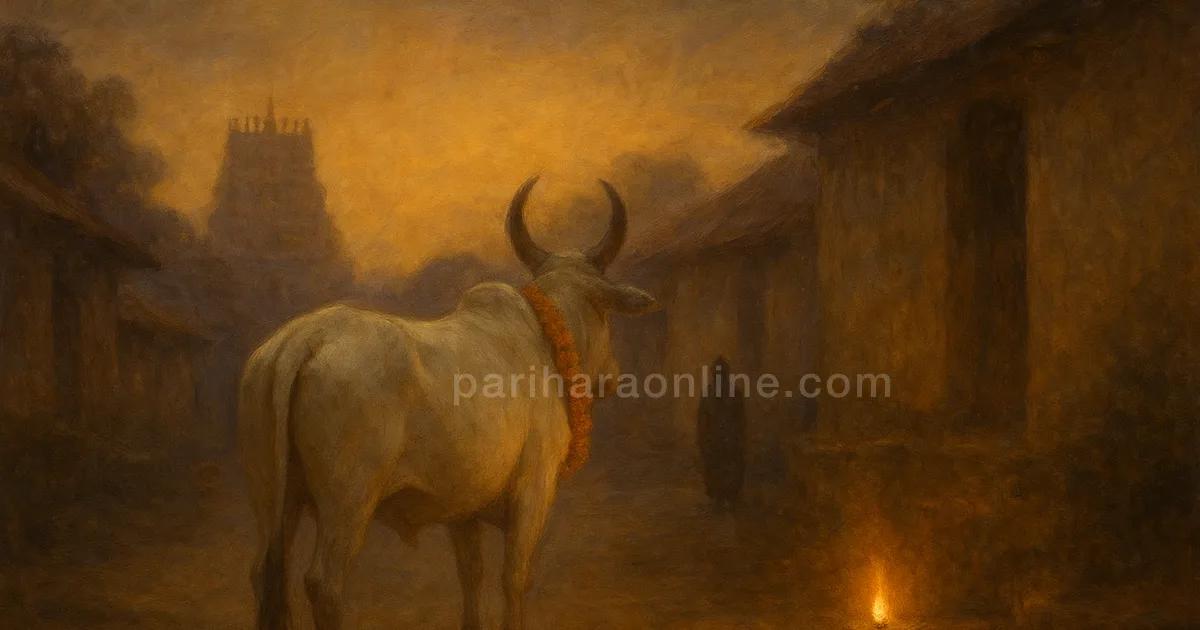
The bull is not just any bull. In South Indian temples it is Nandi, who sits in front of Shiva's shrine, facing the inner sanctum, perfectly still. Nandi is the gatekeeper and the model devotee. He does not rush in. He waits, attentive, for as long as it takes. That is the posture of the sign.
The steadiness tradition describes, and how to practise it
Tradition describes Rishabha natives as patient, loyal and reliable, with a love of comfort, beauty and good food. Its shadow is stubbornness: the bull that will not move even when the field is on fire. You may see yourself in that, or you may not. Either way, the portrait points at something worth practising.
Most of us think steadiness is a mental quality. Mostly it is physical. A mind that is stable rarely lives in a body that eats at random hours, sleeps at random hours and never sits still. Try watching yourself for three days and you will see how much of what you call anxiety or restlessness is simply an irregular body.
The bull's practice is plain. Regular meals, at roughly the same time each day. Regular sleep. Eating slowly, tasting the food rather than scrolling through it. Shukra, the ruling planet, loves good food, and the tradition does not ask you to give it up; it asks you to actually be present for it. Cooking as an offering takes the idea from the plate back to the stove.
Temples and poojas traditionally linked through Shukra
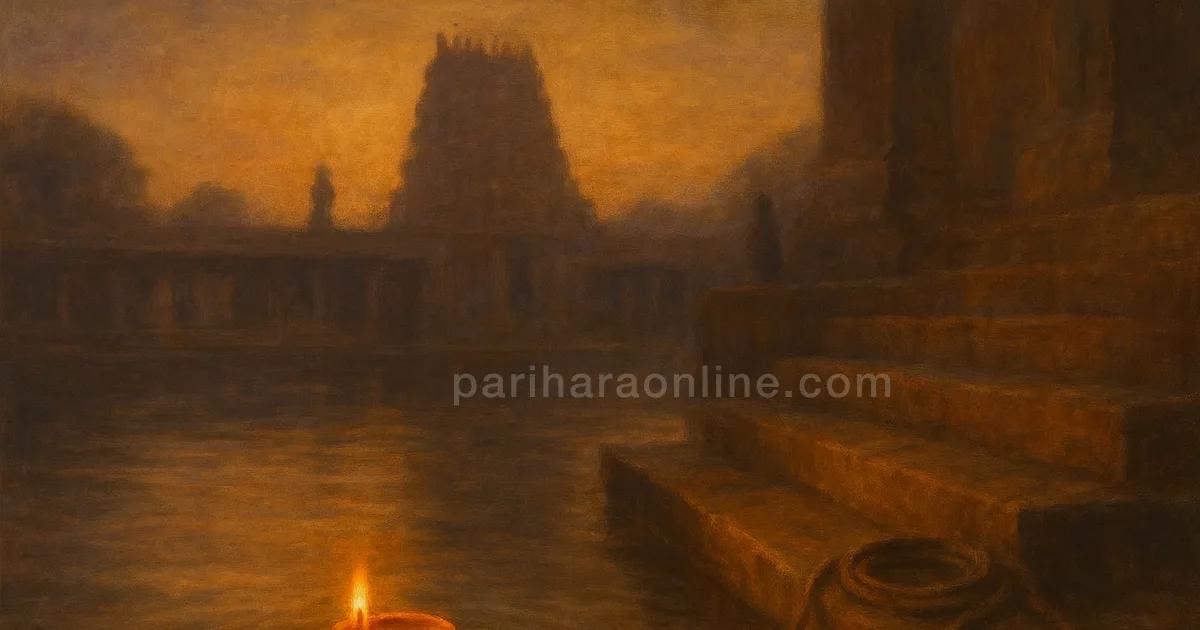
Because Shukra rules Rishabha, the temples linked with the sign are those of Venus. The main one is Kanjanur, the Sukra shrine among the nine Navagraha temples near Kumbakonam, where Shiva is worshipped and Shukra is honoured through him. There is also the guide to Shukra and Friday worship if you want to understand the tradition behind it.
Friday is Shukra's day, and in most South Indian homes Friday belongs to Lakshmi. A lamp on Friday evening, a few flowers, a sweet offering, and a few minutes of quiet in front of it. Nothing elaborate is needed.
The bull's own worship is at Pradosham, the twilight hour on the thirteenth day of each lunar fortnight, when Nandi is bathed and adorned before Shiva is. It is one of the few times in the ritual calendar when the attendant is honoured first. For a Rishabha person, that is a very fitting thing to attend. The piece on the meaning of Pradosham explains the story.
The same breakfast, every day
Eat the same simple breakfast at the same hour each day, slowly, without a screen. Just that. On Friday evening, light a lamp and sit in front of it for five minutes. At the end of the week, notice what steadiness feels like in the body: the shoulders, the breath, the speed of your speech.
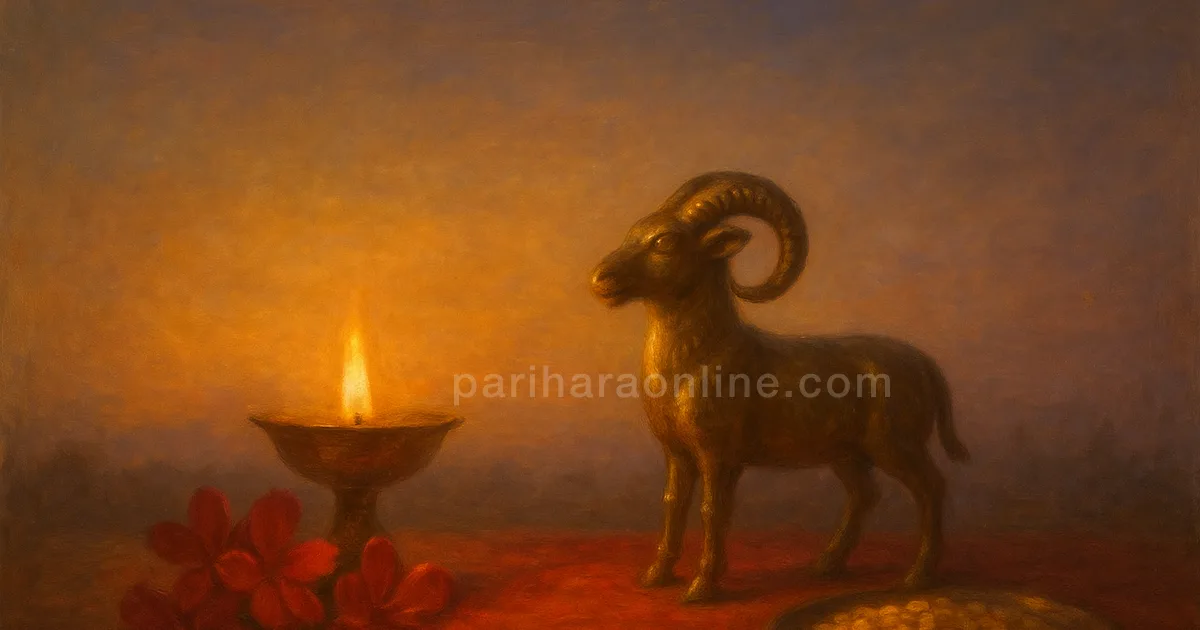
Then look at the neighbours. The sign before, Mesha, the ram, charges; the sign after, Mithuna, the twins, scatters. The bull sits between them, chewing. Borrow its patience for seven days and see what you find.
Questions people ask
Which god should Rishabha rasi people worship?
Because Shukra rules Rishabha, many families worship Lakshmi on Fridays and some visit Kanjanur, the Sukra shrine among the Navagraha temples near Kumbakonam. Since the bull is also Nandi, Shiva worship at Pradosham is popular. There is no single rule; choose a form of the divine you can return to steadily and keep the practice simple.
What are Rishabha rasi characteristics?
Tradition describes people with the Moon in Rishabha as patient, reliable, affectionate, artistic and fond of comfort and good food, with stubbornness or possessiveness as possible shadows. The Moon is exalted in this sign, so emotional steadiness is often mentioned. These Rishabha rasi characteristics are tradition's portrait of the Moon sign, not fixed traits.
Which temple is linked to Rishabam rasi?
Rishabam, the Tamil name for Rishabha, is traditionally linked with Kanjanur, where Shukra, its ruling planet, is worshipped among the Navagraha temples of the Kumbakonam region. Some families also honour the bull through Nandi worship at Shiva temples. These are associations through the ruling planet, not a fixed canonical list, so regional customs vary.
Enjoying this?
To get more Rasi posts like this, subscribe for free.
Written by
Writes about practice: attention, breath, the body, the lamp
Archana writes about ritual as something you do rather than something you believe: the lamp, the breath, the fast, the few quiet minutes before the day begins. Her pieces usually end with a small practice to try for a week and notice what changes.