Dhanishta Nakshatra (Avittam): Rhythm and Wealth
Dhanishta nakshatra, Avittam in Tamil: the Vasus and Mangal, the drum, rhythm and wealth, the Keezha Korukkai temple, and a week of keeping time.
· 4 min read
In short
Dhanishta, Avittam in Tamil, is presided over by the eight Vasus, gods of the elements, with Mangal as its ruling planet and a drum as its symbol.
Tradition links the star with rhythm, music and wealth that grows from steady effort.
Nakshatra temple lists differ for Avittam; one widely shared list names the Brahmajnanapureeswarar temple at Keezha Korukkai.
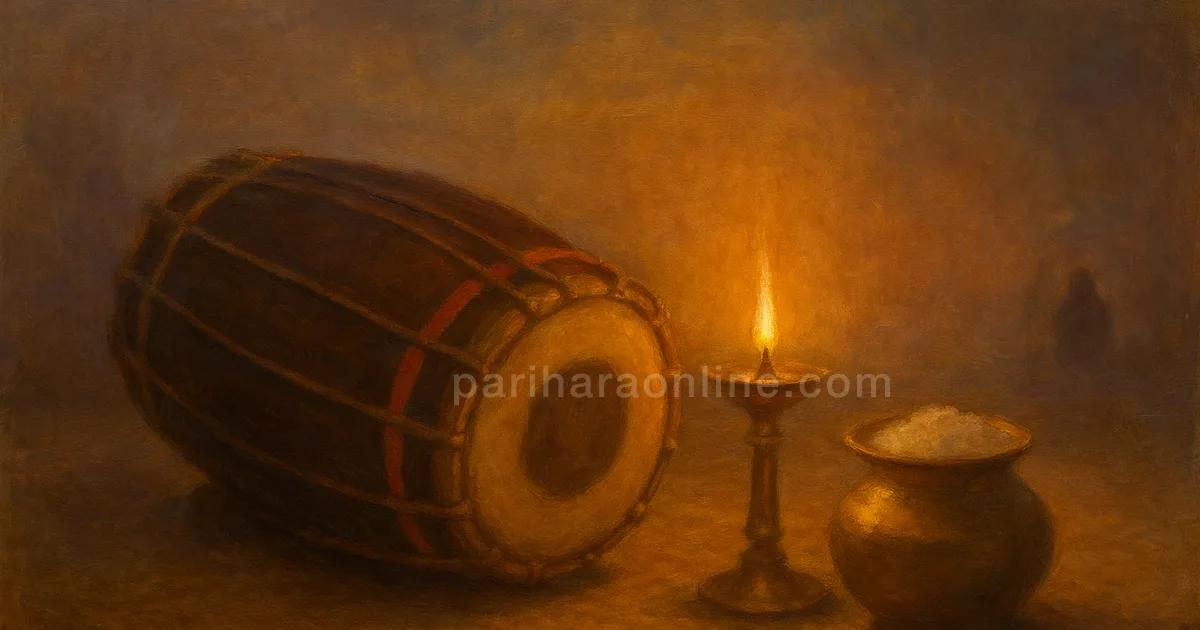
Dhanishta's symbol is a drum, hollow inside and full of sound. Before you think about the wealth this star is said to bring, try something simpler: keep a steady rhythm for a week and see what fills up. Dhanishta nakshatra, called Avittam in Tamil, is the twenty-third of the twenty-seven birth stars, following Shravana, the listener's star. Tradition links it with music, abundance and generosity, and the drum is the best teacher it offers.
Dhanishta nakshatra: the Vasus, Mars and the drum
The Moon crosses twenty-seven star groups, or nakshatras, every month, and wherever it stood when you were born is your birth star. Dhanishta nakshatra is presided over by the eight Vasus, the Vedic gods of the elements, and its adhipati, or ruling planet, is Mangal, Mars. It straddles two signs, its first half in Makara rasi and its second half in Kumbha. Its symbol is a drum: the mridangam of the concert hall, or the small damaru that Shiva shakes in his dance.
Avittam-born people are said to be energetic, generous, musical and good with money. You may recognise yourself in that, or you may not. Offer it the same respect you would give a family story about your character: interesting, sometimes true, never binding. The more useful question is what the drum is trying to show you.
Can rhythm be a practice?
A drum sounds because it is empty. Fill it with rice and it goes dull. Most of us walk around full: of plans, of notifications, of the conversation we had at lunch. Nothing resonates. The star's symbol suggests a different order of things: first the hollow, then the sound.
Look at the Vasus the same way. In one common list, from the Upanishads, they are earth, fire, wind, mid-air, sky, sun, moon and stars. Those are not distant gods. They are what the body is made of and what it depends on every minute: the ground under your feet, the heat of digestion, the breath, the space in the chest. Honouring the Vasus can be as plain as noticing them.
There is a Tamil saying, "Avittathil pirandhal thavittilum thangam": born in Avittam, there is gold even in the ladle. People like to read it as a promise of riches. Read it more slowly. The ladle is the kitchen, the daily grind of cooking and serving. Gold in the ladle is wealth that comes from doing the ordinary thing again and again, in rhythm, until it adds up. That is the Dhanishta idea of abundance.
Rhythm is also one of the oldest ways to steady attention. Many people find that a repeated beat, a chant or even a walking pace settles the breath without effort, because the body likes to entrain to a pulse. If the voice is your instrument, begin with chanting for beginners.
Keezha Korukkai and ten minutes of rhythm
Nakshatra temple lists differ for Avittam. One widely shared list names the Brahmajnanapureeswarar temple at Keezha Korukkai, near Kumbakonam, while others give the shrine a different name, so check locally. If you cannot get there, saying its name on your star day is a perfectly good substitute.
Because Mangal rules the star, Tuesday worship of Murugan, whom the tradition links with Mars, sits naturally with Avittam. A lamp on Tuesday evening, a few lines of the Kanda Sashti Kavasam, or simply a moment before his image is enough. Tuesday worship of Murugan and Durga fills in the rest of the day.
Every month the Moon comes back to Avittam for about a day. On that day, try chanting or drumming for ten minutes at the same hour. Clap on your knees if you have no drum. Before you begin, state what you are doing and why; that small spoken intention is what the tradition calls a sankalpam. The Avittam that falls in your birth month is your star birthday, traditionally a good day for Avittam people to share food, money or time; the panchangam, the traditional almanac, gives the date.
Keep the beat when you are bored
Each morning, walk, chant or clap a steady rhythm for ten minutes. Keep the same pace the whole time. Do not speed up when you get bored; that is exactly when the practice starts. Notice your breath settle into the beat, usually somewhere around the fourth or fifth minute.
Then, on your Avittam day, give a little of what you have. If you are curious how Dhanishta sits among its neighbours, the next star in the series is Shatabhisha, the star of a hundred healers. Empty the drum a little, and see what sound comes out.
Questions people ask
Which temple is associated with Avittam nakshatra?
The widely cited Tamil list of nakshatra temples names the Brahmajnanapureeswarar temple at Keezha Korukkai, near Kumbakonam, as the Avittam nakshatra temple. Some lists give the shrine a different name, so check locally. Avittam-born devotees often visit on their monthly star day, or arrange archana there from afar, and many worship Murugan on Tuesdays.
Who are the Vasus, the deities of Dhanishta nakshatra?
The Vasus are eight Vedic gods of the elements and natural world, often listed as earth, fire, wind, mid-air, sky, sun, moon and the stars. As the presiding deity of Dhanishta nakshatra, the Vasus give the star its themes of abundance and elemental energy. In the Mahabharata, Bhishma is one of the Vasus, born as a man under a curse.
What are Avittam star characteristics?
Tradition describes Avittam-born people as energetic, generous, musical, ambitious and good at managing resources, with restlessness or pride as possible shadows. The Tamil saying about gold even in the ladle reflects the star's reputation for prosperity. These Avittam star characteristics are tradition's descriptions, not guarantees; the full chart and effort matter far more.
Enjoying this?
To get more Nakshatra posts like this, subscribe for free.
Written by
Writes about practice: attention, breath, the body, the lamp
Archana writes about ritual as something you do rather than something you believe: the lamp, the breath, the fast, the few quiet minutes before the day begins. Her pieces usually end with a small practice to try for a week and notice what changes.