Purva Ashadha (Pooradam) Nakshatra: The Waters' Star
Purva Ashadha nakshatra, Pooradam in Tamil: Apas the waters and Shukra, the winnowing fan, the Kaduveli temple, and a week of practice with water.
· 4 min read
In short
Purva Ashadha, Pooradam in Tamil, is presided over by Apas, the divine waters, with Shukra as its ruling planet and a winnowing fan as a symbol.
Tradition calls it the invincible star: water yields, yet nothing stops it for long.
The Akasapureeswarar temple at Kaduveli is traditionally associated with Purva Ashadha nakshatra.
Purva ashadha nakshatra, Pooradam in Tamil, is the only star whose deity is simply water. Before any theory about it, try one thing: notice how differently you feel after a cool bath at dawn compared with a hot shower at noon. That difference, the way water can wake and settle you at the same time, is where this star begins.
Purva Ashadha nakshatra: the waters, Venus and a winnowing fan
Jyotish, the astrology of the Indian tradition, gives each of its twenty-seven nakshatras, or birth stars, a presiding deity and an adhipati, the planet in charge. Pooradam's deity is Apas, the divine waters of the Vedas, praised not as one god but as many mothers. Its adhipati is Shukra, Venus, the planet of beauty, pleasure and refinement. The star lies wholly in Dhanu, the archer.
It has two symbols. The winnowing fan, the flat basket used to toss grain in the air so the wind carries away the husk and the good grain falls back. And the elephant's tusk, strong and hard to break. One separates; the other endures.
Tradition calls Purva Ashadha "the invincible star", and it describes Pooradam-born people as confident, persuasive, proud and hard to defeat in an argument. Hold that lightly; it is a tradition, not a forecast. You may recognise it, or you may find you are gentler than your star.
It follows Mula, the root star. First the root goes down; then comes the water.
Why does a water star feel invincible?
The Rig Veda has several hymns to the Apas. They are called mothers who purify, waters that carry away whatever wrong we have done, waters that heal and give strength. The seers speak of them with unusual tenderness, as if water were the most intimate of the gods.
Water is soft. It takes the shape of any vessel. It yields to your hand. And yet, given time, it wears down stone and cuts valleys through mountains. That is the invincibility of Purva Ashadha: not the strength of the wall, but the strength of what keeps flowing. Varuna, lord of the waters, is the god of the moral order in the Vedas for the same reason. Water finds its level. It always returns to what is true.
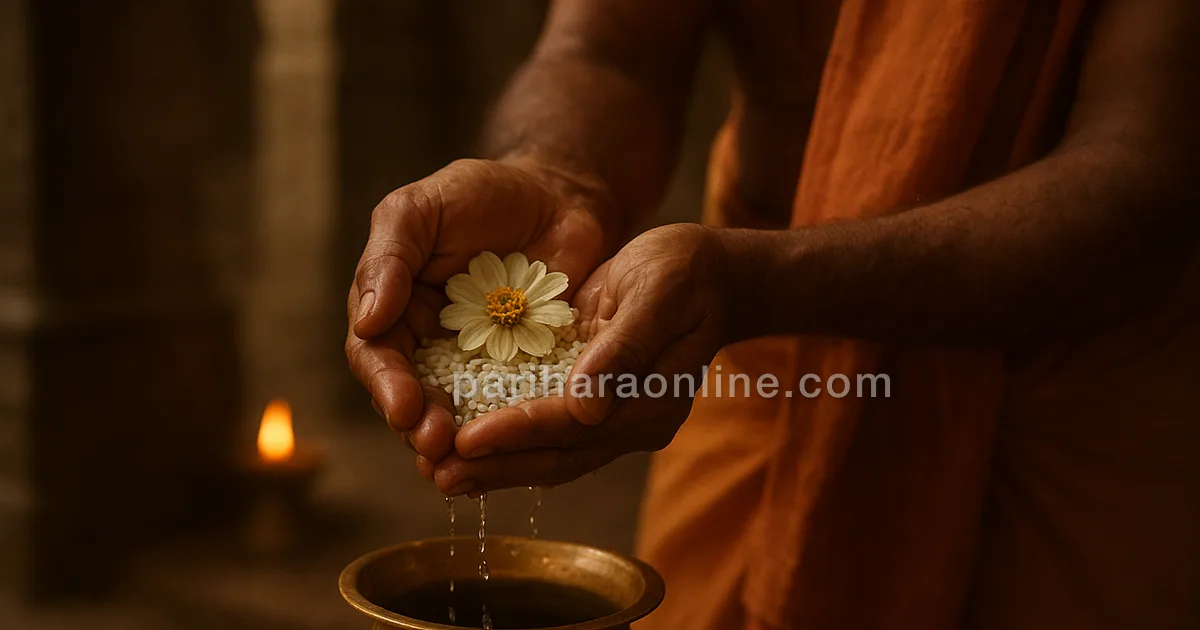
The tradition turned this into daily practice. Snanam, the bath before prayer, is not only about being clean. It marks a boundary: the body is washed and the mind is told that something different is starting. Achamanam, sipping a little water three times from the palm with attention before a ritual, does the same in miniature. Many people find that the pause of achamanam, three small sips, is enough to bring the mind back from wherever it was wandering. A bath feels most like a beginning in the hour before dawn, which is why waking in brahma muhurta suits this star.
Kaduveli and an offering of water
Pooradam's temple, in the Tamil star lists, is the Akasapureeswarar temple at Kaduveli, near Thanjavur. An archana there, the deity's names recited over an offering of flowers, is the usual way to be remembered at the shrine.
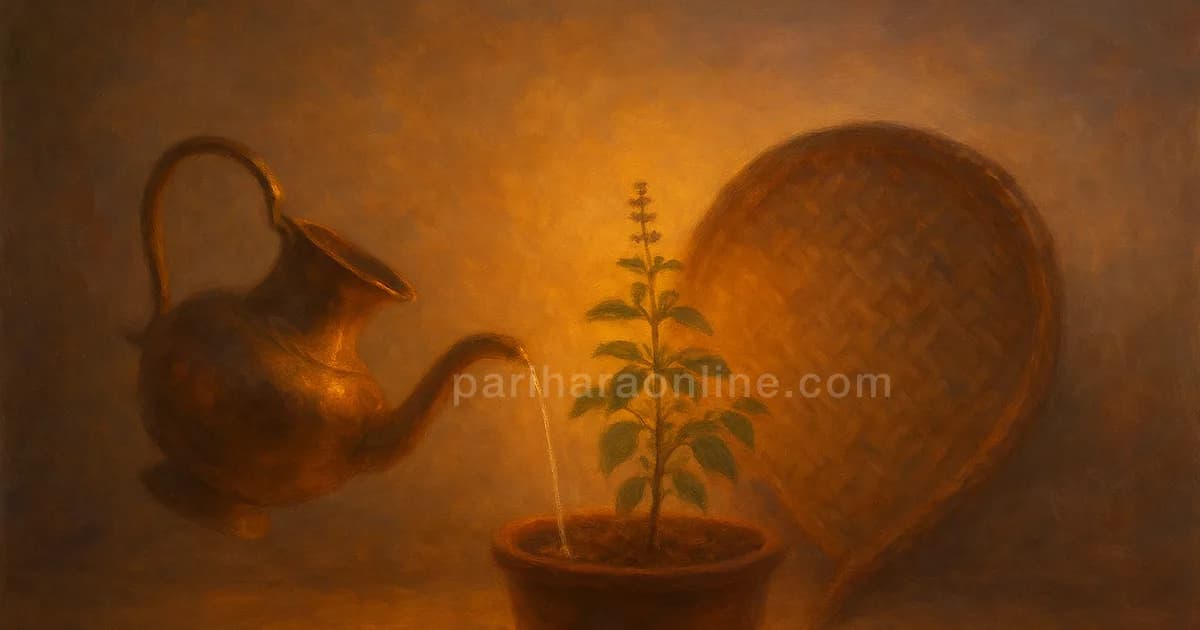
Because Shukra rules the star, Friday evening lamps are common; how Shukra is worshipped covers the details. On the monthly Pooradam day, your janma nakshatra, try a simple offering of water: pour a pot slowly at the foot of a tree or a tulsi plant, and pay attention while you do it.
When Pooradam comes round in your birth month, your star birthday, begin the day with a bath before prayer, taken slowly, with nothing else on your mind. Uttara Ashadha, the star of final victory, which follows, completes the pair.
A glass of water, slowly
Begin each morning by drinking a glass of water slowly. Sit down to do it. Hold nothing else in your hands: no phone, no toothbrush, no list. Feel the temperature of the glass, the first sip, the swallow. It takes about a minute.
Notice how the rest of the morning goes when it begins that way instead of with a screen. Many people find the minute stretches further than it should.
On your Pooradam day, offer a pot of water to a plant, or a glass to a thirsty stranger: a delivery driver, a neighbour working in the yard. Water was the first offering. It is still one of the best.
Questions people ask
Which temple is the Pooradam nakshatra temple?
The widely cited Tamil list of nakshatra temples names the Akasapureeswarar temple at Kaduveli, near Thanjavur, as the Pooradam nakshatra temple. Pooradam-born devotees often visit on their monthly star day, or on Fridays since Shukra rules the star. Arranging archana there from afar is a common choice for those living outside Tamil Nadu.
Who is the deity of Purva Ashadha nakshatra?
The deity of Purva Ashadha is Apas, the divine waters, praised in the Rig Veda as mothers who cleanse, heal and give life. Some traditions also connect the star with Varuna, lord of the waters. That is why water offerings, ritual bathing and prayers at rivers or tanks are favoured by people born under this star.
What are Pooradam star characteristics?
Tradition describes Pooradam-born people as confident, persuasive, proud, loyal and hard to discourage, with stubbornness as a possible shadow. The star's name, the earlier invincible one, gives it that reputation. These Pooradam star characteristics are tradition's portrait rather than prediction; the full chart and a person's own effort shape life far more.
Enjoying this?
To get more Nakshatra posts like this, subscribe for free.
Written by
Writes about practice: attention, breath, the body, the lamp
Archana writes about ritual as something you do rather than something you believe: the lamp, the breath, the fast, the few quiet minutes before the day begins. Her pieces usually end with a small practice to try for a week and notice what changes.