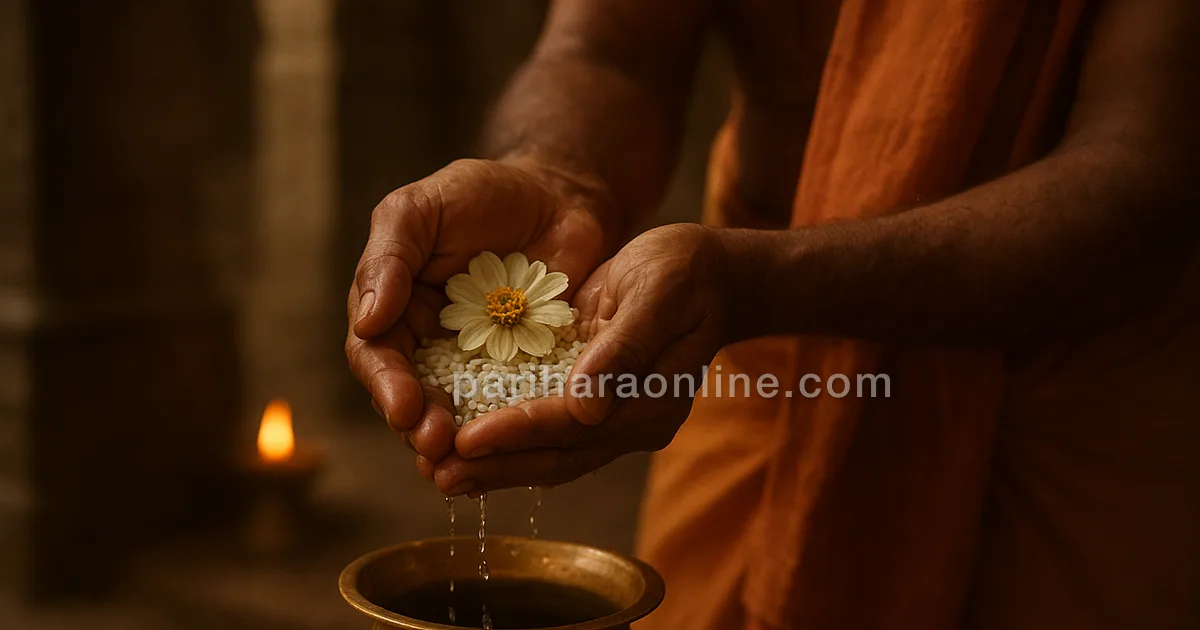
Anuradha Nakshatra (Anusham): Friendship and Devotion
Anuradha nakshatra, Anusham in Tamil: Mitra and Shani, the lotus, friendship as devotion, the Thirunindriyur temple, and a week of loyal practice.
· 4 min read
In short
Anuradha, Anusham in Tamil, is presided over by Mitra, god of friendship, with Shani as its ruling planet and a lotus as its symbol.
Tradition links Anuradha with loyalty, devotion and discipline: love that lasts because it is practised.
The Mahalakshmeeswarar temple at Thirunindriyur, a Shiva shrine, is traditionally associated with Anuradha nakshatra.
Anuradha nakshatra has Mitra for its god, whose name simply means "friend", and Shani for its planet, the slow one. Put them together and you get the star of friendships that last because someone kept showing up. Not the dramatic friendships. The ones built on a weekly phone call, kept for twenty years.
Anuradha nakshatra, the friend's star
Jyotish, the astrology of the Indian tradition, divides the Moon's monthly path into twenty-seven nakshatras, or birth stars, and gives each a guardian god and an adhipati, a planetary ruler. For Anuradha the god is Mitra, one of the Adityas of the Vedas, the god of friendship, agreements and the bonds between people. Its adhipati is Shani, Saturn, the planet of discipline, patience and time. In Tamil it is Anusham, and it lies wholly in Vrischika, the sign of the scorpion, which has its own guide as Vrischika rasi.
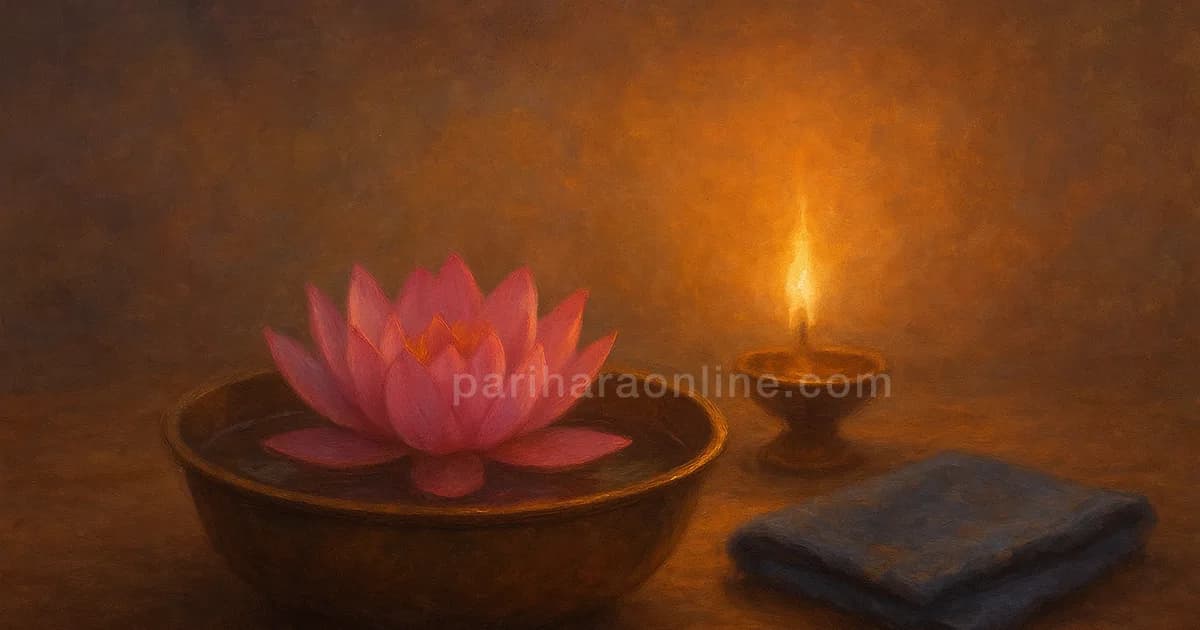
Its symbol is the lotus, the flower that rises clean out of mud. Nobody sees the long slow work underneath the water. They only see the bloom.
People born under Anusham are said to be loyal, devoted, disciplined and good at keeping groups together, the one who organises the reunion and remembers the birthdays. That is the traditional portrait. Loyalty is also a skill, and skills can be practised.
The star follows Vishakha, Murugan's forked star. Vishakha chooses the path. Anuradha keeps walking it.
What makes devotion different from mood?
In the Rig Veda, Mitra is almost always paired with Varuna. Varuna watches over the cosmic order and the moral law. Mitra watches over the bond between people: the handshake, the promise, the friendship that holds a village together. One is law; the other is loyalty.
Shani brings a quality that looks harsh until you understand it: consistency. Saturn is slow. It takes about two and a half years to cross a single sign. It does not do anything quickly, and it does not give up. Anyone who has worried about Shani and the sade sati, the long Saturn period, may find it reads differently once Saturn is seen as a teacher of patience.
Put Mitra and Shani together and you get a precise idea of devotion. Devotion is not a feeling. Feelings come and go; some days you feel close to your practice, some days you feel nothing at all. Devotion is returning anyway. The same prayer, the same friend, the same seat, whether or not you feel like it.
Most people who keep a practice for years will tell you the same thing. The feeling follows the showing up, not the other way round. The Tirukkural, the Tamil book of ethics, gives a whole chapter to friendship and says much the same; what the Tirukkural says about friendship picks out the couplets.
Thirunindriyur, Saturdays and one old friend
The shrine most Tamil star-temple lists give Anusham is the Mahalakshmeeswarar temple at Thirunindriyur, near Sirkazhi, a Shiva shrine where Lakshmi is said to have worshipped. An archana, the chanting of the deity's names while flowers are offered, can be requested there or at any Shiva temple you can reach.
Because Shani rules the star, Saturday evening is a natural time for a sesame-oil lamp. On the monthly Anusham day, your janma nakshatra, try two things: light a lamp at the same hour you always do, and call one old friend. The star's annual return in your birth month, the Tamil star birthday, is a good excuse to gather friends rather than family, or both.
After Anuradha comes Jyeshtha, the eldest's star, which picks up the other side of loyalty: the burden of being the one everyone relies on.
Five minutes, same seat
Sit for five minutes at the same time every day, in the same place. Same chair, same corner, same hour. You do not need to do anything special in those five minutes. Breathe, light a lamp, say a name if you like. The point is not the content. The point is the returning.
Notice the days you do not feel like it, and sit anyway. Those are the days that count.
Then, on your Anuradha day, call someone you have not spoken to in a long while. Do not wait for a reason. Mitra does not need one.
Questions people ask
Which temple is associated with Anusham nakshatra?
The widely cited Tamil list of nakshatra temples names the Mahalakshmeeswarar temple at Thirunindriyur, near Sirkazhi in Mayiladuthurai district, as the Anusham nakshatra temple. It is a Shiva shrine where Lakshmi is said to have worshipped. Anusham-born devotees often visit on their monthly star day, or on Saturdays, or arrange archana there from afar.
Why is Saturn the lord of Anuradha nakshatra?
In Jyotish, the nakshatras are assigned ruling planets in a fixed order, and Anuradha falls to Shani. The pairing is read as discipline serving devotion: friendships and practices that last because they are kept up patiently. Saturday sesame lamps and Hanuman or Shani prayers are common, offered as devotion rather than fear.
What are Anusham star characteristics?
Tradition describes Anusham-born people as loyal, devoted, hardworking, good at building friendships and teams, and able to thrive far from home, with stubbornness as a shadow. The lotus rising from mud expresses that quiet resilience. These are tradition's descriptions of the star rather than certainties; the full chart and one's choices shape life far more.
Enjoying this?
To get more Nakshatra posts like this, subscribe for free.
Written by
Writes about practice: attention, breath, the body, the lamp
Archana writes about ritual as something you do rather than something you believe: the lamp, the breath, the fast, the few quiet minutes before the day begins. Her pieces usually end with a small practice to try for a week and notice what changes.