Vishakha Nakshatra (Visakam): Murugan's Forked Star
Vishakha nakshatra, Visakam in Tamil: Indra-Agni and Guru, the forked branch and archway, Murugan's Vaikasi Visakam birth, and the Panmozhi temple.
· 4 min read
In short
Vishakha, Visakam in Tamil, is presided over by Indra and Agni together, with Guru (Jupiter) as its ruling planet and a forked branch or archway as symbols.
Tamil tradition celebrates Murugan's birth on Vaikasi Visakam, the full moon on this star in Vaikasi.
The Muthukumaraswamy temple at Panmozhi is traditionally associated with Vishakha nakshatra.
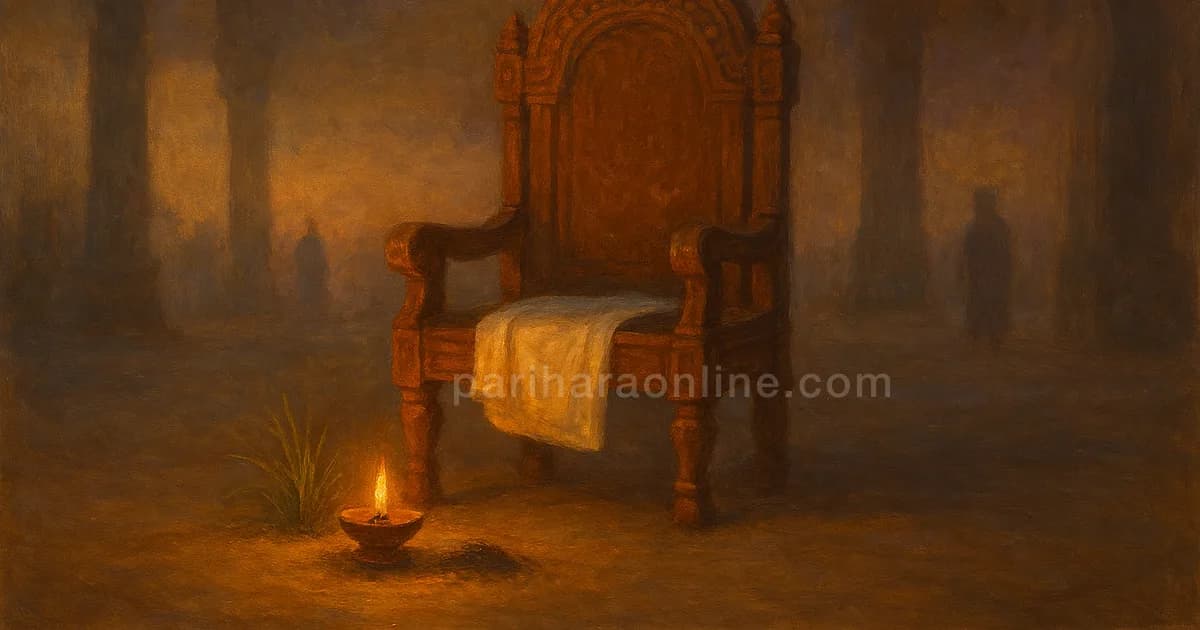
Vishakha means "forked", a branch that splits in two, and Vishakha nakshatra is ruled by two gods at once. Tamil tradition says Murugan was born on this star, and he grew up to hold two roles at once as well: son of Shiva, and his father's teacher. The star and the story are about the same thing, the fork in the road and the moment you choose.
Vishakha nakshatra: two gods, Jupiter and a gateway
Most nakshatras, the twenty-seven star groups the Moon moves through each month, have one presiding god and one ruling planet. Vishakha is unusual: it has two presiding deities, Indra and Agni together, the king of the gods and the god of fire. Its ruling planet is Guru, Jupiter, the planet of wisdom and teaching. In Tamil it is Visakam, and it spans Tula, the scales, and Vrischika, the scorpion.
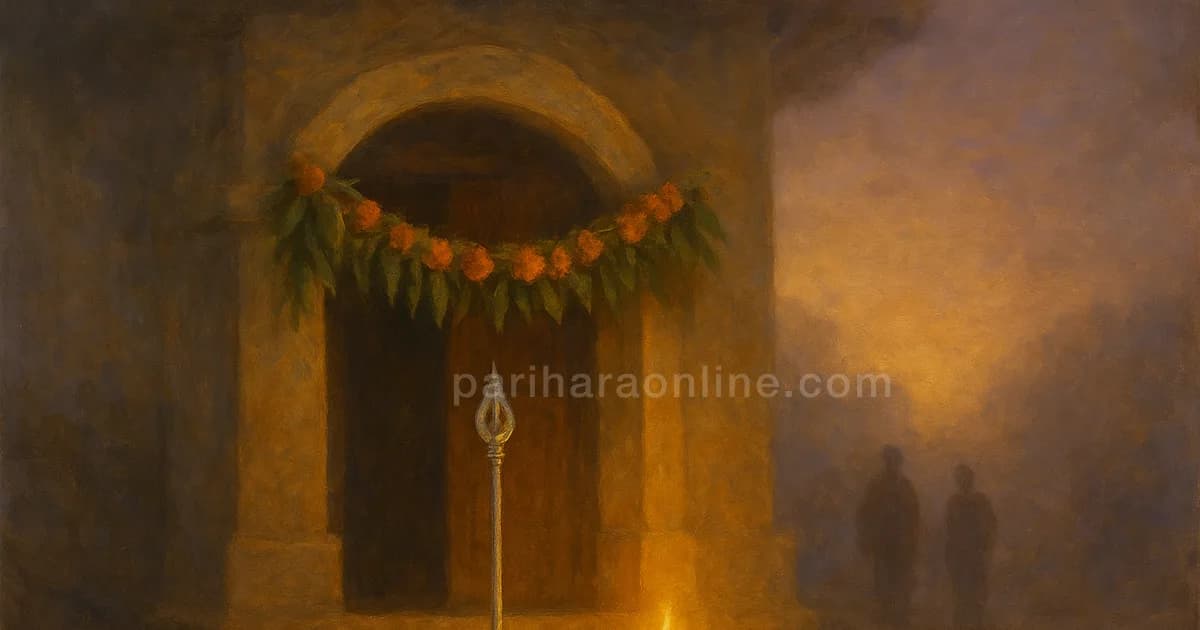
It has several symbols. The forked branch. The triumphal archway decorated with leaves, the kind put up at a wedding or a festival. And the potter's wheel, turning steadily while something takes shape on it. All three are about passage and becoming.
The Visakam-born, in the traditional sketch, are determined and ambitious, able to choose between paths when others hesitate. Then again, plenty of Visakam people dither for a week over a menu, and the star forgives them.
The star follows Swati, the wind's independent star.
What did the boy teach his father at Swamimalai?
The story belongs to the Tamil Skanda tradition, and it is set at Swamimalai, one of Murugan's six abodes. Brahma, the creator, came to visit Shiva's household, and the young Murugan stopped him and asked a simple question: what does Om mean? Brahma, who recites the Vedas all day, could not explain it. The boy imprisoned him for his ignorance and took over creation himself.
Shiva came to sort things out and, half amused, asked his son whether he knew the meaning. Murugan said he did, but that a teaching should be given properly, from teacher to student. So Shiva sat as the student, and the child explained the Pranava, the sacred syllable Om, into his father's ear. From that day Murugan was called Swaminatha, the lord who taught the Lord.
Tamil tradition holds that Murugan was born on Visakam, and his birthday, Vaikasi Visakam, is kept when the full moon falls on this star in the month of Vaikasi. The festival and its processions belong to Vaikasi Visakam and Murugan.
The story says a son became his father's guru. The story is really about the fork where student and teacher change places. Every teacher, if they are lucky, eventually learns something from the person they taught. For a star ruled by Guru, the planet of teachers, that is exactly the right tale.
The Panmozhi temple and the Murugan star day
The temple usually paired with Visakam is the Muthukumaraswamy temple at Panmozhi. An archana there, the priest chanting Murugan's names over flowers, or at your nearest Murugan temple, is the usual way to keep the connection.
Because Guru rules the star, Thursday prayers fit a Vishakha life well; Thursday worship of Guru describes the simple form. On the monthly Visakam day, the janma nakshatra when the Moon returns to your star, many families light a lamp for Murugan. The star birthday, when Visakam returns in the birth month, is often kept the same way.
Swamimalai and Palani are the abodes many Visakam families hold dear. Palani has a guide of its own: it is where the young god stands alone on the hill with only a staff. The next star, Anuradha, the star of friendship, follows naturally from a star about choosing: once you have chosen, you have to keep showing up.
Walking through the archway
The archway is Vishakha's symbol for a reason. You pass through an archway; you do not live in it. People put them up for weddings and festivals precisely because they mark a crossing.
On your star day, name one goal you have been standing under too long, admiring the decorations. A course you keep planning to start. A conversation you keep rehearsing. A change you keep describing to friends. Then take the first step through.
Questions people ask
Why is Vaikasi Visakam important for Murugan?
Tamil tradition holds that Murugan was born on Visakam in the month of Vaikasi, usually May or June, around the full moon. Vaikasi Visakam is therefore celebrated as his birthday, with abhishekam, processions and kavadi at Murugan temples such as Tiruchendur and Palani. Devotees often fast in the morning and offer milk, panchamritam and red flowers.
Which temple is associated with Visakam nakshatra?
The widely cited Tamil list of nakshatra temples names the Muthukumaraswamy temple at Panmozhi, in southern Tamil Nadu, as the Visakam nakshatra temple. It is a Murugan shrine, fitting the star's link with Murugan's birth. Visakam-born devotees often visit on their monthly star day, or arrange archana there from afar.
What are Vishakha star characteristics?
Tradition describes Vishakha-born people as ambitious, focused, energetic and persuasive, often facing clear choices between two paths, with impatience or single-mindedness as shadows. The forked branch and archway symbols capture that. These Vishakha star characteristics are tradition's descriptions, not destiny; the full chart and a person's choices matter far more.
Enjoying this?
To get more Nakshatra posts like this, subscribe for free.
Written by
Reads the old stories for what they still mean
Hariharan writes about the myths, symbols and festival stories that most of us grew up hearing but were rarely asked to think about. He tells the story first, then asks what it is really about, and leaves the conclusion to you.