Sudarshana Homam Meaning: The Wheel That Protects
Sudarshana homam benefits explained: the story of Vishnu's spinning discus, what the fire ritual invokes for protection, and when families choose it.
· 4 min read
In short
Sudarshana homam is a fire ritual invoking Vishnu's discus, the Sudarshana chakra, traditionally for protection and removing obstacles.
Families often choose it for new homes, recurring setbacks, disputes or clearing a heavy atmosphere.
The name means auspicious sight, pointing to clarity as protection.
Sudarshana homam meaning, in one line: it is a fire ritual that invokes Vishnu's spinning discus, the Sudarshana chakra, as a protector, traditionally to clear obstacles, ill will and a heavy atmosphere from a person or a home. The stories say the discus never misses its mark. Yet its name does not mean "sharp" or "swift". It means "beautiful sight". It looks like a story about a weapon. It is closer to a story about protection that begins with seeing clearly.
Sudarshana homam meaning: the story of the chakra
The name joins su, good or auspicious, with darshana, sight. That is an odd name for a blade, until you notice how the discus behaves in the stories.
In the Bhagavata Purana, an elephant king named Gajendra is seized by a crocodile while drinking at a lake. He struggles for a very long time, relying on his strength and his herd. Only when his strength is gone does he lift a lotus with his trunk and call out to Vishnu. The discus arrives and cuts the crocodile's grip. Vishnu rescues an elephant, but what the story is doing is marking the moment we stop pretending we can manage alone.
Another tale in the same Purana is sharper. King Ambarisha, a quiet devotee, is cursed by the short-tempered sage Durvasa over a point of etiquette while breaking his fast. The discus rises to defend the king and pursues Durvasa through every world, and no god will shelter the sage. Only when Durvasa returns and asks the king's forgiveness does the chakra rest. The protection here is not violence. It is a kind of clarity that follows anger until anger sees itself.
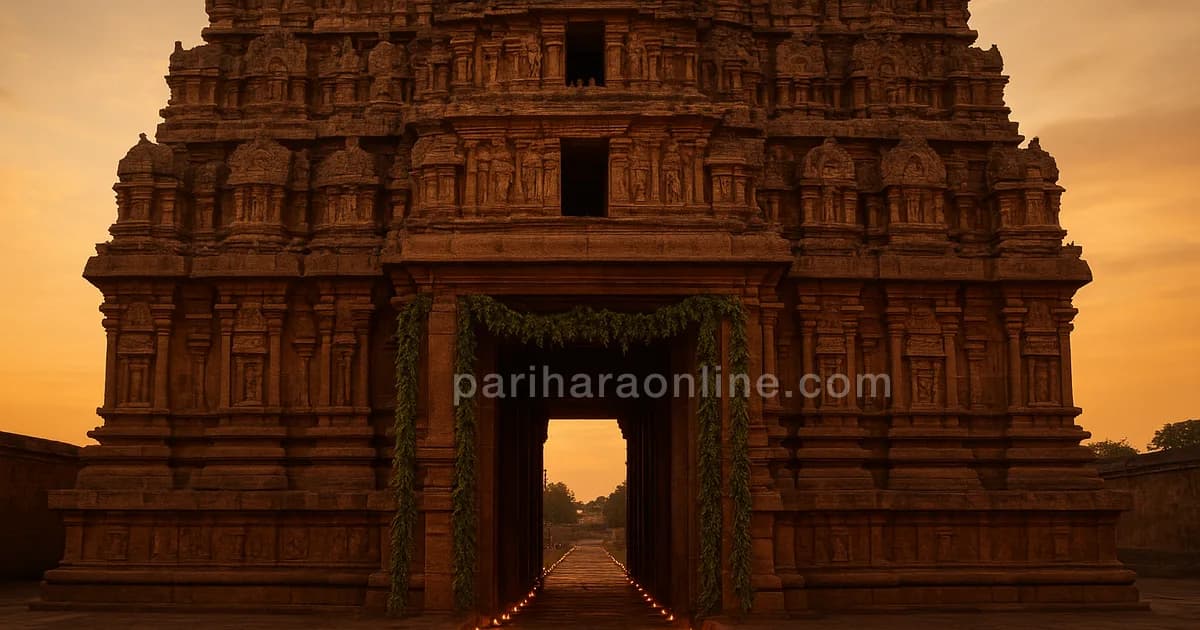
Over time Sudarshana became a deity in his own right. In many South Indian Vishnu temples he is worshipped as Chakrattalvar, shown with sixteen arms carrying weapons, often with Narasimha carved on the reverse of the same image. Devotees walk around him to see both faces.
Sudarshana homam benefits in tradition
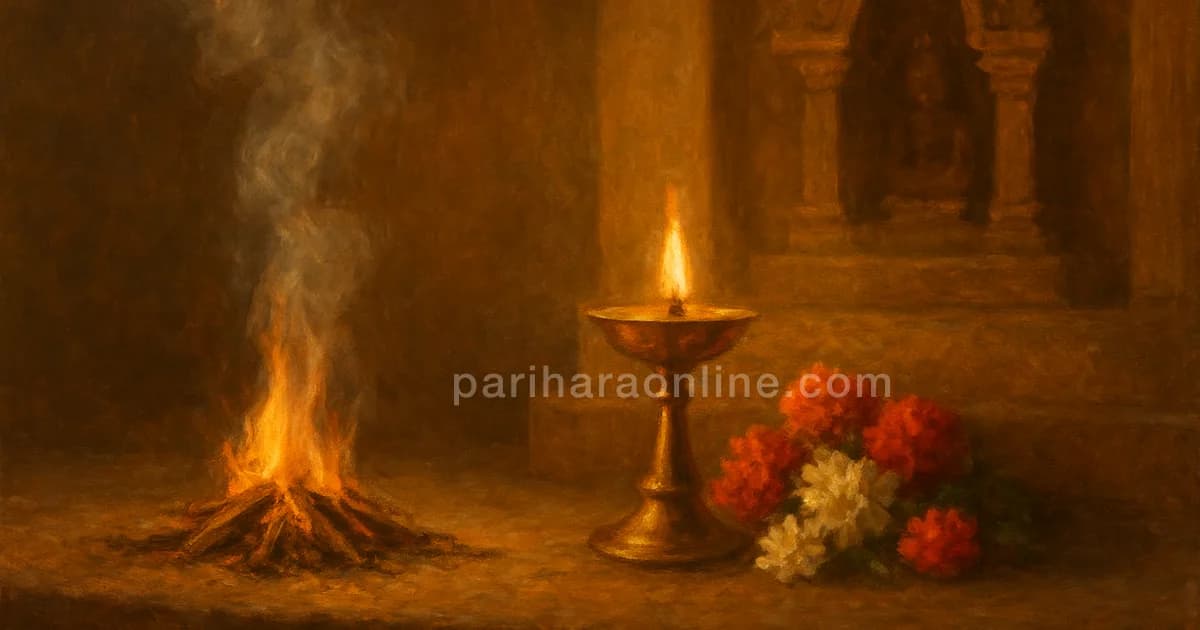
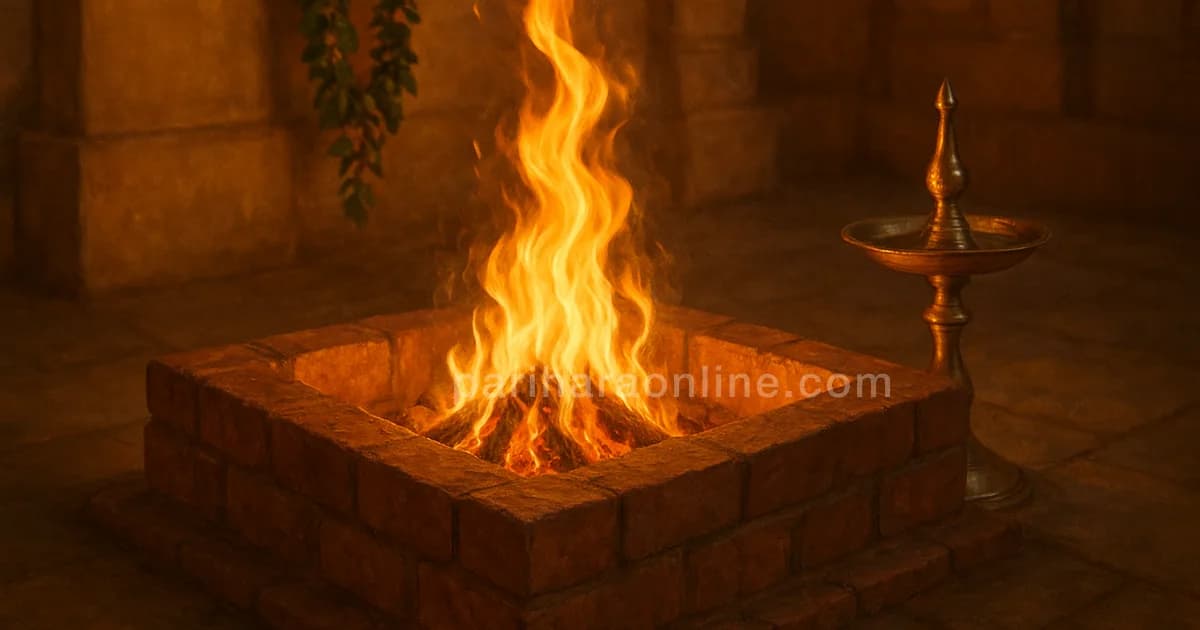
A homam is a Vedic fire ritual in which offerings are placed into a consecrated fire with mantras; if the form is new to you, start with what a homam is. In the Sudarshana homam, the priest invokes the chakra through its mantra and offers ghee, grains and herbs into the fire, followed by a final full offering.
In tradition, families turn to it for protection from harm and ill will, for removing obstacles that keep returning, and for support during disputes, business troubles or a long illness. It is also used to purify a new home or workplace. Like every ritual, it is offered as prayer and support, never as a guarantee. The fire does not fix the lawsuit. It gives the people inside the lawsuit a different place to stand.
When do families choose Sudarshana homam?
Common moments include moving into a new house, recovering from illness, facing a court matter, or starting a venture after a run of setbacks. Some families book it when the home simply feels heavy, when arguments keep flaring and nobody can say why.
How does it differ from other homams? A Ganapathy homam invokes Ganesha, the remover of obstacles, and is usually performed first before any beginning; the reason is told in why Ganesha comes first. A Navagraha homam addresses the nine planetary influences of Jyotish, the traditional astrology. The Sudarshana homam is chosen when the need is protection and the dispelling of opposition. Families sometimes combine them, beginning with Ganapathy. If you are unsure whether a fire ritual or a simpler worship suits you, this comparison of a homam and a puja helps, and for those living abroad, how an online puja works from the USA explains what happens when a priest performs it on your behalf.
Try a short prayer before a difficult task
Whether or not you ever book a homam, you can borrow the chakra's meaning. Before you begin something hard, a difficult conversation or a day you are dreading, sit for a moment and say a short Sudarshana prayer, even just "Om Sudarshanaya namah", three times. Then notice what you see. Often the fear was sitting where the facts should have been. Protection, the story suggests, starts when the eye clears.
Questions people ask
What are the benefits of Sudarshana homam?
In tradition, Sudarshana homam is performed for protection from harm, removal of obstacles and negative influences, and support during legal, business or health difficulties. Devotees also do it to purify a new home or workplace. Like all rituals, it is offered as prayer and support; it is not a guarantee of any particular outcome.
What does the Sudarshana chakra represent?
The Sudarshana chakra is the spinning discus held by Vishnu. Its name combines su, good, and darshana, sight, so it stands for auspicious vision. In stories from the Puranas it rescues devotees like Gajendra and cuts through evil. Symbolically it represents time, order and the clarity that cuts through confusion.
Who should perform Sudarshana homam?
Anyone facing repeated obstacles, conflicts, fears or a sense of heaviness at home or work may choose Sudarshana homam. It is popular before moving into a new house, starting a business, during court matters or after illness. An astrologer or priest can suggest it alongside other remedies, but devotion to Vishnu is the only real requirement.
How is Sudarshana homam different from Ganapathy homam?
Ganapathy homam invokes Ganesha to remove obstacles before beginnings and is usually done first in any series of rituals. Sudarshana homam invokes Vishnu's discus for protection and dispelling negativity or opposition. Families sometimes do both, starting with Ganapathy. The choice depends on whether the need is a new start or protection.
Enjoying this?
To get more Sudarshana Homam posts like this, subscribe for free.
Written by
Reads the old stories for what they still mean
Hariharan writes about the myths, symbols and festival stories that most of us grew up hearing but were rarely asked to think about. He tells the story first, then asks what it is really about, and leaves the conclusion to you.