Vasant Panchami: Saraswati, Yellow and Spring
Vasant Panchami significance: why Saraswati is worshipped at the start of spring, why yellow, and the story of the goddess who gave the silent world its voice.
· 4 min read
In short
Vasant Panchami, the fifth day of the bright half of Magha, welcomes spring and honours Saraswati, goddess of speech, music and learning.
People wear yellow for the mustard fields and spring sun, place books and instruments before Saraswati, and some children write their first letters.
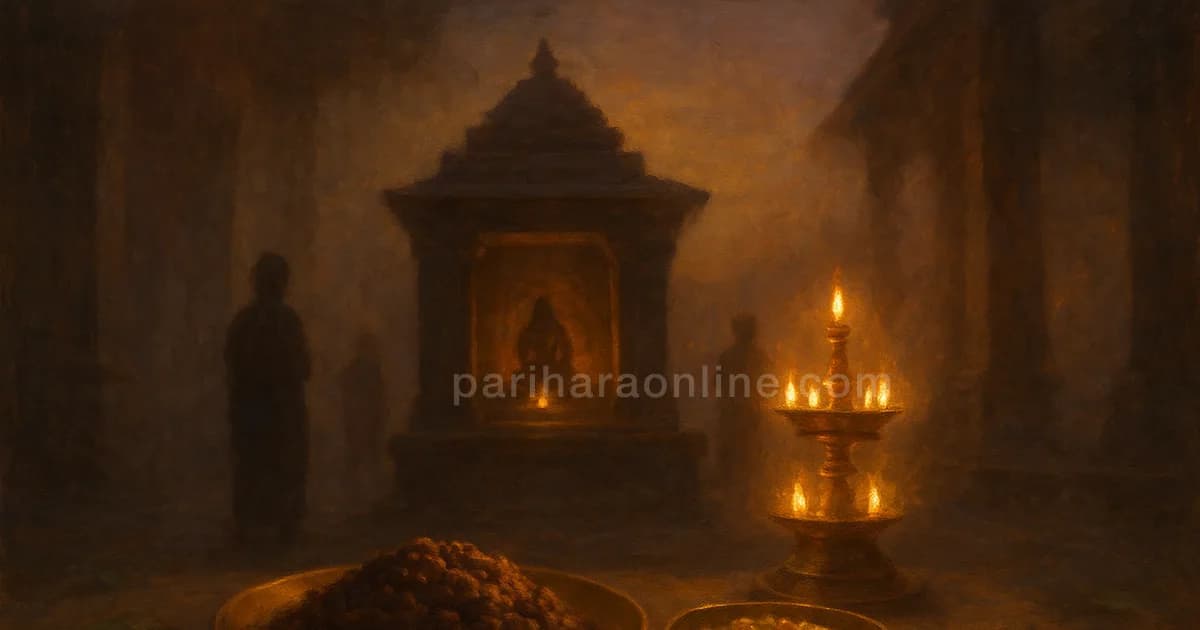
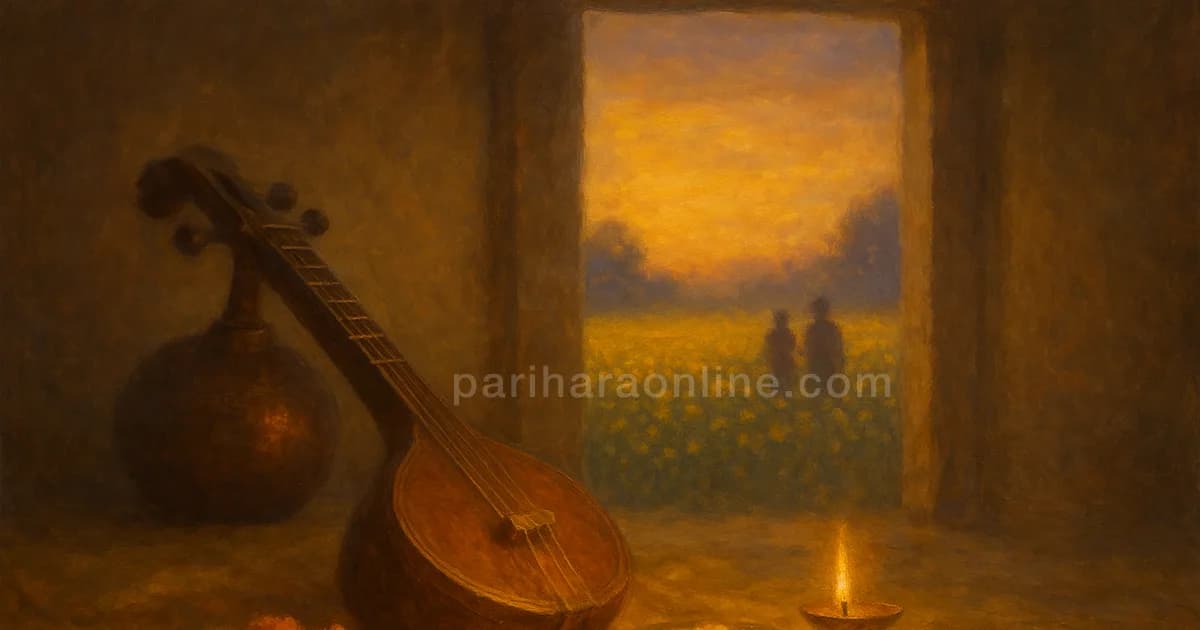
In one telling, Brahma finished making the world and found it silent. Nothing sang, nothing spoke; the rivers lay still. Then Saraswati appeared with her veena, played one note, and the rivers began to murmur, the birds to call, and people to speak. The story is about creation. The festival is about the first sound of spring. That is Vasant Panchami significance in a sentence: a day for the goddess of speech and learning, kept just as the land begins to wake.
Vasant Panchami significance: spring and speech
Vasant Panchami falls on the fifth day of the bright half of Magha, usually late January or February. Vasant means spring, and panchami, the fifth lunar day. In North India the cold is starting to break, and the mustard fields turn yellow almost overnight. In Bengal and much of the North, the day is Saraswati Puja, when schools, homes and neighbourhood clubs set up images of the goddess. In Punjab it is Basant, and the sky fills with kites.
The two ideas belong together. Spring is the season when the world starts speaking again after winter. Saraswati is the goddess of speech. The festival does not need to explain the connection; the fields make it.
Why wear yellow?
On Vasant Panchami, people wear yellow, cook yellow and decorate in yellow. The obvious reason is the mustard flower. But yellow is also the colour of ripening grain and of the sun gathering strength after winter. Sweets turn saffron-yellow too: kesari bhaat, sweet rice coloured with saffron or turmeric, boondi and halwa.
In older Sanskrit poetry, spring belongs to Kamadeva, the god of desire, whose closest companion is Vasanta, spring personified. Poets describe him arriving with mango blossom for arrows and the hum of bees for a bowstring. Some regions still remember Kama and his wife Rati on this day. It seems strange to put the god of desire next to the goddess of learning, until you notice that both are about longing: one for another person, one for understanding. Spring stirs both.
Saraswati, books and first letters
On the day, families place books, pens, notebooks and musical instruments before an image of Saraswati and do not use them until the puja is over. Students ask her blessing before exams; artists before a performance. In parts of India, small children write their first letters on this day, tracing them in rice or on a slate, much as South Indian families do at Vidyarambham on Vijayadashami.
Look at how Saraswati is shown. She wears white. She sits by water, on a lotus, with a white swan beside her. The swan, in the old poetry, can separate milk from water, and so stands for discernment: the ability to tell what matters from what does not. She holds a book, a rosary and a veena. Nothing in the image is about marks or ranks. It is all about attention, practice and judgement.
That is worth saying to a child before an exam. The goddess is not a score-raising service. What learning asks is attention, not only prayers for marks. A Saraswati mantra for students works best as a way to settle the mind before study. South Indian families also honour knowledge through Hayagriva, whose festival falls on Avani Avittam; the pairing is explained in Saraswati and Hayagriva.
A river before a goddess
Saraswati is a river before she is a goddess. In the Rig Veda she is praised as the best of rivers, the best of mothers, a great flowing body of water in the north-west. Only later does the river become the goddess of speech and knowledge, as though the old poets understood that knowledge, like water, has to keep moving.
Knowledge that stops moving stops being knowledge. It becomes a certificate. The winter festivals around this one, from Arudra Darshan's cosmic dance to the sun's turn at Ratha Saptami, are all about motion, and even the household wedding of Tulsi Vivah marks a season turning; this one is about the motion of the mind.
So on Vasant Panchami, pick up the instrument you set down. The guitar in the cupboard, the language app you abandoned, the book with a bookmark still in chapter three. Play one note. That is how, in the story, the whole world began to speak.
Questions people ask
Why do people wear yellow on Vasant Panchami?
Yellow on Vasant Panchami echoes the mustard fields flowering across North India at the start of spring, and the sun growing warmer. It is also linked to Saraswati and to ripening and hope. Families wear yellow clothes, offer yellow flowers, and cook yellow foods such as saffron rice, kesari and boondi laddoos.
How is Saraswati puja done on Basant Panchami?
Saraswati puja on Basant Panchami is simple: clean the puja area, place a picture of Saraswati, and set books, pens and musical instruments before her. Offer white and yellow flowers, a lamp and a yellow sweet, and chant a Saraswati prayer. Students often refrain from studying that day as a mark of respect, then begin again the next morning.
What is the Vasant Panchami story?
One popular story says that after Brahma created the world, it was silent and lifeless. He sprinkled water from his kamandalu, and Saraswati appeared holding a veena. When she played, all beings found their voice, rivers began to flow with sound, and wind rustled the trees. Vasant Panchami is celebrated as her appearance day in many traditions.
Enjoying this?
To get more Vasant Panchami posts like this, subscribe for free.
Written by
Reads the old stories for what they still mean
Hariharan writes about the myths, symbols and festival stories that most of us grew up hearing but were rarely asked to think about. He tells the story first, then asks what it is really about, and leaves the conclusion to you.