Hasta Nakshatra (Hastham): The Star of Skilled Hands
Hasta nakshatra, Hastham in Tamil: Savitr and Chandra, the open hand, the Vedic tale of Savitr's golden hand, and the Komal temple for the star.
· 4 min read
In short
Hasta, Hastham in Tamil, is presided over by Savitr, the Sun as awakener, with Chandra as its ruling planet and an open hand as its symbol.
Tradition links Hasta with skill, craft and giving, and Savitr is the god addressed in the Gayatri.
The Krupakoopareswarar temple at Komal is traditionally associated with Hasta nakshatra.
The god of Hasta once lost his hand at a sacrifice, and the other gods gave him a golden one. That is the old story behind Hasta nakshatra, the star of the hand. The story says the hand was replaced. The story is really about what hands are for.
Hasta nakshatra: Savitr, the Moon and an open palm
Every nakshatra, each of the twenty-seven birth stars, has a god who presides over it and a planet that rules it. Hasta's god is Savitr, the Sun in one particular role: the one who stirs all things into motion, who wakes the world each morning and sends it about its business. Its ruling planet is Chandra, the Moon. In Tamil it is Hastham, and it lies wholly in Kanya, the maiden; Kanya rasi covers the wider sign.
The symbol is a hand, sometimes drawn as an open palm, sometimes as a closed fist. The open palm gives. The closed fist holds a tool. Between them they cover most of what hands do: craft, skill, giving, work.
Grandmothers expect a Hastham child to be good with their hands: skilful, witty, practical, the one who gets things done. Many are said to be natural makers and menders. There are clumsy Hastham people too; the star does not check.
The star comes after Uttara Phalguni, the star of promises. The promise is made; now the hands do the work.
Why does the Sun god have golden hands?
A story in the Brahmanas, the ritual texts that explain the Vedic sacrifice, tells of a sacrifice that went wrong. Several gods were injured as the offering was handled carelessly. Savitr's hand was cut off. The gods, needing him to keep stirring the world, gave him a hand of gold in its place.
Long before that story, the Rig Veda already calls Savitr "golden-handed", hiranyapani. In one hymn he rises at dawn and stretches out his golden arms to wake everything that moves and everything that rests. It is a beautiful picture: the Sun not as a ball of fire but as someone reaching out his hands to get the day started.
The most famous prayer in the tradition is addressed to this same god. The Gayatri mantra is a prayer to Savitr, asking that his light stir our understanding the way it stirs the world. Read the meaning of the Gayatri mantra with that golden hand in mind, and the words change colour.
Put the two stories together. The hand in the old sacrifice was cut off by carelessness. It came back as gold. The golden hand is the one that wakes others. The story is really saying that skill is not something you own. It is something that passes through the hands, from the Sun to the potter to the cook to the child learning to tie a knot.
Temple, star day and a Surya connection
The temple traditionally linked with Hasta is the Krupakoopareswarar temple at Komal, near Kuthalam. Krupa means compassion, and the name suggests a well of it. Devotees born under it sometimes arrange an archana there, flowers offered as the deity's names are recited.
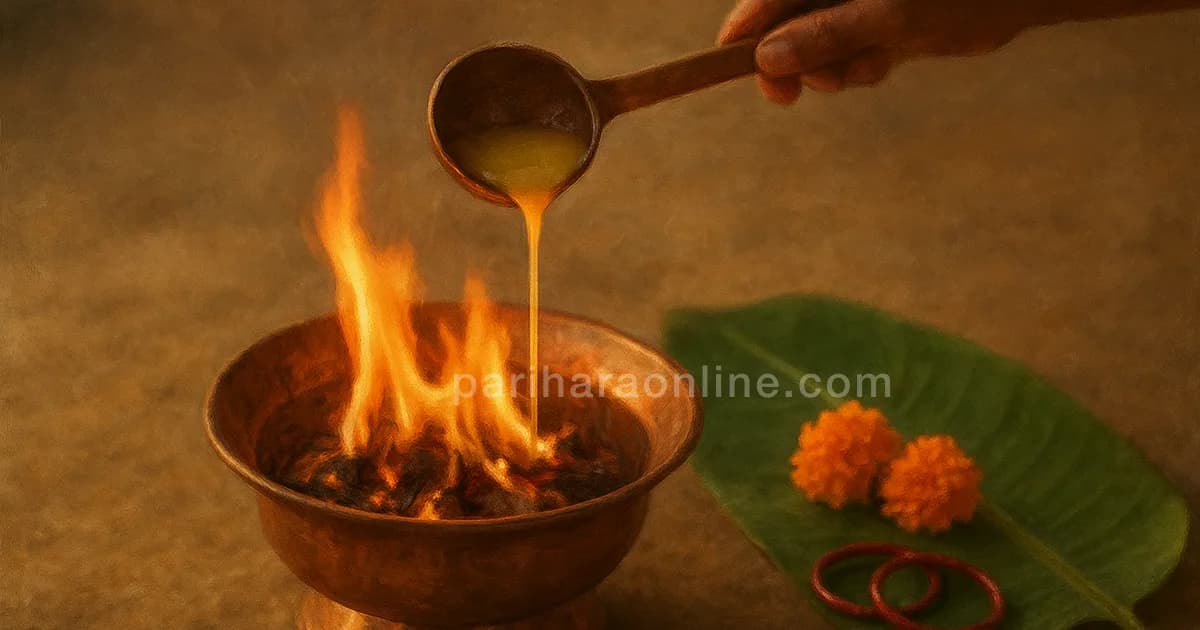
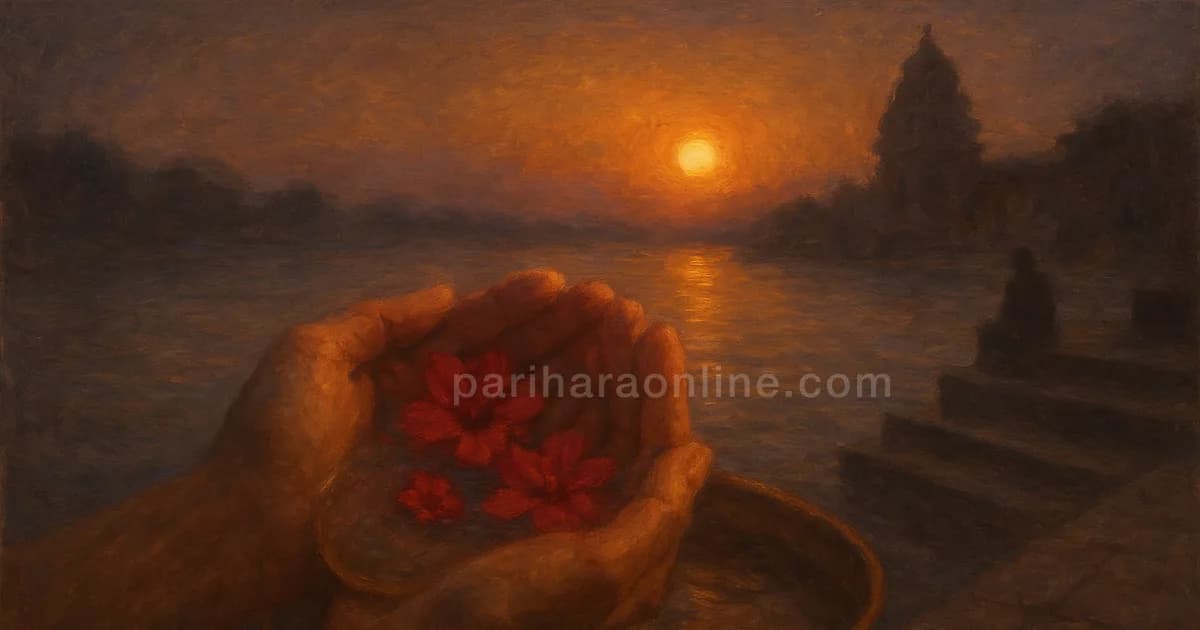
Because Savitr is the Sun, a Sunday practice fits the star: a few rounds of Surya namaskaram, the sun salutation, or a simple arghya, water poured towards the rising sun from cupped hands. The salutation carries a meaning of its own, explained in what the Surya namaskar means.
On the monthly Hastham day, your janma nakshatra, try making something by hand to offer: a small garland, a kolam at the door, a sweet. Hastham's yearly return in your birth month is a good day to give something handmade instead of something bought. The next star, Chitra, the builder's bright star, takes the idea of craft even further.
Give with the hand
On your Hasta day, give with the hand, not the phone. Cook a meal. Mend a torn shirt. Write a card with a pen. Carry someone's groceries up the stairs. Notice how different it feels from tapping a button, even when the button is kinder than it looks.
The golden hand in the story was never for keeping. It was only ever for giving.
Questions people ask
Which temple is the Hastham nakshatra temple?
The widely cited Tamil list of nakshatra temples names the Krupakoopareswarar temple at Komal, near Kuthalam in Mayiladuthurai district, as the Hastham nakshatra temple. The name means the Lord who is an ocean of grace. Hastham-born devotees often visit on their monthly star day, or arrange archana there from afar when travel is not possible.
Who is Savitr, the deity of Hasta nakshatra?
Savitr is a Vedic form of the Sun, the one who rouses all beings to activity at dawn and settles them at dusk. The Rig Veda calls him golden-handed, and the Gayatri mantra is addressed to him. As the presiding deity of Hasta, Savitr gives the star its themes of skill, work and the hands that carry light into action.
What are Hastham star characteristics?
Tradition describes Hastham-born people as skilled with their hands, clever, humorous, practical, hardworking and good at crafts or healing work, with restlessness as a possible shadow. These Hastham star characteristics come from the hand symbol and the Moon's rulership. They are traditional descriptions, not certainties, and the full chart matters much more than a single star.
Enjoying this?
To get more Nakshatra posts like this, subscribe for free.
Written by
Reads the old stories for what they still mean
Hariharan writes about the myths, symbols and festival stories that most of us grew up hearing but were rarely asked to think about. He tells the story first, then asks what it is really about, and leaves the conclusion to you.