Ayushya Homam: Celebrating a Birthday by the Star
Ayushya homam is a fire ritual for long life, done on the birthday by birth star. Why tradition celebrates the nakshatra birthday and what the homam invokes.
· 4 min read
In short
Ayushya homam is a Vedic fire ritual praying for long life and good health, traditionally done on a person's birthday by birth star.
The star birthday falls when the Moon returns to your birth nakshatra in your birth month, so it moves on the solar calendar.
Families often perform it for a child's first birthday and for milestone birthdays.
Ayushya homam is a fire offering for a long and healthy life, traditionally performed on a person's star birthday, the day the Moon returns to their birth nakshatra. Which raises a question worth asking: why would anyone need a second birthday? You already have one, printed on your passport, fixed by the Sun. The story of the star birthday says there is another one in the sky, and that it moves. Underneath, it is about how differently two calendars count a life.
Ayushya homam: a fire offering for a long life
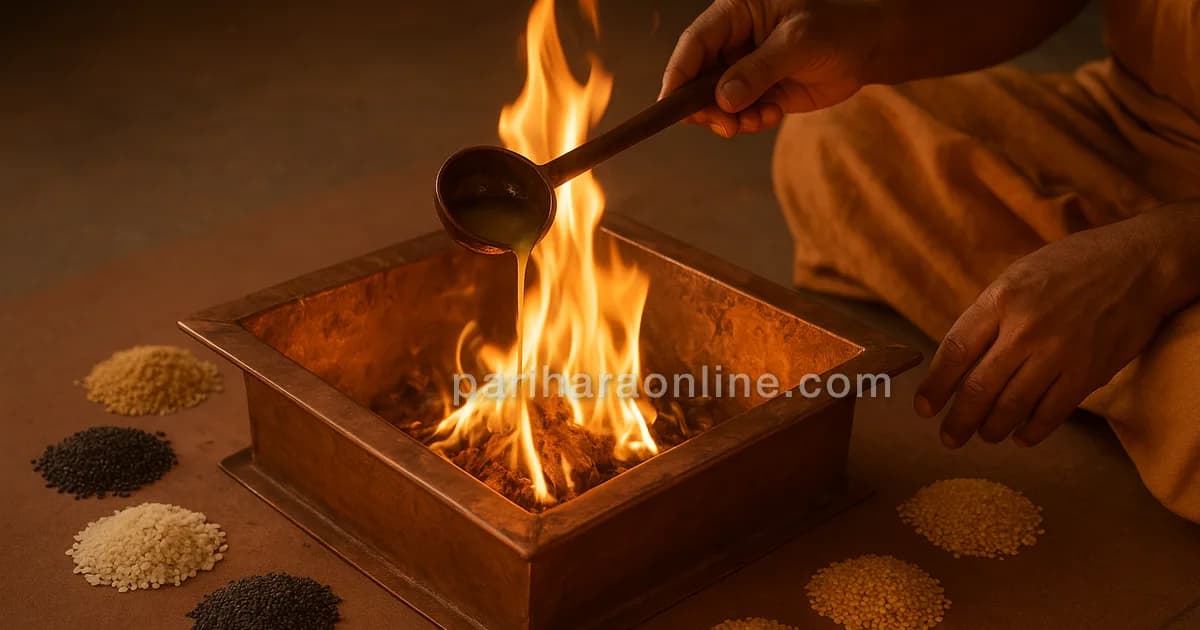
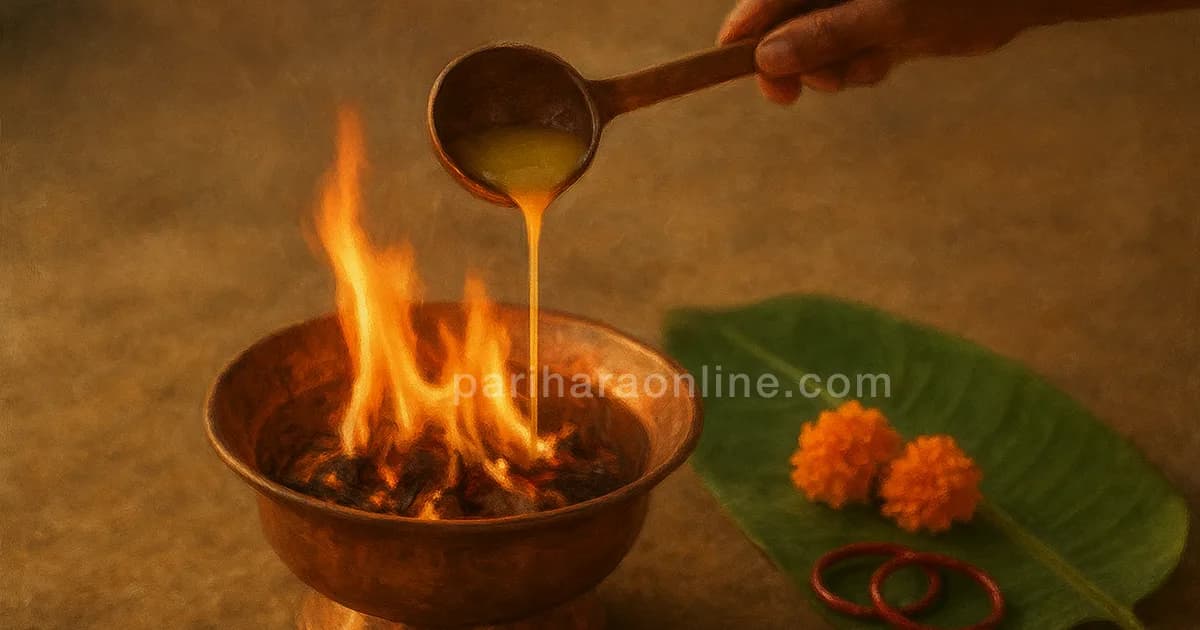
Ayus means life, or lifespan. Ayushya homam is a homam, a Vedic fire ritual, addressed to Ayur Devata, the deity who personifies the span of life, along with prayers to the nine planets and to Mrityunjaya, the form of Shiva who conquers death. Ghee, grains and herbs are offered into the fire with mantras asking for health, strength and years enough to do what one came to do. If the mechanics of a fire ritual are new to you, what is a homam walks through them.
Families do not perform it every year, though some do. It clusters around two moments. The first is a child's first star birthday, when the whole household is still a little astonished that the baby has survived a year. Ayushya homam for a child, on that day, is a thank-you as much as a prayer. The second is the sixtieth year, when the elder has completed one full cycle of the traditional sixty-year calendar and the family gathers to honour them. In between, people often book it when someone has been ill, or when a parent far away is ageing and a child abroad wants to do something, anything, from a distance; praying for a sick parent speaks to that feeling.
What is a star birthday?
Nakshatra birthday meaning is simple once you see the sky the old way. The Moon passes through twenty-seven star groups, the nakshatras, roughly one a day, completing the circle in about a month. The one it occupied when you were born is your janma nakshatra, your birth star.
Your star birthday is the day, in your birth month, when the Moon returns to that nakshatra. In South Indian practice the month is usually the solar month of birth, so a Tamil family would look for your star in, say, the month of Aippasi each year.
That is the star birthday calculation, and it explains why the day drifts. The Moon's cycle does not line up neatly with the solar year, so your star birthday may fall a week or two before or after your passport birthday, a different date every year. You need a panchangam, the traditional almanac, or an astrologer to find it.
Why tradition counts birthdays by the Moon
The solar birthday counts years. The star birthday counts returns. One is a line; the other is a circle. The Moon comes back to the same place again and again, and each return is a small completion, a chance to begin once more.
Temple tradition in Tamil Nadu ties long life to Markandeya, the boy given only sixteen years who clung to a Shiva lingam when Yama came for him; his story sits behind the Mahamrityunjaya mantra, discussed below. The legend is told at the temple of Thirukadaiyur, where many families still celebrate sixtieth and eightieth birthdays. On the surface, devotion defeats death. Read it again and it is about refusing to let a number have the last word. Markandeya did not get more years by counting them. He got them by holding on to something larger.
That is also the spirit of the Mahamrityunjaya mantra, the great prayer for release from untimely death, which is almost always chanted at an Ayushya homam. If you want to know why a string of syllables would matter at all, what is a mantra is a good place to start.
Finding your own star birthday
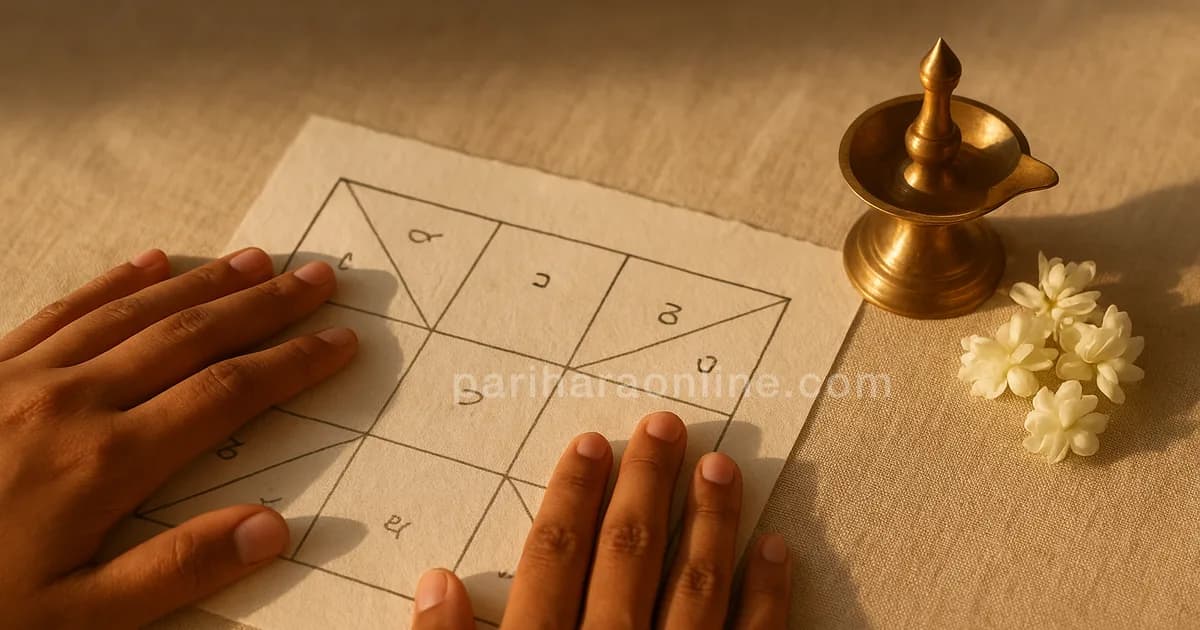
Start by learning your birth star. Your parents may know it; it is often written in the horoscope made at birth. If not, a panchangam or an astrologer can work it out from your date, time and place of birth.
Then mark next year's star birthday. You do not need a homam to honour it. Light a lamp in the morning. Visit an elder and touch their feet, or call one. Eat something your grandmother used to make. And if a homam feels right, for a child's first year, a parent's sixtieth, or a year that has been hard, it will mean more on the day the Moon comes home.
Questions people ask
What is Ayushya homam and who should do it?
Ayushya homam is a fire ritual offered to Ayur Devata, the deity of lifespan, praying for health and a long, meaningful life. Families commonly perform it for a baby's first birthday, for children's birthdays, for elders and for anyone recovering from illness. It is often done on the birthday calculated by the birth star rather than the solar date.
How is a nakshatra birthday calculated?
Your nakshatra birthday is the day in your birth month, on the lunar or Tamil solar calendar, when the Moon passes through the same nakshatra it occupied when you were born. Because the Moon's cycle does not match the solar calendar, the date moves each year. A panchangam or astrologer can find it from your birth details.
Can Ayushya homam be done for a child's first birthday?
Yes, it is one of the most common occasions. Many South Indian families hold Ayushya homam on the first star birthday, called Abdapoorthi in some regions, praying for the child's health and long life. It can be done at home with a priest, at a temple, or booked with a temple online while the family watches.
Why do Hindus celebrate birthdays by the star?
Tradition sees time as cyclical, measured by the Moon and stars as much as the Sun. The star birthday marks the Moon returning to the exact point in the sky where it was at your birth, which is considered a spiritually charged moment for prayers, charity and blessings from elders.
Enjoying this?
To get more Ayushya Homam posts like this, subscribe for free.
Written by
Reads the old stories for what they still mean
Hariharan writes about the myths, symbols and festival stories that most of us grew up hearing but were rarely asked to think about. He tells the story first, then asks what it is really about, and leaves the conclusion to you.