Karthigai Deepam Significance: The Column of Fire
Karthigai Deepam significance: the Shiva Purana story of the endless column of fire, why Tiruvannamalai lights a beacon, and what the flame asks of us.
· 4 min read
In short
Karthigai Deepam recalls the Shiva Purana story of Shiva appearing as an endless column of fire that neither Brahma nor Vishnu could measure.
It falls on the Karthigai nakshatra in the Tamil month of Karthigai, around November or December, when the Maha Deepam is lit atop Arunachala hill.
Brahma and Vishnu once argued over which of them was greater, and in the middle of the argument a pillar of fire appeared between them, so tall and so deep that neither could find its end. Karthigai Deepam is the night we remember that pillar. The Karthigai Deepam significance is simple to state: it honours Shiva as endless light, and it falls on the full moon of the Tamil month of Karthigai, when the Krittika star is in the sky, usually in November or December. What the story means is less simple, and more interesting.
Karthigai Deepam significance: the column of fire
The story is told in the Shiva Purana. Brahma, the creator, and Vishnu, the preserver, fell into a quarrel about rank. Before it could turn into a war, a column of fire rose up between them, without beginning or end. A voice said that whoever found either end of it would be the greater.
Brahma became a swan and flew upward. Vishnu became a boar and dug downward. They searched for what the story calls a very long time. Vishnu, somewhere deep in the earth, finally stopped and admitted he could not find the bottom. Brahma, flying upward, met a ketaki flower drifting down, and persuaded it to say he had reached the top.
The pillar split open, and Shiva stepped out. He honoured Vishnu for his honesty and rebuked Brahma for the lie. The tradition says that is why Brahma has so few temples, and why the ketaki flower is never offered to Shiva. The fiery column is called the Jyotirlinga, the linga of light, and the Lingodbhava image of Shiva emerging from it is carved on the back wall of many Tamil temples.
Why is the flame lit on a hill?
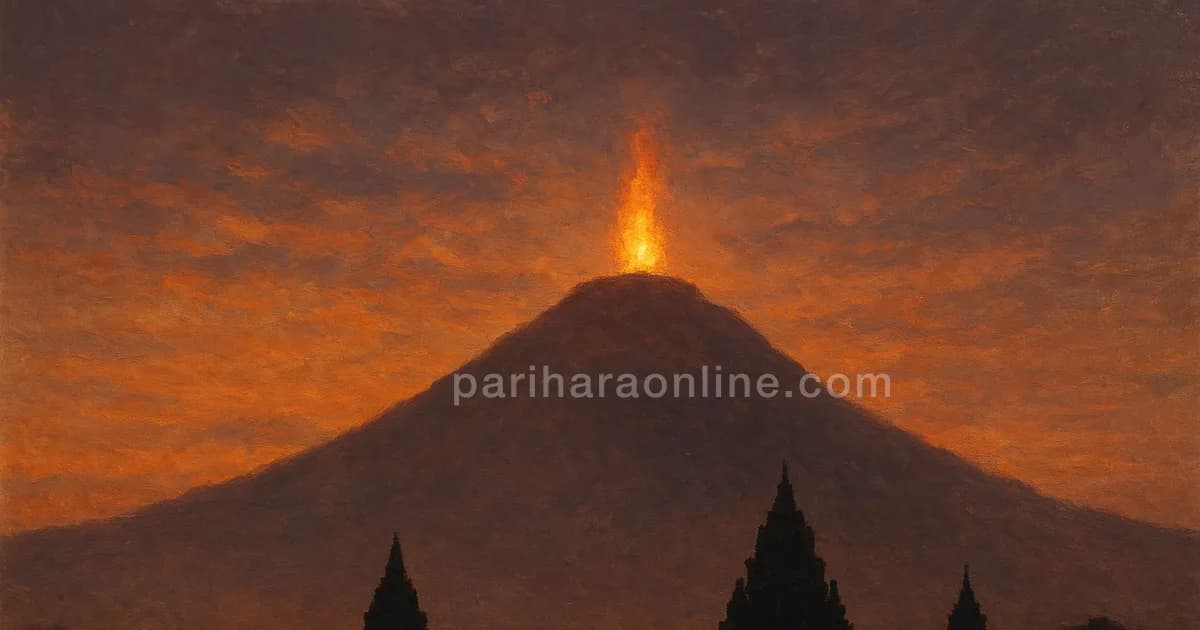
In Tiruvannamalai, the tradition says that pillar of fire cooled into a mountain: Arunachala, the red hill, which is worshipped as Shiva himself rather than as his home. On the evening of Karthigai Deepam, a huge beacon called the Maha Deepam is lit on the summit at dusk, fed with ghee and a thick cloth wick, and it can be seen for miles. Before dawn that same day, five lamps are lit inside the temple and merged into one, the Bharani Deepam. If you watch it from far away, the Tiruvannamalai Deepam from afar is about exactly that.
The night belongs to Murugan too. The Skanda Purana says Shiva's son was born as six babies in a lotus pond, raised by the six Krittika maidens, the stars of the Pleiades, until Parvati gathered them into one child with six faces. The Krittika star, Karthigai in Tamil, gives the month and the festival its name. Many families light lamps for Murugan on this night as well.
What is the story really about?
The story says two gods went looking for the edges of Shiva. The story is really about the limits of looking.
Brahma and Vishnu are not fools. They are the two things the mind does best: going up, into ideas and plans, and going down, into roots and causes. Both are useful. Neither finds the end of something without an end. One of them admits it. The other invents a witness.
Most of us are Brahma more often than we would like. We would rather report that we reached the top than say "I do not know". The ketaki flower is a small, pretty lie, and it is always available.
The lamp answers the pillar. The pillar is infinite fire; the lamp in your doorway is a tiny, humble copy of it, a flame you can hold in your palm. It does not claim to be the whole of the light. It only claims to be light. On a night like this, the choice of oil matters to some families, and ghee lamp or oil lamp explains the difference.
One lamp, one full minute
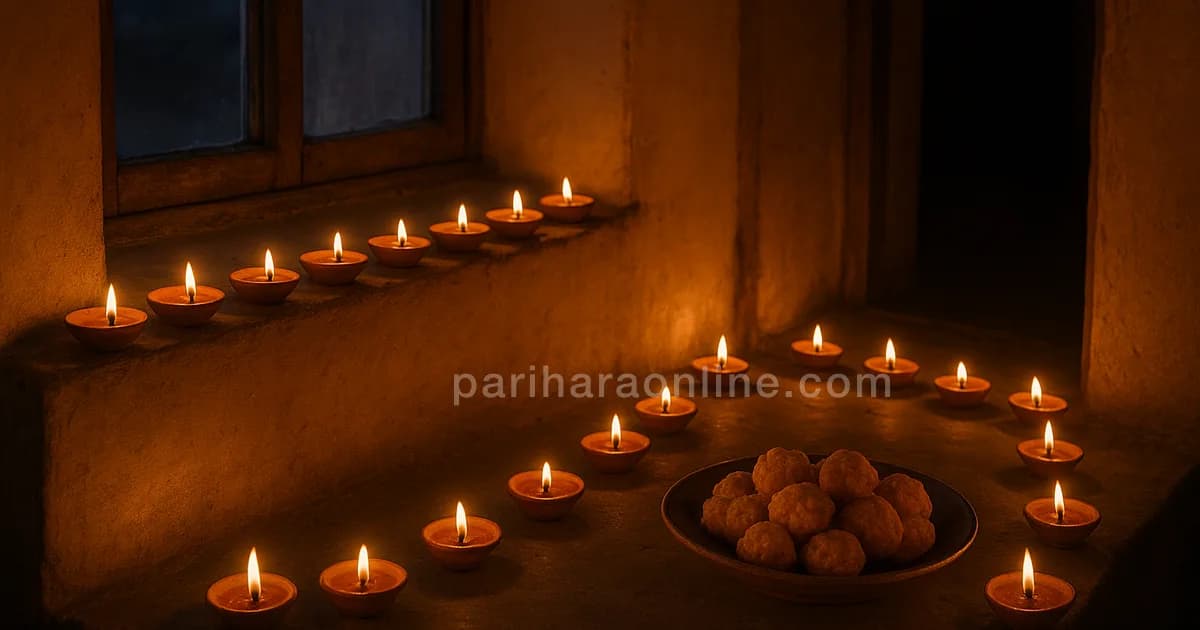
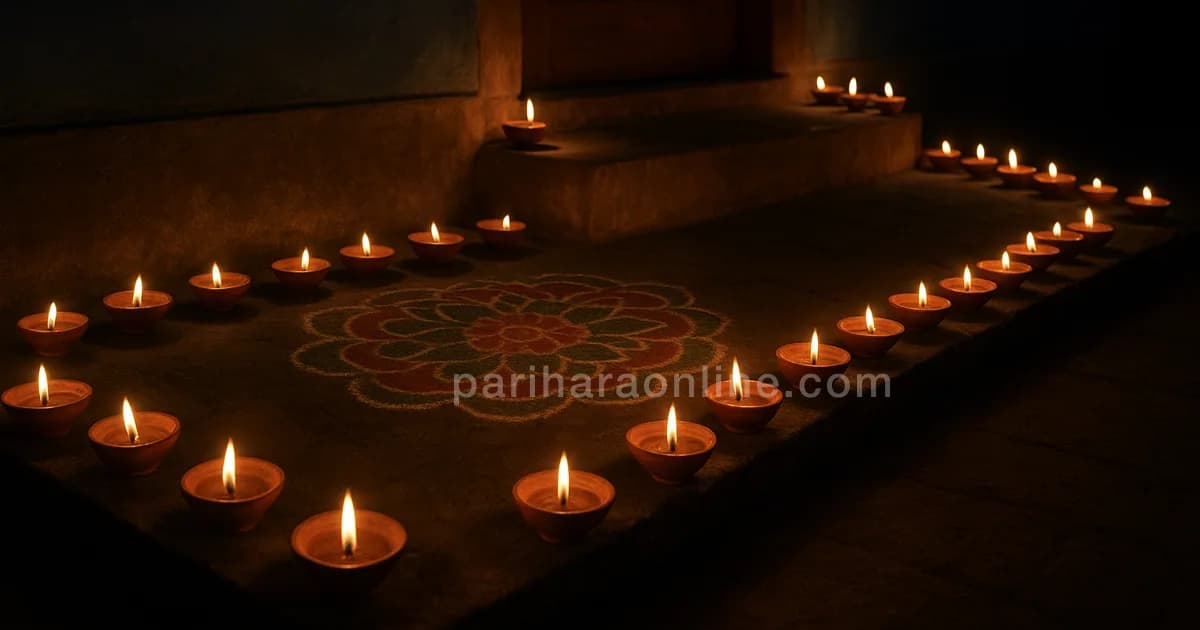
At dusk on Karthigai Deepam, light one lamp, or many if you like; there is a guide to celebrating Karthigai Deepam at home with the traditional rows of clay lamps. Then sit in front of one of them and look at it for a full minute without doing anything else.
Some quarrel is probably running in your head, about who is right, who is more important, who owes whom. Let the flame be the pillar between the two sides. You do not have to find its end. You only have to stop measuring, for one minute, and let the argument finish there.
Questions people ask
What is the story behind Karthigai Deepam?
The Shiva Purana tells of Brahma and Vishnu arguing over who was supreme. A boundless pillar of fire appeared. Vishnu became a boar and dug down, Brahma became a swan and flew up; neither found its end. Vishnu admitted it, Brahma lied. The fire was Shiva. At Tiruvannamalai, the hill Arunachala is revered as that fire made solid.
Why is Karthigai Deepam celebrated in Tamil Nadu?
Karthigai Deepam is one of the oldest Tamil festivals of light, mentioned in Sangam-era poetry. It honours Shiva as the column of fire and also Murugan, who was raised by the six Karthigai maidens, the stars of the Pleiades. Homes are lit with rows of clay agal vilakku lamps, and a great beacon is lit on Arunachala hill.
When is Karthigai Deepam celebrated?
Karthigai Deepam falls on the day the Moon is in the Karthigai nakshatra (Krittika, the Pleiades) during the Tamil month of Karthigai, usually close to the full moon, around November or December. The exact date moves each year with the lunar calendar, so check the current year's panchangam, especially if you live outside India.
Enjoying this?
To get more Karthigai Deepam posts like this, subscribe for free.
Written by
Reads the old stories for what they still mean
Hariharan writes about the myths, symbols and festival stories that most of us grew up hearing but were rarely asked to think about. He tells the story first, then asks what it is really about, and leaves the conclusion to you.