Karthigai Deepam at Home: Lamps in Rows
Karthigai Deepam at home: how to set out rows of agal vilakku lamps, prepare pori and appam, and keep the lamps as a practice of attention in a small space.
· 4 min read
In short
To celebrate Karthigai Deepam at home, light rows of clay agal vilakku lamps at dusk, from the puja lamp outward to the front door and windows.
Lighting many lamps one by one works as a practice of attention; offerings of pori urundai and nei appam complete the evening.
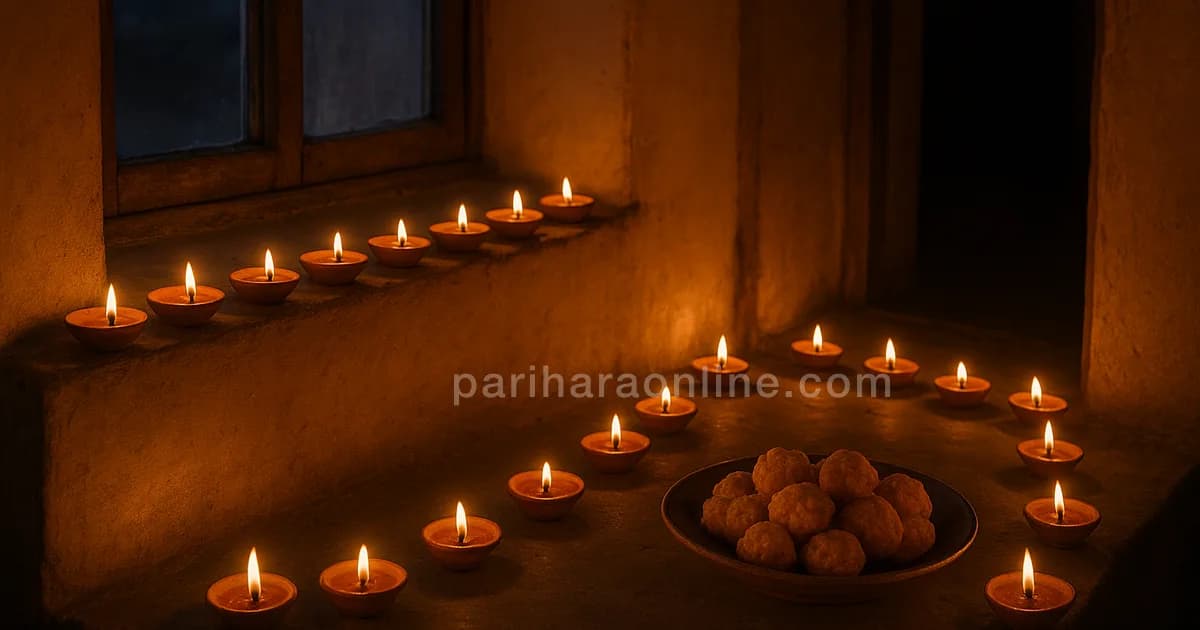
Lighting forty small lamps one after another is a strange, slowing thing to do. By the tenth your hands have found a rhythm; by the twentieth your breath has changed. That is the heart of Karthigai Deepam at home: at dusk on the full-moon night of the Tamil month of Karthigai, you set rows of small clay lamps at the threshold, the windows and the prayer corner, light them one by one, and let the evening slow down around them. Some families add sweets of puffed rice and jaggery. The rest is attention.
Karthigai Deepam at home: what you need
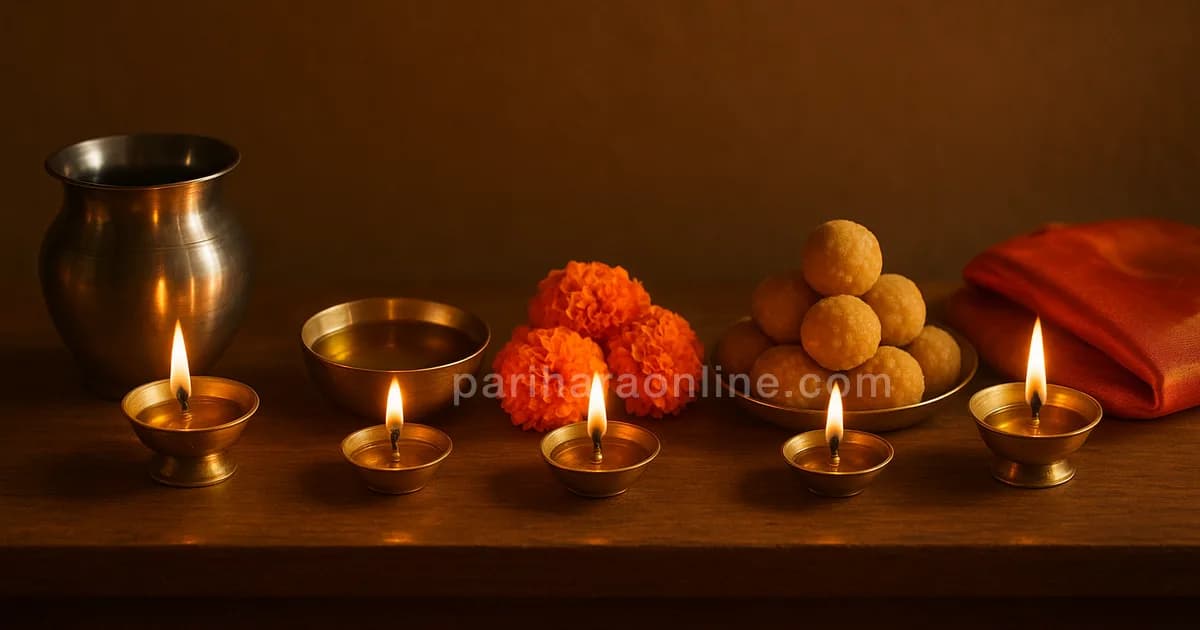
- Agal vilakku, the small shallow clay lamps sold in Indian stores in the weeks before the festival. Buy more than you think you will use. New ones are traditional, but old ones cleaned well work fine.
- Oil or ghee. Sesame oil is the common choice; ghee for the lamp in the prayer corner if you have it. Ghee lamp or oil lamp goes into the difference.
- Cotton wicks, rolled thin for the small lamps.
- A tray or a steel plate to carry the lamps and to sit them on, so oil does not mark the floor.
- A matchbox and a single lit lamp to light the others from, rather than striking a match forty times.
Where to put them: the threshold of the front door first, then windowsills, the balcony if you have one, the prayer corner, the kitchen. The idea is that no part of the house faces the full moon in darkness.
How many lamps, and in what order?
Families differ. Some light twenty-seven, one for each nakshatra, or lunar star. Some light a hundred and eight. Many simply use odd numbers and as many as the space allows. None of these counts is the right one.
The order has a logic, though. Start with the main lamp in your prayer corner, a brass kuthu vilakku, the tall standing lamp, if you have one. Light your first small lamp from it. Then move outward: from the prayer corner through the house to the doorway, and finally to the threshold, carrying the light from the centre to the edge. If you have never lit many lamps before, how to light a diya covers wicks and oil.
Try this as you go: one lamp, one breath. Light it, breathe out slowly, move to the next. Do not talk. Do not check your phone between lamps. By the end, the house will look different, and so will your nervous system.
Pori, appam and the evening itself
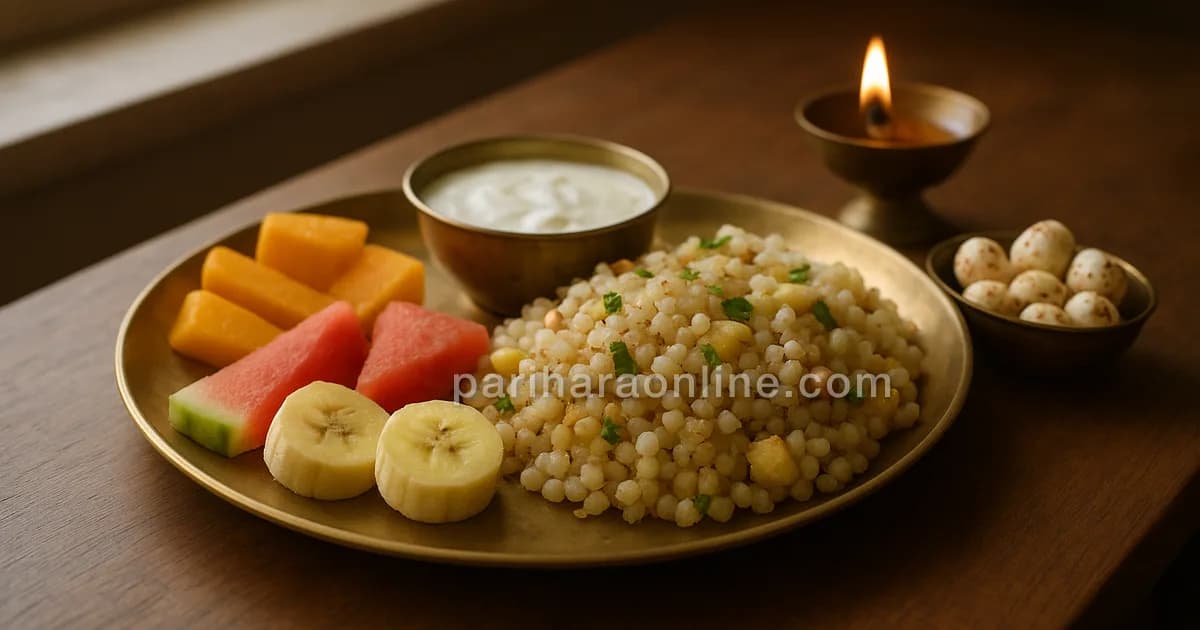
The food of the day is simple. Pori, puffed rice, is mixed with melted jaggery, a little cardamom and sometimes grated coconut, then rolled into balls called pori urundai while it is still warm. Nei appam, small sweet dumplings of rice flour and jaggery fried in ghee, are the other favourite. Both are offered first and eaten after. Many families also keep a light fast through the day and eat after the lamps are lit.
Light the lamps at dusk, just as the sky begins to turn. That is when the great beacon is lit on the hill at Tiruvannamalai, and many people like to time their own lamps to it; watching the Tiruvannamalai Deepam from afar explains how that works across time zones. The story behind the whole night, the pillar of fire no one could measure, is told in the significance of Karthigai Deepam.
A few practical notes for apartments. Keep lamps away from curtains, blinds and anything that moves in a draught. Put them on metal or ceramic, never directly on wood. Do not leave them burning when you go to bed or leave the house. If your building has sensitive smoke alarms, fewer lamps and good ventilation are better than a panicked evening. Electric lamps on the balcony are fine; the tradition has always adapted.
Sit until the first lamp burns low
Once the last lamp at the threshold is lit, go back to the first one and sit in front of it. Stay until it begins to burn low. It may be twenty minutes; it may be longer. You do not need to chant, though a few repetitions of "Om Namah Shivaya" suit the evening well.
If this night lifts something in you, the calendar keeps going: Skanda Sashti has usually just passed, and its six-day fast is worth trying next season. For tonight, the practice is enough. Light slowly, one breath per lamp, and wait.
Questions people ask
How do you celebrate Karthigai Deepam at home?
Clean the home, draw a kolam at the entrance, and at dusk light clay agal vilakku lamps filled with sesame oil or ghee, starting from the lamp in your puja corner and moving to the threshold, steps and windows. Offer pori urundai, nei appam or adai, say a simple prayer to Shiva or Murugan, and let the lamps burn into the night.
How many lamps should be lit on Karthigai Deepam?
There is no fixed number. Many families light lamps in rows at every doorway and window, often choosing odd numbers such as nine, twenty-seven or more. Some light the lamps for three evenings, from the day before to the day after. Light as many as you can watch safely; attention matters more than the count.
What is Karthigai pori and why is it offered?
Pori is puffed rice, mixed with melted jaggery, cardamom and sometimes coconut, then shaped into balls called pori urundai. It is the traditional offering on Karthigai Deepam, alongside nei appam and vella adai. Puffed rice is light and bursts open in heat, which many read as a symbol of the self opening in the presence of the flame.
Enjoying this?
To get more Karthigai Deepam posts like this, subscribe for free.
Written by
Writes about practice: attention, breath, the body, the lamp
Archana writes about ritual as something you do rather than something you believe: the lamp, the breath, the fast, the few quiet minutes before the day begins. Her pieces usually end with a small practice to try for a week and notice what changes.