Kartik Purnima Significance: Lamps on the Water
Kartik Purnima significance: Shiva's victory over the three flying cities, lamps floated on rivers and ghats, and why this full moon is called the gods' Diwali.
· 4 min read
In short
Kartik Purnima, the full moon of Kartika, celebrates Shiva's destruction of the three flying cities of the Tripuras, and is called Tripurari Purnima and Dev Deepawali.
Families bathe in rivers at dawn and float lamps on water at night, closing a month in which lamps are lit every evening.
Three demons built three cities that flew through the sky, and they could be destroyed only by a single arrow, at the single moment the three lined up. The story says Shiva waited for that moment. The festival is lamps on water for the night he did not miss. Kartik Purnima significance comes down to that: a full moon that closes a whole month of lamps, and remembers a victory that depended less on strength than on timing. The story is about demons. It is really about patience, and what it takes to act when the moment finally comes.
Kartik Purnima significance: the full moon of lamps
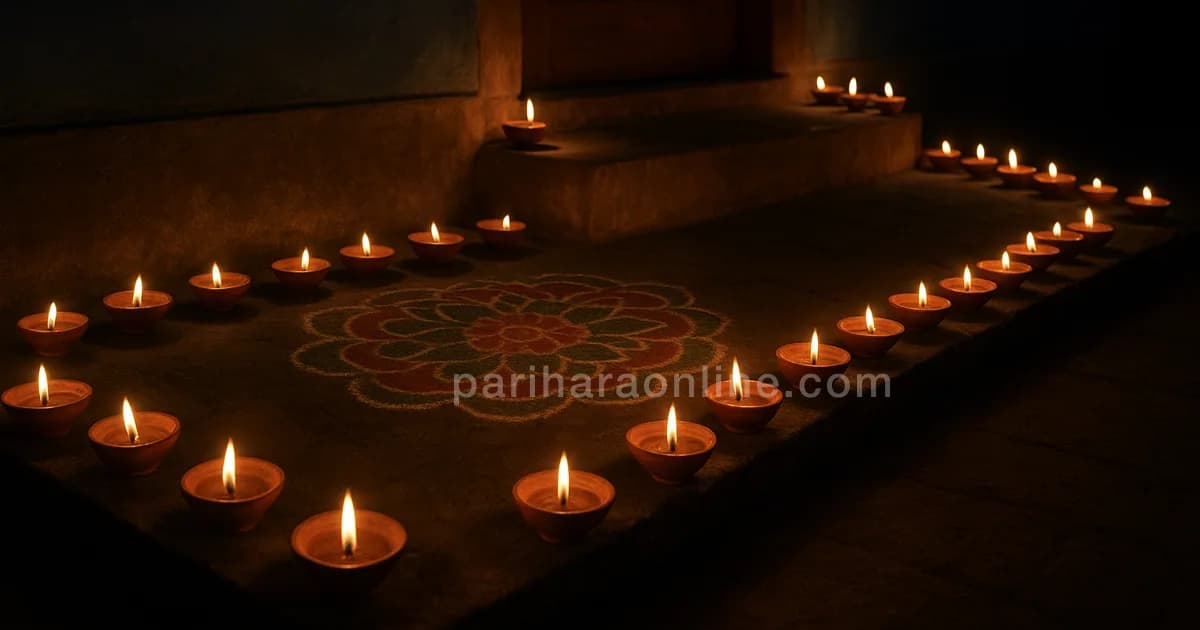
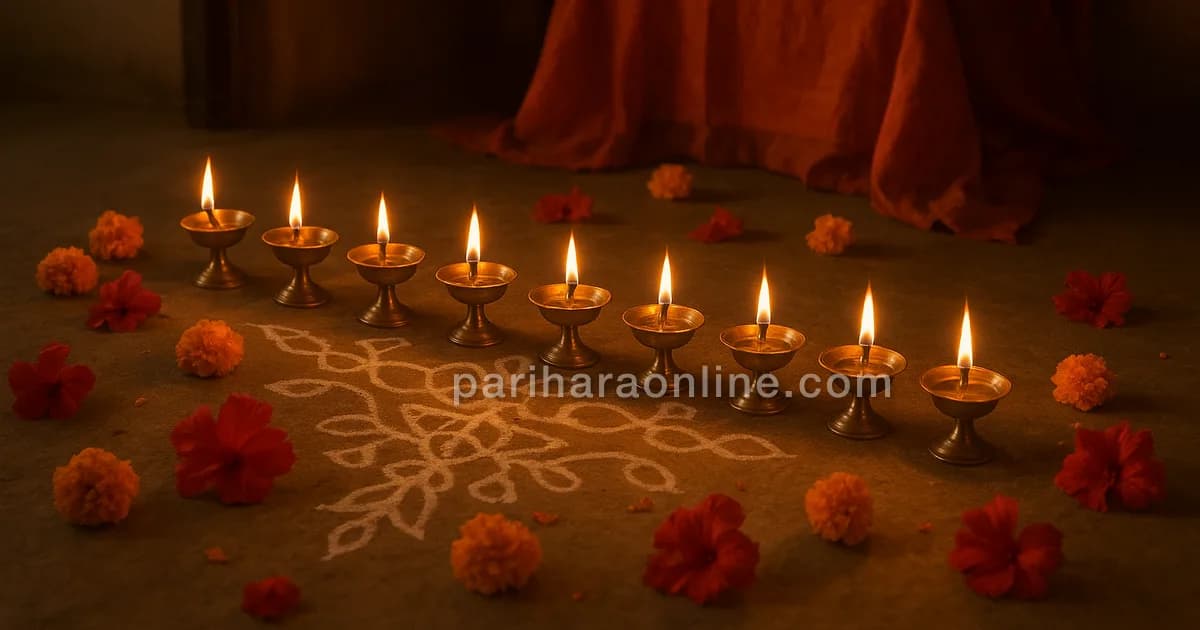
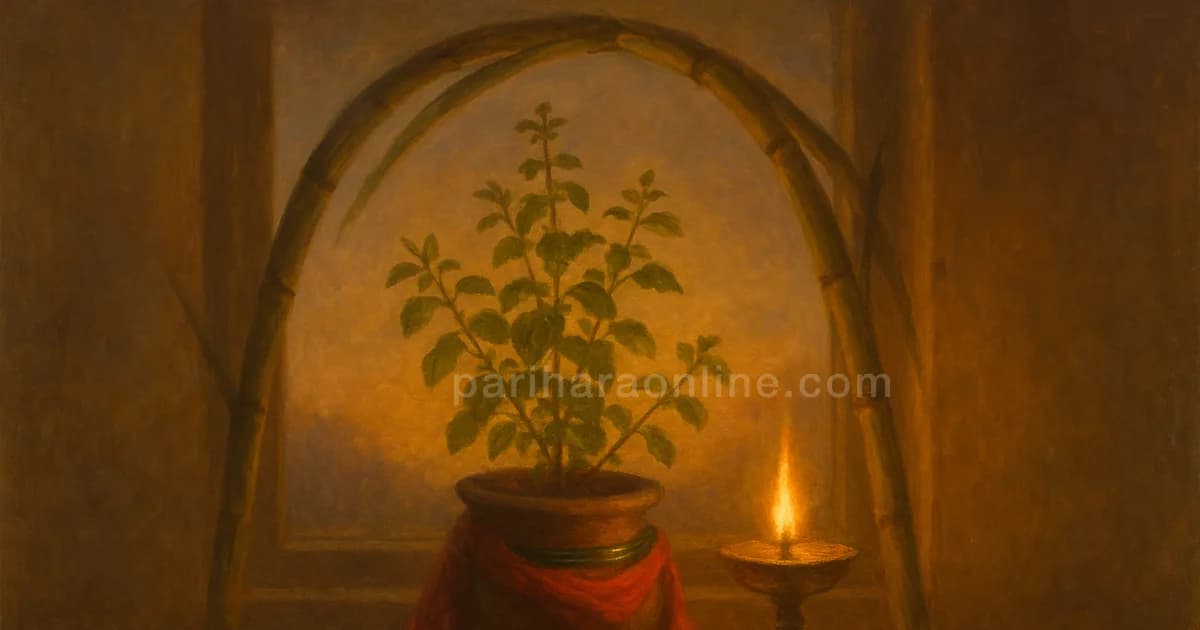
Kartik Purnima is the full moon of the month of Kartika, usually in November. For many households, the whole month before it is a month of lamps, lit at dusk at the doorway, by the tulsi plant, at the river. The full moon is the crowning night.
It goes by several names. In North India it is Tripurari Purnima, the full moon of the enemy of the three cities, and in Varanasi it is Dev Deepawali, the gods' own Deepavali. In the Tamil month of Karthigai, its close cousin is Karthigai Deepam, when the great beacon is lit on the hill at Tiruvannamalai; read the significance of Karthigai Deepam for its story, and keeping the Tiruvannamalai Deepam from afar if the hill is an ocean away. Different stories, the same instinct: at the darkest turn of the year, put light on high places and on moving water.
Who were the Tripuras, and what did Shiva do?
The Shiva Purana tells it, and an older version appears in the Mahabharata. After the demon Taraka was killed, his three sons performed fierce austerities and won a strange boon. The architect Maya built them three cities, one of gold in the heavens, one of silver in the sky, one of iron on the earth. The cities moved, and they could be destroyed only by one arrow, at the one moment in a thousand years when all three fell into line.
The brothers grew arrogant, as boon-holders in these stories tend to, and the gods came to Shiva. What follows is a wonderful piece of cosmic engineering. The earth became his chariot, the sun and moon its wheels, Brahma the charioteer. Mount Meru became his bow and the serpent Vasuki its string. Vishnu himself became the arrow.
And then Shiva waited. The whole universe assembled as a weapon, and the one thing it could not do was hurry. When the three cities slid into alignment, he released the arrow and they burned in a single flash. From that day he is Tripurantaka, the ender of the three cities.
The story is really about the rare alignment of patience and action. Most of us are good at one. We wait forever and never let go of the arrow, or we fire the moment we are angry. Shiva does both, in the right order.
Why float lamps on water?
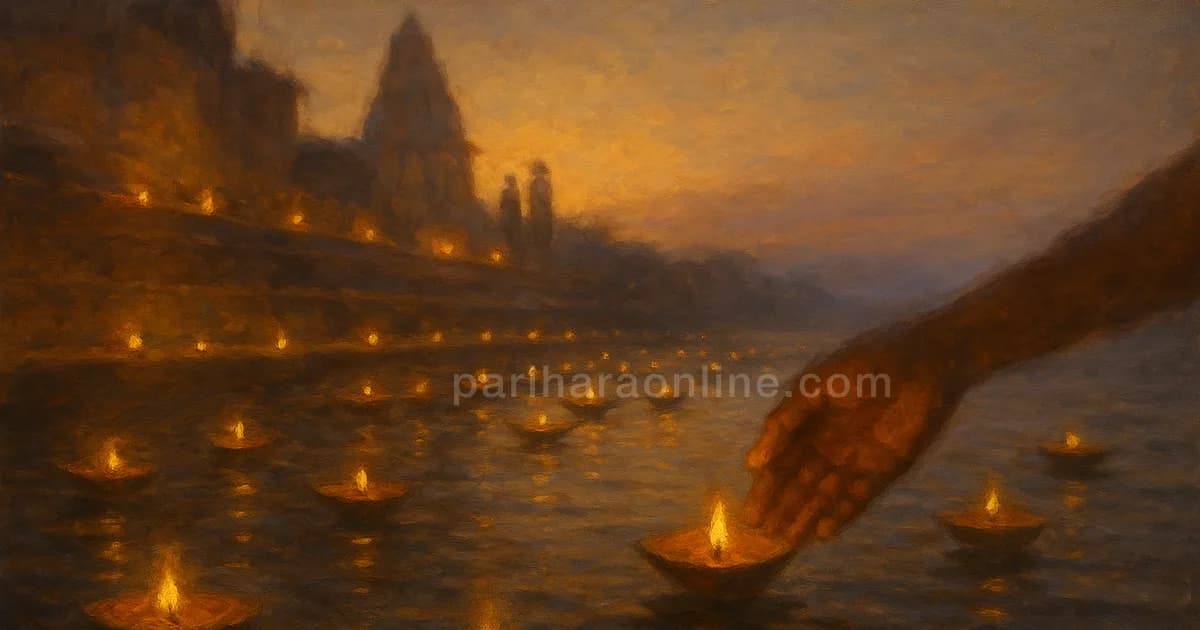
On Dev Deepawali, the ghats of Varanasi are lined with countless clay lamps, and the river, the Ganga that flows past Kashi Vishwanath, carries their reflection. Pilgrims take a holy dip at dawn. Across India, people fold leaf boats, set a small lamp in each, and let them go on rivers, ponds and temple tanks.
In Odisha the day is Boita Bandana, when families float tiny boats of banana bark with lamps inside, remembering the sea traders who once sailed from that coast to the islands of Southeast Asia in this season. The lamp here is a memory of departure and a prayer for return.
Notice what the gesture is. Most lamps are kept: in the shrine, at the door. This one you let go. You light it, set it on the water and watch it drift until you cannot tell it from the stars. It is a lamp you do not get to tend.
A lamp for what you are waiting on
The Kartika season ends and the year moves toward its darkest weeks; in the months ahead, Ratha Saptami's turn toward the sun will come into view, and after it Vasant Panchami's first sound of spring.
Shiva's victory needed one moment of readiness after a very long wait. Nothing in the story says the wait was wasted. The wait was the preparation.
On this full moon, light one lamp for something you are still waiting on: an answer, a recovery, a reconciliation, a door that has not opened. Set it in a bowl of water if you have no river. Let it burn down on its own. You are not asking for the moment to hurry. You are asking to be ready when it comes.
Questions people ask
What is the Tripurari Purnima story?
The three sons of the asura Tarakasura won a boon that their three flying cities, of gold, silver and iron, could be destroyed only by a single arrow when the cities aligned. They grew arrogant and tormented the worlds. Shiva, riding a chariot made of the earth, with Mount Meru as his bow, shot the arrow at that moment and ended them.
What is Dev Deepawali in Varanasi?
Dev Deepawali, the Diwali of the gods, is celebrated in Varanasi on Kartik Purnima. The ghats along the Ganga are lined with countless clay lamps at dusk, the river fills with floating lamps, and a grand Ganga aarti is performed. Tradition holds that the gods descend to bathe in the Ganga and celebrate Shiva's victory over the Tripuras.
Why are lamps floated on Kartik Purnima?
Floating lamps honour the river as sacred and mark the end of Kartika, the month of lamps. Each lamp carries a prayer for the family, for ancestors, or in thanks. In Odisha, children float small boats to remember traders who sailed to Southeast Asia. Letting a lamp go downstream is a gentle practice of offering without holding on.
Enjoying this?
To get more Kartik Purnima posts like this, subscribe for free.
Written by
Reads the old stories for what they still mean
Hariharan writes about the myths, symbols and festival stories that most of us grew up hearing but were rarely asked to think about. He tells the story first, then asks what it is really about, and leaves the conclusion to you.