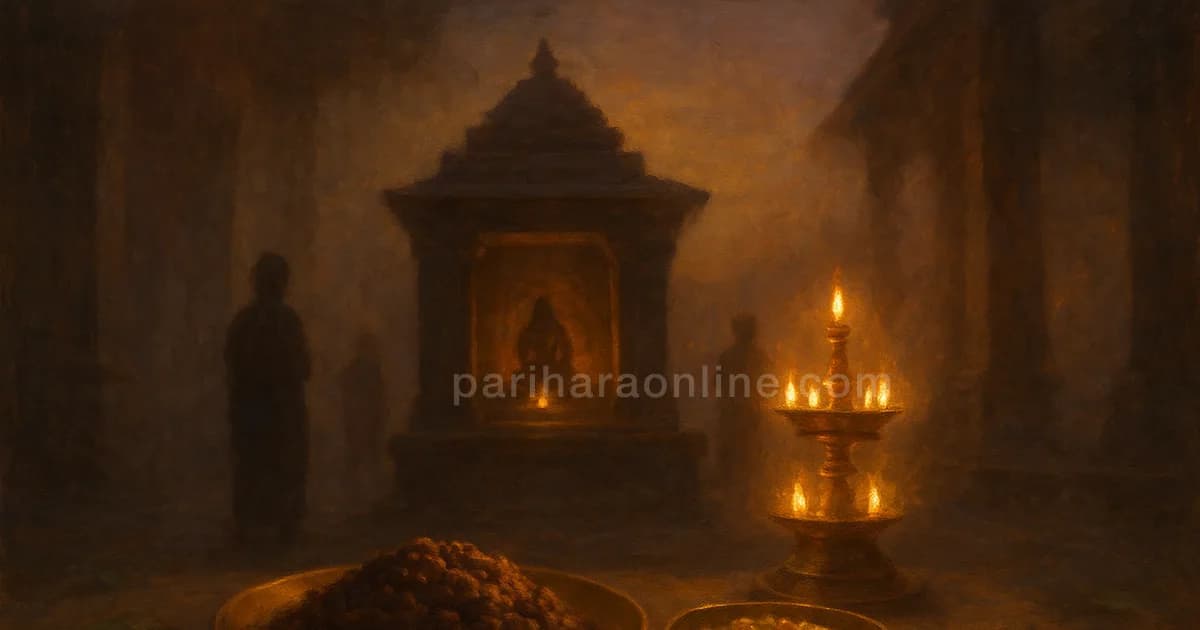
Why Is Pongal Celebrated? Sun, Harvest and Cattle
Why is Pongal celebrated? The sun's turn north, the rice harvest, Indra, Surya and Nandi, and the four days from Bhogi to Kaanum, explained through their story.
· 4 min read
In short
Pongal is a Tamil harvest thanksgiving to Surya, the sun, celebrated at the start of the Tamil month of Thai when the sun enters Makara, in mid-January.
Its four days thank Indra, the sun, the cattle and family in turn; the milk pot boiling over is the festival's image of abundance.
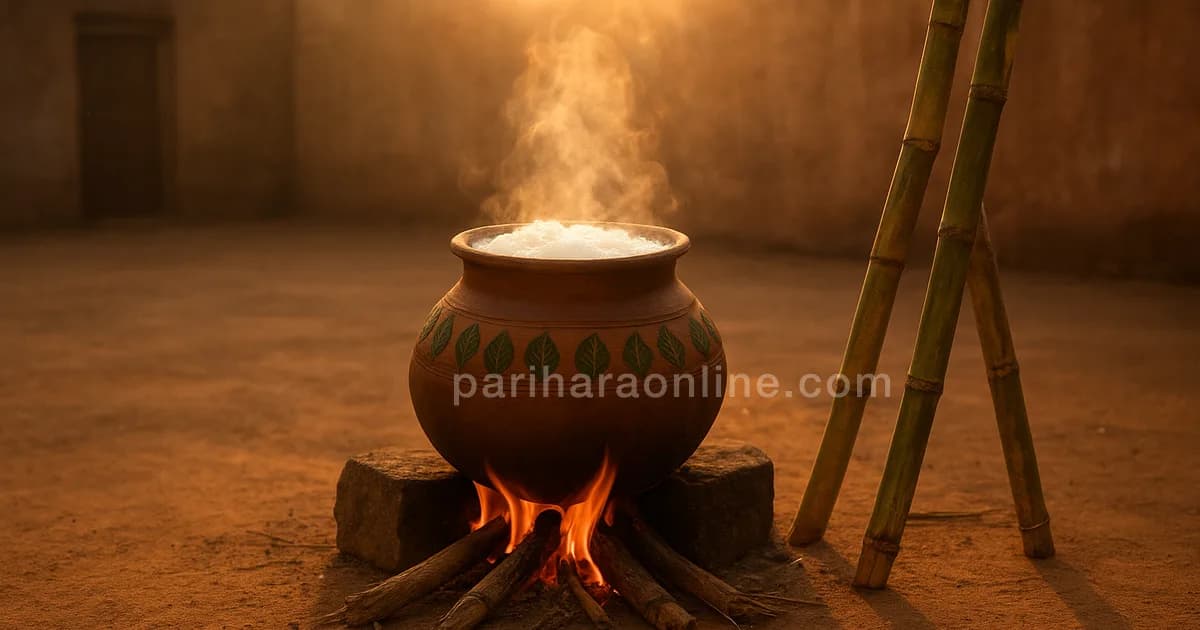
A clay pot of milk and new rice is set on a fire in the open courtyard, and everyone gathers around it and waits. When the milk rises and spills over the rim, the whole family shouts "Pongalo Pongal!" Why is Pongal celebrated? It is the Tamil harvest festival, a thanksgiving to Surya, the sun, and to everything that helped the rice grow, held when the sun enters Makara, Capricorn, at the start of the Tamil month of Thai, in mid-January. The whole festival is in that overflow.
Why is Pongal celebrated?
The word pongal means "boiling over", and it is both the name of the festival and the name of the dish: rice cooked in milk, sweetened with jaggery for sakkarai pongal or left savoury with pepper and ghee. The rice is from the new harvest. The pot is new, often tied with a turmeric plant and a sprig of sugarcane.
The festival is solar, not lunar. Most Hindu festivals follow the moon, which is why their dates wander. Pongal follows the sun's entry into Makara, which is why it barely moves. The same moment is celebrated across India under other names, Makar Sankranti in much of the north and west; the meaning of Makar Sankranti looks at what that sun-turn means for the body.
At its simplest, Pongal says thank you. The rice has come in. The rains did their work. The sun did its work. The cattle pulled the ploughs. Before anyone eats, the first pot is offered to the sun.
Four days, four thanks
Pongal is really four festivals in a row, each thanking something different.
Bhogi, the last day of the month of Margazhi, belongs to Indra, the god of rain. Families clean the house and burn old things, broken baskets, worn mats, in a bonfire at dawn. Clear out the old before the new arrives.
Thai Pongal, the first day of Thai, belongs to the sun. The pot is boiled in the courtyard, facing east, and the first sweet pongal is offered to Surya. A kolam, a pattern of rice flour, is drawn at the entrance, often with a pot and sugarcane in the design; the meaning of kolam and rangoli explains why the threshold gets that attention.
Mattu Pongal belongs to the cattle. Cows and bullocks are bathed, their horns painted, garlanded and fed the pongal. The story told in Tamil homes is a funny one. Shiva once sent his bull Nandi to earth with a message: tell people to bathe every day and eat once a month. Nandi got it backwards and told them to eat every day and bathe once a month. Shiva, exasperated, told him that since people would now need so much food, Nandi could stay on earth and help them plough. So the bull has been working in the fields ever since, and on this day, he is thanked.
Kaanum Pongal, the last day, belongs to family. Kaanum means "seeing"; people visit relatives, go on outings and feed birds with coloured rice.
Rain, sun, animals, people. The four days make a circle of everyone who had a hand in the harvest.
What does the boiling-over pot mean?
The milk boils over and everyone cheers: abundance that cannot be contained.
A pot that boils over is a small accident. In most kitchens, you rush to turn the flame down. On Pongal, the spilling is the point. The family waits for it, watches for it, and announces it. It is a picture of more than enough: the harvest so full it runs over the sides.
The Tamil proverb for the season says "Thai pirandhal vazhi pirakkum": when Thai is born, a way opens. Weddings are planned for this month. Decisions put off through the dark, wet months are taken up again. The overflow of the pot is also a kind of permission. Things can move now.
For families outside India, the same pot can boil over on an electric stove; there is a guide to making Pongal in a US kitchen, and the Hindu festival calendar for the USA places Pongal among the year's other festivals.
Thank one thing that feeds you
This Pongal, pick one thing that feeds you that you normally never think about. The farmer who grew your rice. The truck driver who brought it. The water, the soil, the sun. Say its name before you eat the first spoonful. That is the whole of the festival in one sentence, and it works at any table in the world.
Questions people ask
Why is Pongal celebrated in Tamil Nadu?
Pongal is a harvest festival that thanks Surya, the sun, and the forces that make farming possible. It falls as the sun enters Makara, the start of the Tamil month of Thai, around mid-January, after the rice harvest. The name comes from the dish of new rice and milk that is boiled until it overflows, a sign of abundance.
What are the four days of Pongal?
Bhogi comes first, when old things are discarded and Indra, the rain god, is honoured. Thai Pongal is the main day, for Surya. Mattu Pongal honours cattle, which are bathed, decorated and fed. Kaanum Pongal is for visiting family and outings. Each day thanks a different part of the web that makes a harvest possible.
What is the story behind Mattu Pongal?
A popular story says Shiva sent his bull Nandi to earth with a message that people should bathe daily and eat once a month. Nandi mixed it up and said eat daily and bathe once a month. As punishment Shiva sent him to help humans plough fields for the food they now needed. Mattu Pongal thanks cattle for that work.
Enjoying this?
To get more Pongal posts like this, subscribe for free.
Written by
Reads the old stories for what they still mean
Hariharan writes about the myths, symbols and festival stories that most of us grew up hearing but were rarely asked to think about. He tells the story first, then asks what it is really about, and leaves the conclusion to you.