Homam vs Puja: What Is the Difference?
Homam vs puja: one is offered through fire, one through image and lamp. What the difference is, when each is used and which fits your intention and your home.
· 4 min read
In short
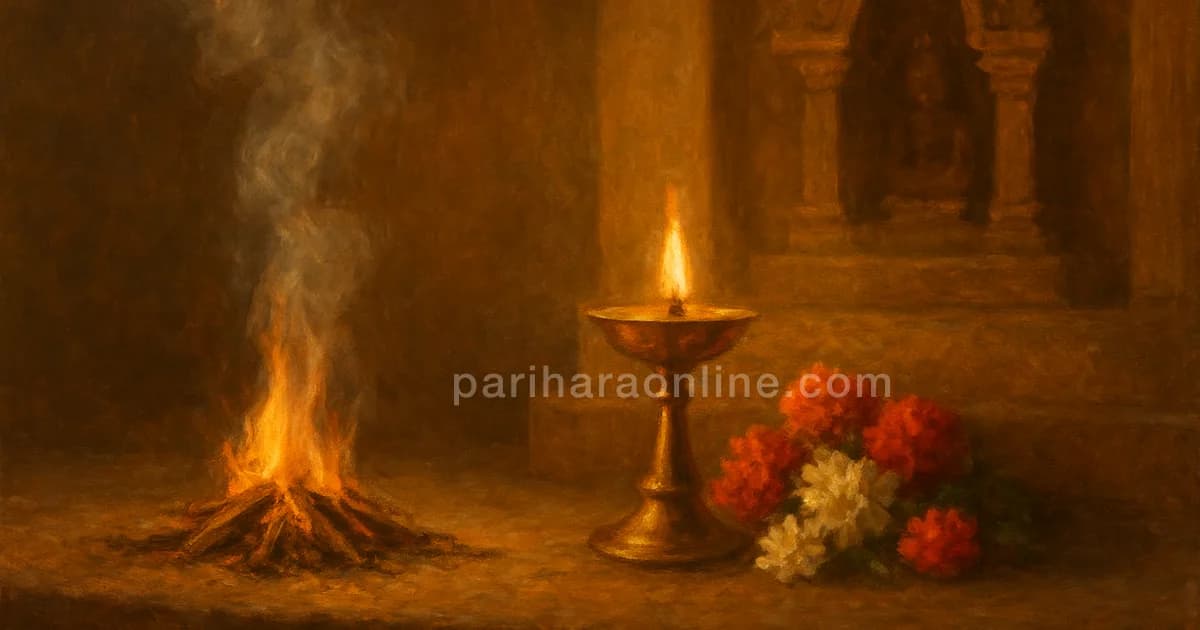
The main difference between a homam and a puja is the medium: a homam makes offerings into consecrated fire, while a puja offers to an image, idol or lamp.
Homams come from Vedic ritual and usually need trained priests; pujas are the everyday worship of home and temple and can be done by anyone.
Families often choose a homam for major beginnings or remedies, and keep a simple daily puja for steady, regular practice.
Both are worship, but they work on you differently. A puja brings you close to an image: you look at a face, offer a flower, wave a lamp. A homam asks you to sit before fire and watch what you offer disappear. That is the heart of homam vs puja. A homam makes offerings into consecrated fire with Vedic mantras, usually led by trained priests. A puja offers to an idol, image or lamp with flowers, water, incense and food, and anyone can do it at home. Families tend to choose a homam for big beginnings and remedies, and keep a puja for daily life.
Homam vs puja: the core difference
The simplest difference between homam and puja is the medium.
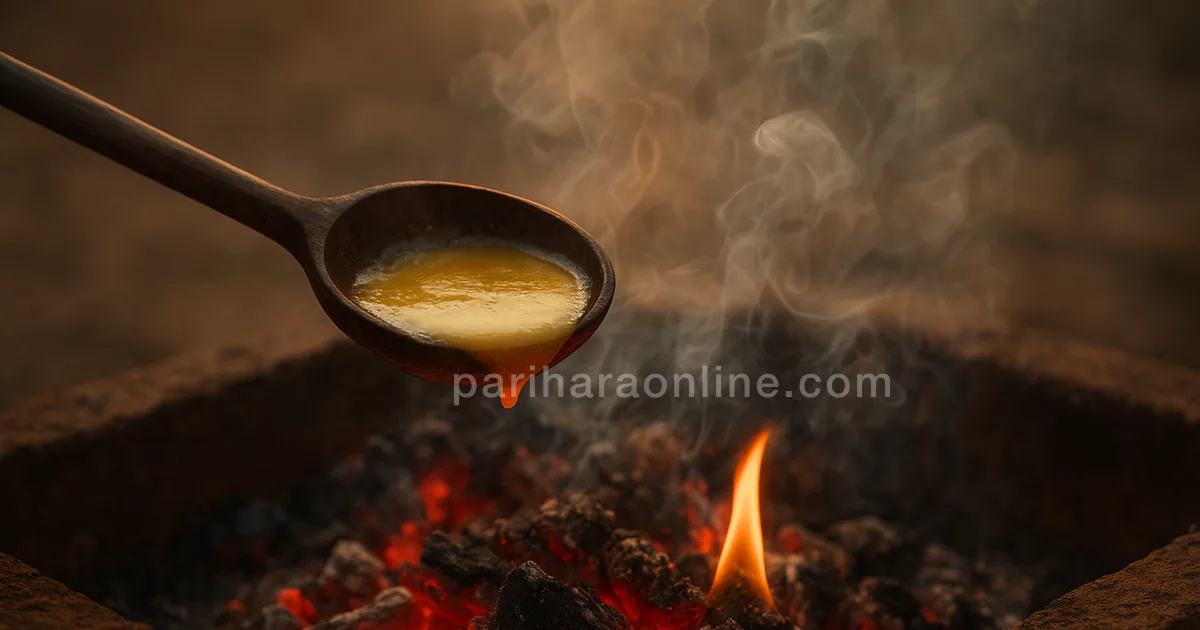
In a homam, the fire is the medium. Offerings of ghee, grains, sesame and herbs go into a consecrated fire, and Agni, fire, is understood as the messenger who carries them to the deity. The roots are Vedic: fire rituals are described in the Vedas themselves. A homam needs specific mantras, a prepared fire pit and, usually, priests who know the procedure. What is a homam walks through the steps.
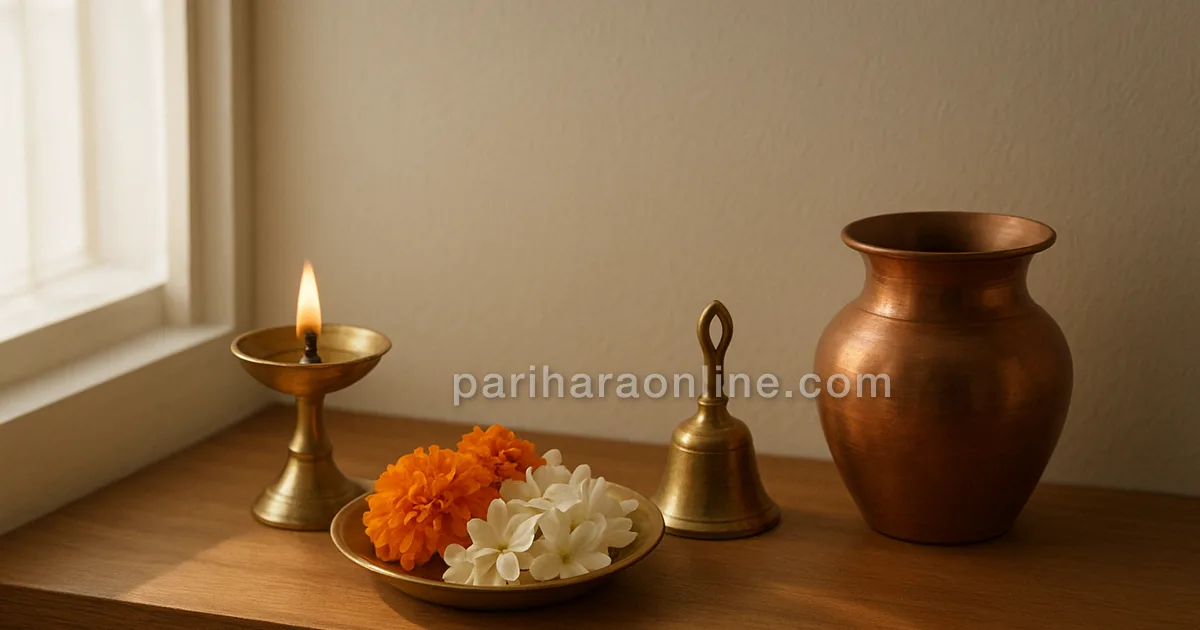
In a puja, the deity is present in an image, idol, or even a lamp. You offer directly to that form: water, flowers, sandal paste, incense, a lamp, food. The roots are largely Agamic, from the Agamas, the texts that shaped temple worship. Pujas range from a five-minute morning ritual to an elaborate temple ceremony, and they are the everyday worship of Hindu homes. If you are learning, puja at home, step by step is a good start.
What about havan vs puja? Havan is simply the North Indian word for homam. Same fire, same idea, different region.
When is a homam chosen over a puja?
Families usually choose a homam for moments that feel larger than daily life.
- Major beginnings: a new home, a wedding, a new business, a child's first birthday.
- Planetary remedies: Navagraha or Rahu-Ketu homams, when an astrologer suggests them.
- Health: Mrityunjaya or Dhanvantari homams for someone who is ill.
- Festivals: Lakshmi homam at Diwali, Saraswati homam during Navratri.
A daily puja is enough for almost everything else. It is the steady practice; the homam is the occasional, intense one.
Can a homam be done at home? Yes, and families often invite priests to do exactly that for housewarmings and birthdays. In apartments, smoke and fire safety make it harder, so many families have the homam performed at a temple in their name and watch by video.
What does each do for the person sitting there?
This is the part people rarely talk about, and it is the part I find most interesting.
A puja works through closeness. You are near the image. You touch the flowers, smell the sandal paste, hear the bell. The eyes rest on one face. Attention gathers and becomes intimate. Many people find their breath slows and softens during a puja, the way it does when you sit with someone you love.
A homam works through intensity. There is heat on your face. Smoke in the eyes. The chant is loud, rhythmic and continuous, and the fire keeps moving. You cannot rest your gaze on it the way you rest it on an idol, because it never holds still. And again and again, you watch things go into the flames and not come back. The body responds to that. The breath often gets deeper. Some people feel restless at first, then strangely lighter by the end.
Both are training attention. One gathers it close. The other burns it clean. If you are curious how both compare with sitting in silence, meditation vs puja explores that question, and what the homam fire teaches about letting go looks at what people carry away from the fire.
Try this at your next homam
Whether you are sitting before the fire in person or watching on a video call from another country, try this. At some point during the offerings, watch the fire for one full minute without looking away. Do not check your phone. Do not look at the priests. Just the flames.
Notice what happens to your breath. Notice what happens to your thoughts. Then, at your next puja at home, do the same with the lamp for one minute. Compare. You will learn more about the difference from those two minutes than from any explanation.
Questions people ask
What is the difference between a homam and a puja?
A homam is a Vedic ritual in which offerings are made into a consecrated fire with mantras, the fire acting as messenger. A puja is worship of a deity through an image, idol or lamp using flowers, water, incense and food. Homams usually need priests; pujas can be done daily by anyone at home.
Is havan the same as homam?
Yes, havan and homam refer to the same kind of fire ritual. Havan is the term used more in North India and homam in South India. Both involve offering ghee, grains and herbs into a sacred fire with mantras, though the specific procedures and hymns can differ between regional and family traditions.
Can a homam be done at home?
Yes, homams are often performed at home, especially for housewarmings, birthdays or ceremonies, with priests setting up a small fire pit. In apartments, smoke and fire safety can make this difficult, so many families have the homam performed at a temple in their name and attend by video or receive prasadam afterwards.
Enjoying this?
To get more Homam posts like this, subscribe for free.
Written by
Writes about practice: attention, breath, the body, the lamp
Archana writes about ritual as something you do rather than something you believe: the lamp, the breath, the fast, the few quiet minutes before the day begins. Her pieces usually end with a small practice to try for a week and notice what changes.