Puja at Home, Step by Step for Beginners
Puja at home step by step for beginners: clean, light the lamp, invoke, offer, wave the aarti, sit quietly. A simple daily sequence you can learn in a week.
· 4 min read
In short
A simple puja at home follows six steps: clean, light the lamp, invoke Ganesha, offer water, flowers and food, wave the aarti, and sit quietly.
You do not need Sanskrit or a priest; traditional names and a sincere prayer in your own language are enough for daily worship.
Doing the same short sequence at the same time each day matters more than doing a long puja occasionally.
A puja at home is not a performance for anyone. It is a sequence that trains your attention, the same way a warm-up trains a body before exercise. Here is puja at home step by step: clean the space and yourself, light the lamp, invoke Ganesha and then your chosen deity, offer water, flowers and food, wave the aarti, and sit quietly. Six steps. Learn them this week and you have a daily practice for the rest of your life, one you can stretch to an hour on festival days or shrink to five minutes on a Tuesday.
Puja at home step by step
This is a simple puja vidhi, or procedure, for beginners. It works for any deity.
- Clean the space and yourself. Wipe the altar or shelf, remove yesterday's flowers, and wash your hands, face and feet. If you can, do it after a bath. The point is to arrive fresh, not to be ritually perfect. If you are still setting up a space, a small puja corner for an apartment has practical ideas.
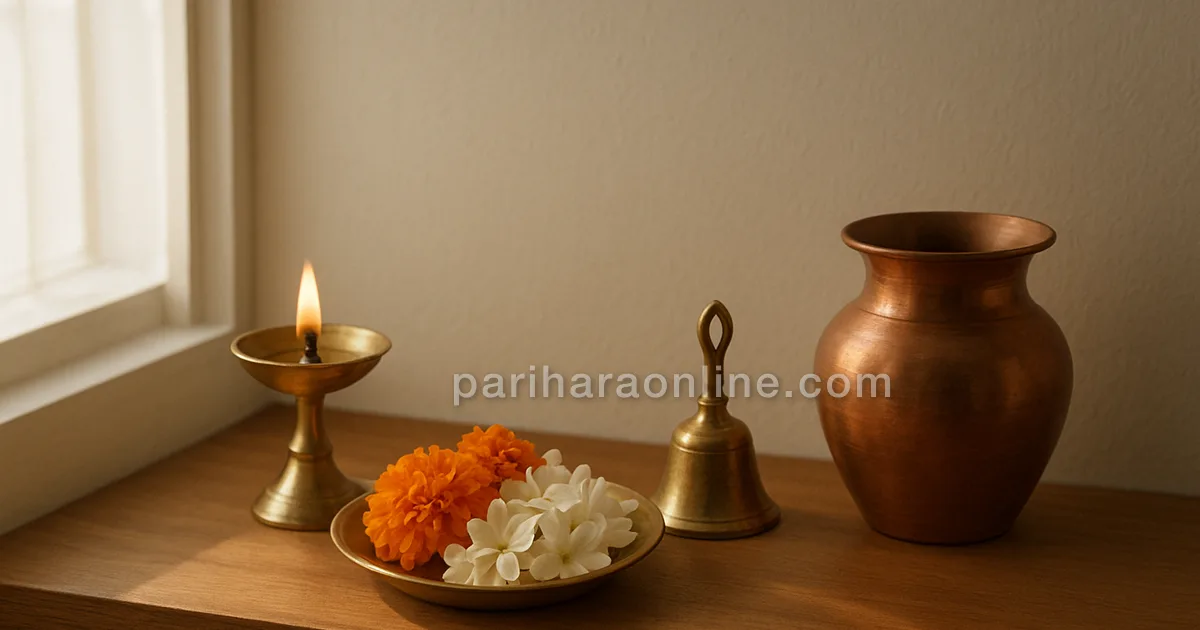
- Light the lamp. A ghee or oil lamp, and incense if you like. Watch the flame catch before you move on. How to light a diya covers wicks, oil and placement.
- Invoke. Begin with Ganesha, always first, with a line such as "Om Gam Ganapataye Namah". There is a lovely reason for that order, told in why Ganesha is worshipped first. Then call on your chosen deity by name.
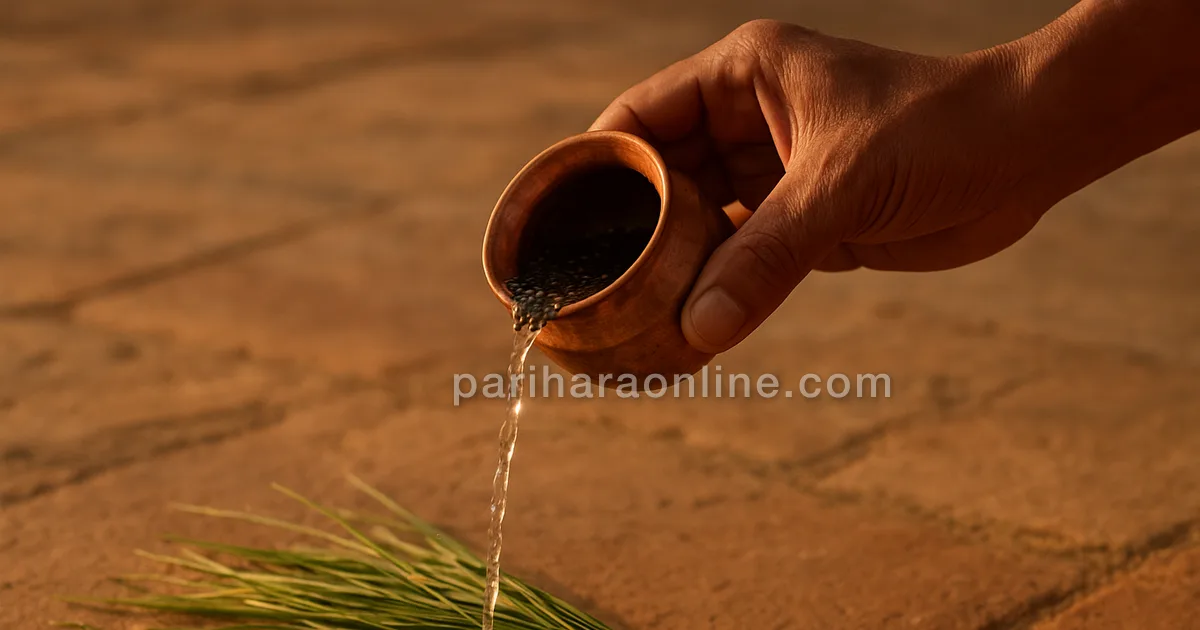
- Offer. A little water in a spoon, sprinkled at the deity's feet. A flower or two. A piece of fruit, a few raisins or some cooked rice. You are offering what you have, not what a list says.
- Aarti. Aarti is the waving of the lamp before the deity. Hold it in your right hand and wave it slowly in circles, clockwise, three or more times. Ring a bell with the left hand if you have one. Then bow.
- Sit in silence. One minute. Just sit. Do not reach for your phone. This is the step most people skip and the one that does the most.
At the end, many families share the offered food as prasadam, the blessed food, and eat it first.
This six-step sequence is itself a shortened form of a much older, fuller one. If you are curious, the sixteen steps of puja show how each act is modelled on welcoming an honoured guest.
Do I need to know Sanskrit?
No. This question stops a lot of people, so let me answer it directly. You can do puja at home without a priest and without Sanskrit. Daily home worship has always been done by families themselves, in every Indian language.
Use the deity's simple names: "Om Namah Shivaya", "Om Namo Narayanaya", "Jai Hanuman", "Amma". If a mantra feels unfamiliar, speak in your own language. Say what you are grateful for, what you are worried about, and what you hope for. Sincerity is the actual requirement. If you would like to learn a few mantras properly, chanting for beginners is a gentle place to start.
Making it stick
The challenge with how to do puja at home daily is not learning it. It is doing it on day twelve, when you are tired.
- Same time, every day. Morning after a bath, or dusk when the light changes. Pick one and protect it.
- A busy-day version. On hard mornings, light the lamp, say one name, bow and sit for three breaths. That still counts.
- Keep things ready. Wicks trimmed, oil filled, matches in the same drawer. Friction kills practices.
Something happens in the body when the same sequence is repeated at the same hour. Many people notice that after a couple of weeks, the shoulders drop and the breath slows the moment the lamp is lit, before any prayer has been said. The body starts to recognise the ritual. That is the ritual working on you.
Try this for seven mornings
Do these six steps for seven mornings in a row. Same time, same order. Do not judge whether it went well.
Each day, notice one thing: at which step your mind begins to quieten. Some days it will be the lamp. Some days it will be the silence at the end. Some days it will not quieten at all. Keep going. By the seventh morning, you will know more about your own attention than any book could tell you.
Questions people ask
What are the basic steps of puja at home?
Clean the puja space and wash your hands and face. Light a lamp and incense. Pray to Ganesha first, then to your chosen deity. Offer water, flowers, and a little fruit or cooked food. Wave the lamp in an aarti, bow, and sit quietly for a minute. Many families finish by sharing the food as prasadam.
Can I do puja at home without a priest?
Yes. Daily home puja has always been done by families themselves. Priests are called for special rites such as homams, weddings or griha pravesh, where precise Vedic chanting is expected. For everyday worship, simple mantras like 'Om Namah Shivaya' or the deity's names, said with attention, are traditionally considered complete.
What time of day is best for puja at home?
Early morning after bathing and dusk when the lamp is lit are the two traditional times. The morning puja sets the tone for the day; the dusk lamp marks the shift into evening. If your schedule does not allow either, a consistent time you can keep is better than an ideal one you skip.
Enjoying this?
To get more Puja at Home posts like this, subscribe for free.
Written by
Writes about practice: attention, breath, the body, the lamp
Archana writes about ritual as something you do rather than something you believe: the lamp, the breath, the fast, the few quiet minutes before the day begins. Her pieces usually end with a small practice to try for a week and notice what changes.