Brahma Vidya Ganapati Temple, Bengaluru: A Guide
A guide to the Brahma Vidya Ganapati temple in Bengaluru: Ganesha as knowledge, panchamrita abhishekam on Sankatahara Chaturthi, and joining from abroad.
· 4 min read
In short
The Brahma Vidya Ganapati temple in Bengaluru is a private temple devoted to Ganesha, with special pujas on Ganesh Chaturthi and every Sankatahara Chaturthi.
Its panchamrita abhishekam bathes the deity in milk, curd, ghee, honey and sugar, and can be offered in your name from abroad.
Brahma Vidya means the knowledge of the Absolute, and a Ganapati by that name tells you what the Brahma Vidya Ganapati temple in Bengaluru is about before you arrive. Here Ganesha is not only the remover of obstacles on the road outside. He is the one who clears the mind, so that what you already know can finally be seen. The temple is known for its care over Ganesha worship, with special pujas on Ganesh Chaturthi and on every Sankatahara Chaturthi, and much of that worship can be offered in your name from abroad.
What is special about the Brahma Vidya Ganapati temple?
It is a private temple rather than one run by a large public board, and its worship is devoted to Ganesha. Special pujas are offered on Ganesh Chaturthi and on every Sankatahara Chaturthi, and the panchamrita abhishekam is the offering it is best known for. No famous legend is attached to it, and it does not need one; what matters here is the steady care of the worship itself.
The name is worth sitting with. The Ganapati Atharvashirsha, a Sanskrit hymn chanted in many Ganesha temples, addresses him with a startling line: you alone are the visible form of Brahman, the Absolute. Most of us meet Ganesha as the god you pray to before an exam or a road trip, the one worshipped first in every ritual. The Atharvashirsha takes that same god and says: this is what reality looks like when it chooses a face. Brahma Vidya Ganapati holds both ideas at once. The elephant-headed child and the knowledge that ends all seeking are the same deity.
Why panchamrita abhishekam?
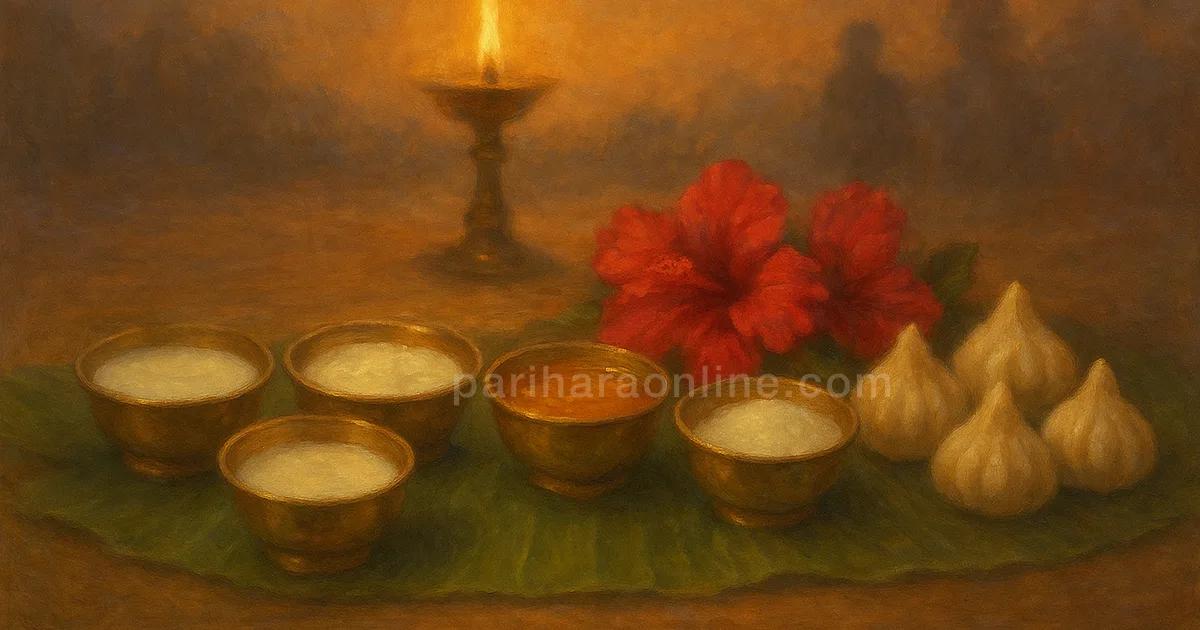
Abhishekam is the ritual bathing of the deity. At this temple, panchamrita abhishekam is central: milk, curd, ghee, honey and sugar are poured over Ganesha one after another, each followed by water.
If you ever get to watch one, do it slowly. Notice how milk runs off quickly and leaves the stone bright. Curd clings. Ghee makes the surface glow. Honey moves so slowly you can follow a single thread of it down the trunk. Sugar sticks, then dissolves under the next pour of water. Five substances, five different ways of touching the same form. It is a lesson in attention disguised as a ritual. You cannot watch it properly while thinking about your inbox.
If you want to try the offering at home, the proportions and method are in panchamrutham at home.
How do you take part from the US?
Sankatahara Chaturthi, the monthly day for Ganesha, falls on the fourth lunar day after the full moon. Sankata means trouble and hara means removing, so it is the day devotees bring Ganesha whatever is stuck. The tradition is to fast until moonrise and then eat after a small prayer. The full practice is described in the Sankatahara Chaturthi fast.
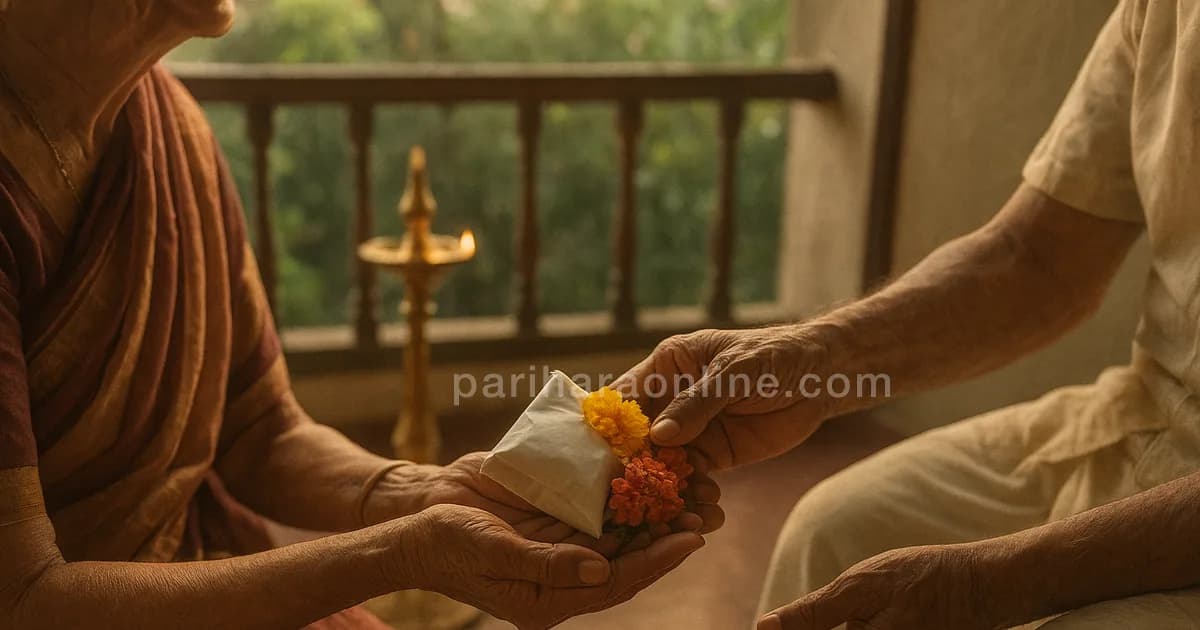
From the US, the timing needs a little thought. The temple's pujas happen on Indian time, which usually means late evening or night for you, the day before on your calendar. Joining a puja across time zones explains how to line the two up. You will be asked for your name, your nakshatra (birth star) and your gotra (family lineage) so they can be spoken in the sankalpam, the statement of intention that begins the ritual. If you do not know your gotra, it is common to say so; the priest will use a general form.
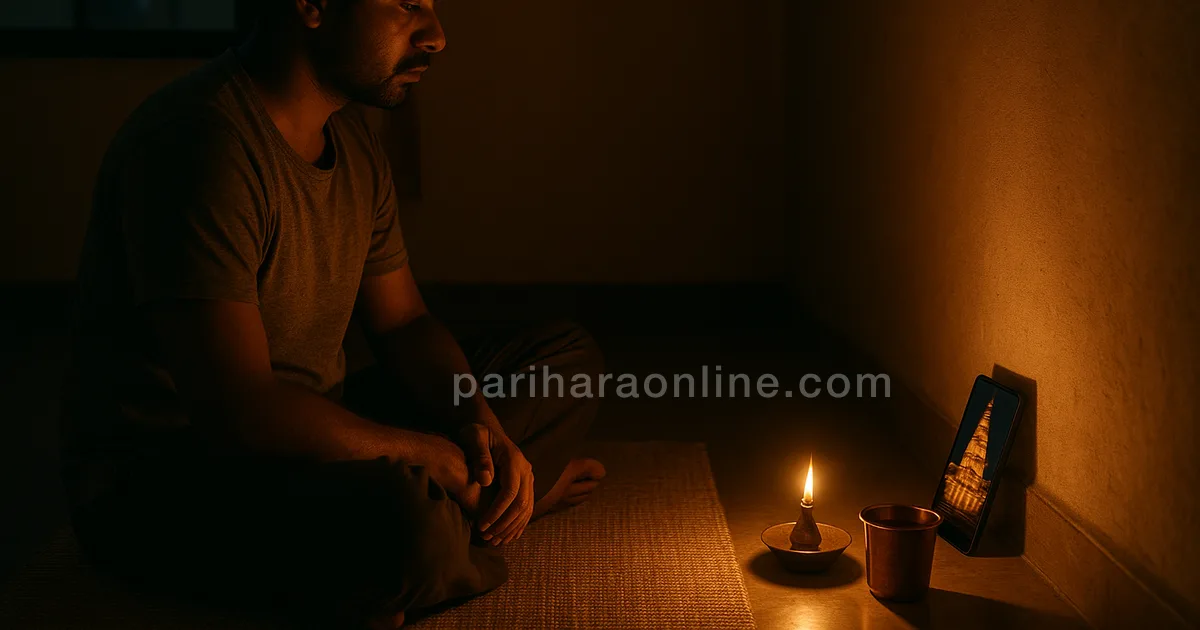
Then keep your own side of it. Fast lightly through your day, whatever that means for your body and your schedule. After moonrise where you live, light a lamp, eat something simple, and let that be your part of the same ritual happening across the world. A student in a dorm can do a version of this with a tea-light and a piece of fruit, and keeping practice as a Hindu student in a dorm has more ideas for small rooms and shared walls.
Try this for one lunar month
On the next Sankatahara Chaturthi, light a lamp at home and offer a sweet to Ganesha, even a single piece of jaggery. Before you do, pick one question you want clarity on. Not a wish, a question. Hold it while the lamp burns. Do the same on the following one, about a month later. Notice whether the question has changed shape.
That is what Brahma Vidya points to. Not a new answer delivered from outside, but the fog lifting from something you were already carrying.
Questions people ask
Can I book a Ganesha abhishekam online from the USA?
Yes. Many temples in India, including the Brahma Vidya Ganapati temple in Bengaluru, accept abhishekam bookings made from abroad. You share your name, birth star and gotra for the sankalpam, and the priest performs the ritual on your behalf on the chosen day. Many families keep a small parallel prayer at home at the same hour, with a lamp and a sweet.
What is Sankatahara Chaturthi abhishekam?
Sankatahara Chaturthi is the fourth lunar day after the full moon, sacred to Ganesha. Devotees fast through the day and break it after sighting the moon. An abhishekam on this day bathes the deity in milk, curd, honey and other offerings while prayers are chanted, and many people ask for obstacles in a specific area of life to ease.
Why is Ganesha called Brahma Vidya Ganapati?
Brahma Vidya means knowledge of Brahman, the ultimate reality. The Ganapati Atharvashirsha, a well-known hymn, addresses Ganesha as the visible form of that reality, not only as a friendly household god. Naming him Brahma Vidya Ganapati emphasises this side of him: the deity who removes the inner obstacles of confusion and restlessness as well as outer ones.
Enjoying this?
To get more Temple Guides posts like this, subscribe for free.
Written by
Writes about practice: attention, breath, the body, the lamp
Archana writes about ritual as something you do rather than something you believe: the lamp, the breath, the fast, the few quiet minutes before the day begins. Her pieces usually end with a small practice to try for a week and notice what changes.