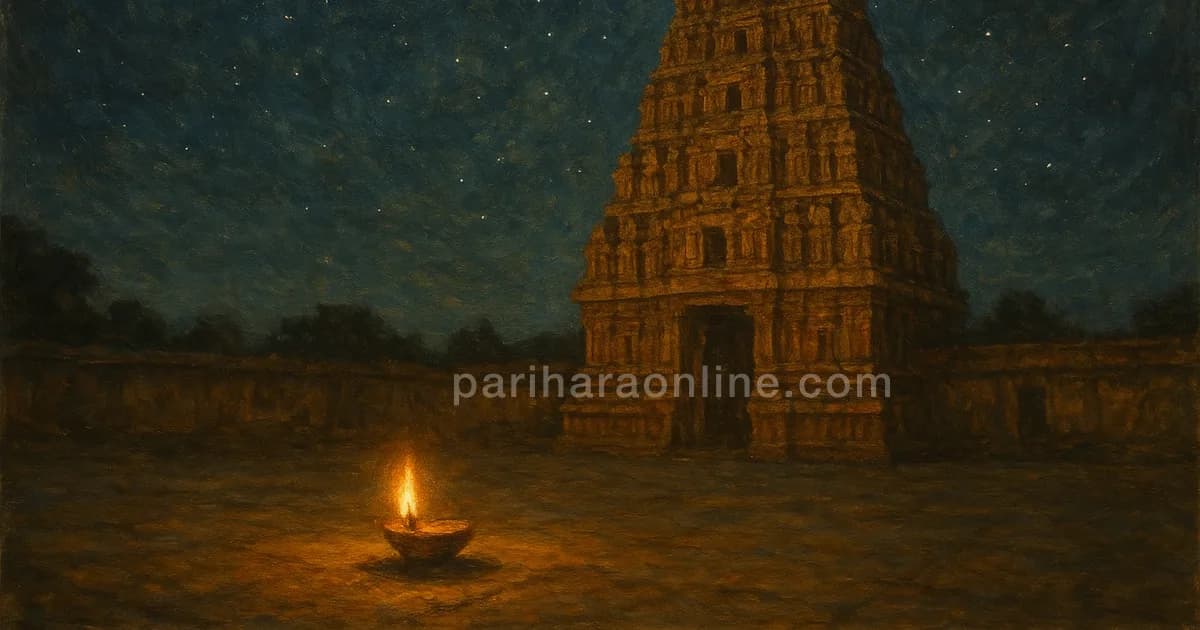
Swati Nakshatra (Swathi): The Wind's Independent Star
Swati nakshatra, Swathi in Tamil: Vayu and Rahu, the young shoot in the wind, Narasimha's star, the Chithukkadu temple, and simple poojas for it.
· 4 min read
In short
Swati, Swathi in Tamil, is presided over by Vayu, the wind, with Rahu as its ruling planet and a young shoot bending in the wind as its symbol.
Many South Indian temples keep Narasimha Jayanti on the Swati star in Vaishakha, so Swathi is widely remembered as Narasimha's star.
Nakshatra temple lists differ for Swathi; one widely shared list names Chithukkadu, near Poonamallee.
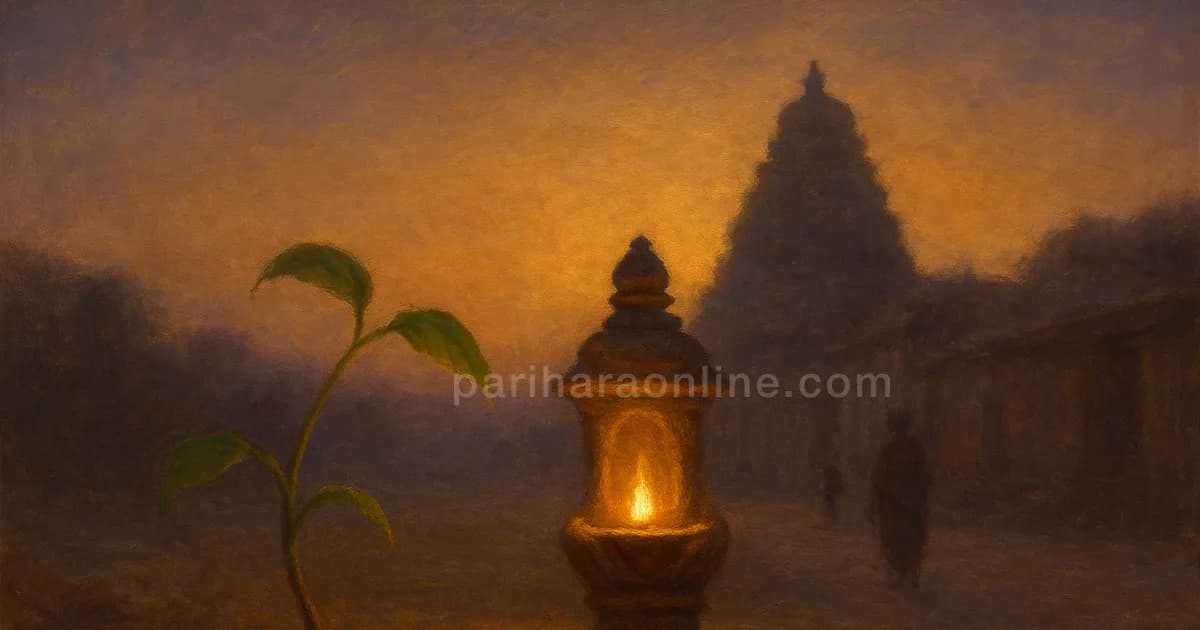
On a windy morning at the Metropark platform, waiting for a train that was running late, I watched a sapling by the fence bend almost flat in a gust and then spring back upright. It did it again, and again. Swati nakshatra, Swathi in Tamil, takes exactly that as its symbol: a young shoot that the wind moves but cannot break.
Swati nakshatra: the wind, Rahu and a bending shoot
Our astrologer in Madurai can give you a star's particulars in one breath. For Swathi the god is Vayu, the wind, the breath of the world, and the adhipati, the ruling planet, is Rahu, the shadow planet associated with restlessness and the unconventional. The star lies wholly in Tula, the sign of the scales, which has its own column in Tula rasi.
Its symbol is a young shoot swaying in the wind, and sometimes a piece of coral. Both are flexible, both survive by moving. Swati is said to mean the independent one, or in some readings, the sword.
Tradition describes Swathi-born people as independent, diplomatic, fond of travel and good at trade. Many are said to dislike being told what to do. My father, when he hears that list, says it describes every Tamil uncle he has ever met, whatever their star. It is a description, not a decree.
The star follows Chitra, the builder's star.
Why is Swathi remembered as Narasimha's star?
Because Narasimha Jayanti falls on it. In many South Indian temples, the day Vishnu burst from a pillar as Narasimha, half man and half lion, to protect the boy Prahlada from his father Hiranyakashipu, is kept on the Swathi star in the bright fortnight of Vaishakha, the month called Vaikasi in Tamil. The Bhagavata Purana tells the whole story, and what the Narasimha avatar means goes through it properly, boon, pillar, dusk and all. My son first heard it from me at a red light, which is not the ideal setting, but he remembered the pillar.
What I take from Prahlada is his steadiness. He was a small boy in a large and angry house. He bent to his father in every way except one, and on that one thing he did not move.
Temple, star day and Sudarshana
Nakshatra temple lists differ for Swathi. One widely shared list places the star's temple at Chithukkadu, near Poonamallee, and even within that village some name the Thatheeswarar shrine and others the Perumal temple. Families usually visit whichever one they were taught to.
On the monthly Swathi day, when the Moon returns to the star, many families keep Narasimha and Sudarshana worship. Sudarshana is Vishnu's discus, worshipped as a protector in its own right, and families who want the fuller ritual read up on the meaning of the Sudarshana homam. A lamp and a few repetitions of Narasimha's name are enough for the day.
When Swathi returns in someone's birth month, the family often books a Narasimha archana, his names chanted over flowers, at a nearby temple. If you are abroad, many families ask someone at home to offer it in their name. The next star, Vishakha, Murugan's forked star, carries Tula over into Vrischika.
One small thing for this week
When something pushes you hard this week, a sharp email, a difficult call, a plan that falls apart, bend first and answer later. Give it a night. Let the gust pass. The sapling at Metropark did not argue with the wind. It simply came back upright once it had gone by. Vayu's star is about returning upright, not refusing to move.
Questions people ask
Which temple is the Swathi nakshatra temple?
The widely cited Tamil list of nakshatra temples names Chithukkadu, near Poonamallee in Tiruvallur district, as the Swathi nakshatra temple. Some lists name the Thatheeswarar shrine and others the Perumal temple in the same village, so check locally. Swathi-born devotees often visit on their star day, or pray to Narasimha at a nearby temple.
Why is Narasimha Jayanti linked to Swati nakshatra?
Tradition holds that Narasimha appeared from the pillar to protect Prahlada on the fourteenth day of the bright fortnight of Vaishakha, Vaikasi in Tamil, with the Moon in Swati. Many temples observe Narasimha Jayanti on that star, usually in May. This is why Narasimha and Sudarshana worship are especially favoured by people born under Swathi.
What are Swathi star characteristics in Jyotish?
Tradition describes Swathi-born people as independent, soft-spoken, diplomatic, adaptable and drawn to trade, travel and learning, with restlessness as a possible shadow. The shoot in the wind captures that ability to bend without breaking. These are tradition's descriptions of the star, not fixed traits; the full chart matters far more than one star.
Enjoying this?
To get more Nakshatra posts like this, subscribe for free.
Written by
The Sunday column: festivals and rituals meeting ordinary weeks
Manikandan writes the Sunday column, where festivals and rituals meet commutes, hospital corridors and video calls with parents far away. Each piece closes with one small thing to carry into the week ahead.