Mula Nakshatra (Moolam): The Root Star, Without Fear
Mula nakshatra, Moolam in Tamil: Nirriti and Ketu, the bundle of roots, why fear of the star is misplaced, and the Mappedu temple for devotees.
· 4 min read
In short
Mula, Moolam in Tamil, is presided over by Nirriti, goddess of dissolution, with Ketu as its ruling planet and a bundle of roots as its symbol.
Folk fears about Moolam are custom, not scripture; Tamil tradition also remembers Hanuman as born on Moolam.
The Singeeswarar temple at Mappedu is traditionally associated with Mula nakshatra.
Mula means "root", and the goddess of Mula nakshatra is Nirriti, who presides over dissolution. People hear that and worry, especially when a baby in the family is born under Moolam, as it is called in Tamil. But ask a gardener. Nothing grows without first going down into the dark. The root star is about depth, not doom.
Mula nakshatra: Nirriti, Ketu and a bundle of roots
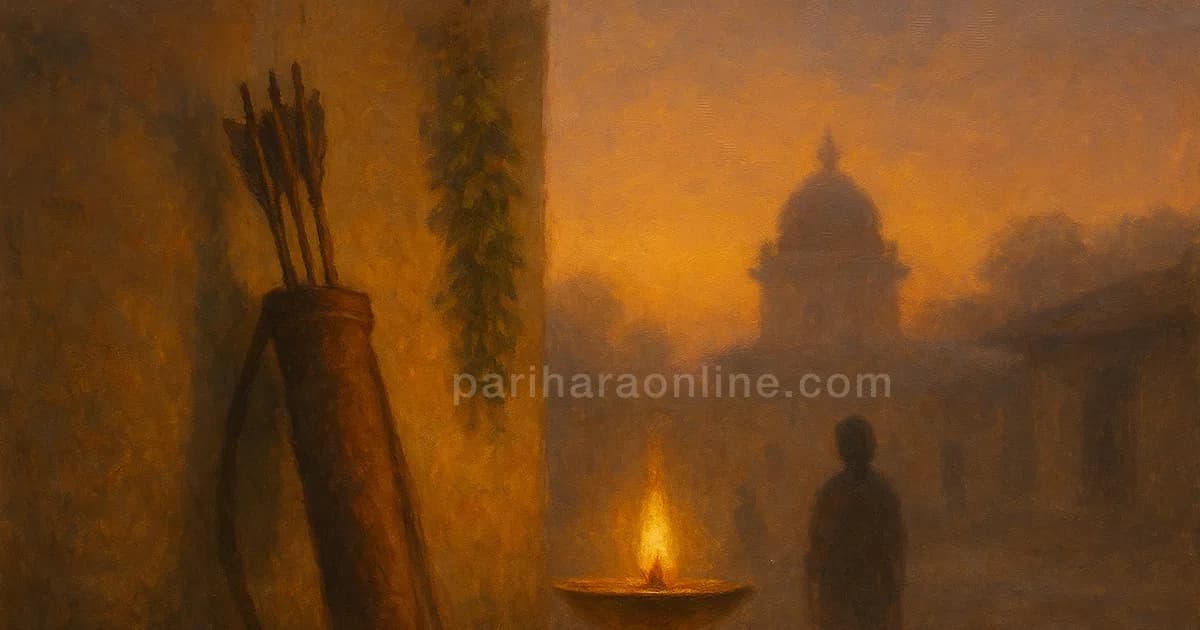
Like each of the twenty-seven nakshatras, the star groups the Moon crosses every month, Mula has a presiding power and a ruling planet. Its power is Nirriti, a Vedic goddess of decay and dissolution. Its planet is Ketu, the shadow planet associated with detachment, endings and insight. The star opens Dhanu, the sign of the archer; Dhanu rasi has more on the sign.
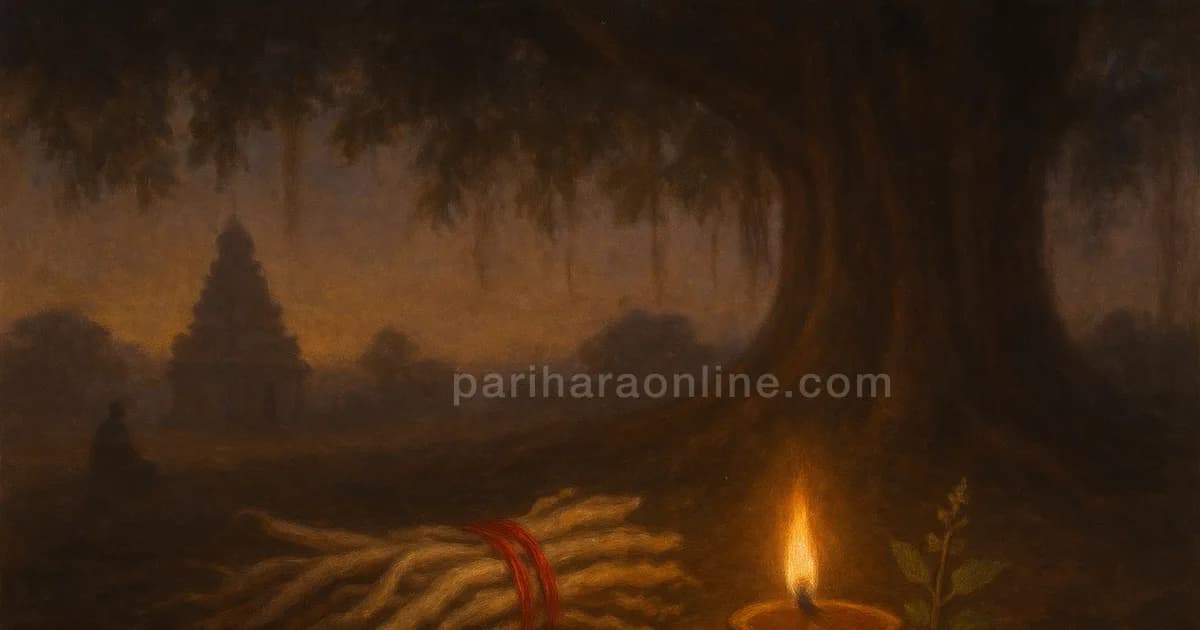
Its symbol is a bundle of roots tied together, and in some texts a lion's tail. Roots are what nobody sees and everything depends on. A lion's tail is the part that trails behind, easy to ignore until the lion turns.
A star with roots for its symbol gets people to match, or so the tradition says: searching, direct, philosophical, drawn to the root of things. They are said to want to know why, not only what. That is a temperament, not a timetable.
The star follows Jyeshtha, the star of the eldest, which carries a similar reputation.
Why do people fear Moolam, and what does the root really mean?
The fear comes mostly from folk sayings. The best known says that a Moolam bride brings misfortune to her father-in-law. You will hear it in matchmaking, and some families still refuse matches because of it. These sayings are custom rather than scripture. Many astrologers say so plainly, and many families have set them aside without fuss.
Nirriti herself is worth a second look. In the Vedas she is feared, yes, but for a reason: she is the one who removes what has decayed. Every garden needs her. Compost is her work. So is the autumn that clears the branches for spring. A tradition that honoured only growth and never decay would be a tradition that did not understand growth.
There is another thread that turns the fear upside down. Tamil tradition remembers Hanuman's birth on Moolam, in the month of Margazhi, and Tamil Hanuman Jayanti is kept then. The festival is described in the significance of Hanuman Jayanti. Of all the gods, the one said to be born on the "feared" star is the one people pray to for courage.
The story says strength was born on Moolam. The story is really about uprooting fear. Hanuman does not avoid the dark places; he leaps into them, across the ocean, into Lanka, into the fire. A root does the same. It goes down, and that is how the tree stands up.
Temple, star day and protection
The shrine usually named for Mula is the Singeeswarar temple at Mappedu, near Perambakkam. An archana, flowers offered while the priest recites the deity's names, can be done there or at a Shiva or Hanuman temple near you.
Because Ketu rules the star, Ganesha and Hanuman are the deities families most often turn to. Ganesha is said to steady Ketu, and Hanuman lends courage. More on this in how Ketu is worshipped. On the monthly Moolam day, your janma nakshatra, the Moon's monthly visit to your birth star, a lamp and a short prayer for courage are enough.
Moolam comes back in your birth month once a year, and that star birthday is a good day for clearing out, in whatever sense you need. The next star, Purva Ashadha, the waters' star, follows the roots with water, which is exactly the right order.
Pull out one weed
On your Mula day, pull out one weed. It might be a habit you have been meaning to drop, a grudge you have been carrying, or a drawer of old papers you have not opened in years. Do the actual work of clearing it: throw away the papers, make the call, say the sentence.
Notice how much lighter the space feels afterwards. That is Nirriti's gift. The root star is not a curse. It is an invitation to go deeper.
Questions people ask
Is Moolam nakshatra bad for marriage?
There are folk sayings that a Moolam bride is hard on her father-in-law, but they are regional custom, not scripture, and many astrologers reject them. Compatibility in Jyotish looks at both full charts across many factors. Tamil tradition also honours Hanuman as born on Moolam. No star should be a reason to refuse or doubt a person.
Which temple is associated with Moolam nakshatra?
The widely cited Tamil list of nakshatra temples names the Singeeswarar temple at Mappedu, near Perambakkam in Tiruvallur district, as the Moolam nakshatra temple. Moolam-born devotees often visit on their monthly star day, or arrange archana there from afar. Many also worship Hanuman and Ganesha, whom families associate with Ketu, the star's ruling planet.
Who is Nirriti, the deity of Mula nakshatra?
Nirriti is a Vedic goddess of dissolution and decay, guardian of the south-west. As the star's presiding deity, Nirriti represents the clearing away of what no longer lives, so that something new can root. Tradition treats this as painful but necessary, like pruning. The star is therefore read as a star of deep inquiry, not of doom.
Enjoying this?
To get more Nakshatra posts like this, subscribe for free.
Written by
Reads the old stories for what they still mean
Hariharan writes about the myths, symbols and festival stories that most of us grew up hearing but were rarely asked to think about. He tells the story first, then asks what it is really about, and leaves the conclusion to you.