Holi Meaning: Prahlad, Holika and the Bonfire
Holi meaning told through the Bhagavata Purana: Prahlad, Holika and the bonfire, Narasimha at dusk, Krishna's colours, and what the fire and colour stand for.
· 4 min read
In short
Holi begins with Holika Dahan, a bonfire recalling how Prahlad, the boy devotee of the Bhagavata Purana, survived the fire that consumed his aunt Holika in later tellings.
The next morning's colours recall Krishna's play with Radha in Braj; Holi falls on the full moon of Phalguna, usually in March.
Holi has two halves. There is a bonfire at night, and then a riot of colour the next morning, and each half has its own story. The short answer to the Holi meaning is this: the fire remembers a boy named Prahlad who walked out of the flames unharmed, and the colours remember Krishna playing with Radha in the villages of Braj. Holi falls on the full moon of Phalguna, usually in March, when the winter has finally let go. One story is about surviving; the other is about letting loose. Put together, they make a festival that is stranger and wiser than a colour party.
Holi meaning, part one: Prahlad and Holika
The Bhagavata Purana tells of Hiranyakashipu, a king of the asuras who wanted the whole world to worship him. His own son, Prahlad, would not. The boy prayed only to Vishnu, quietly and stubbornly, and no threat could change that. The father tried everything. He had the boy thrown from a cliff, trampled by elephants, given poison. Each time Prahlad survived.
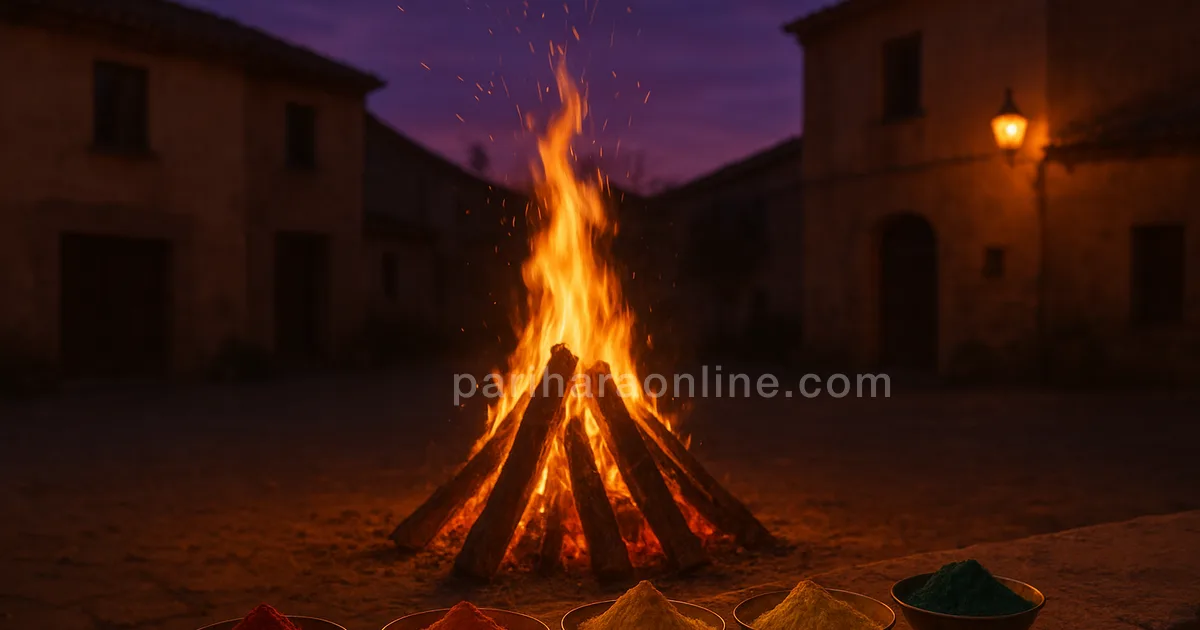
Later tellings, the ones most North Indian families grow up with, add the king's sister, Holika. She had a gift that fire could not burn her. So she sat in a pyre with Prahlad on her lap, meaning to let him burn while she walked out. It went the other way. Holika burned, and Prahlad stepped out untouched. That is why the night before Holi is called Holika Dahan, the burning of Holika, and why people gather around a bonfire.
The story says a demoness was destroyed. The story is really about protection that cannot be borrowed. Holika's immunity was a trick she wore on the outside. Prahlad's was on the inside. Fire tests which kind you have. If you want to keep that night yourself, there is a guide to Holika Dahan at home.
Why does Narasimha come at dusk?
The fire did not end things. Hiranyakashipu had one more protection: a boon from Brahma that he could not be killed by man or beast, inside or outside, by day or by night, on the ground or in the sky, by any weapon. He thought this made him immortal.
So Vishnu came as Narasimha, half man and half lion. He burst out of a pillar in the palace, caught the king at the threshold of the doorway, at dusk, placed him across his lap and used his claws. Neither man nor beast, neither inside nor outside, neither day nor night, neither earth nor sky, no weapon at all.
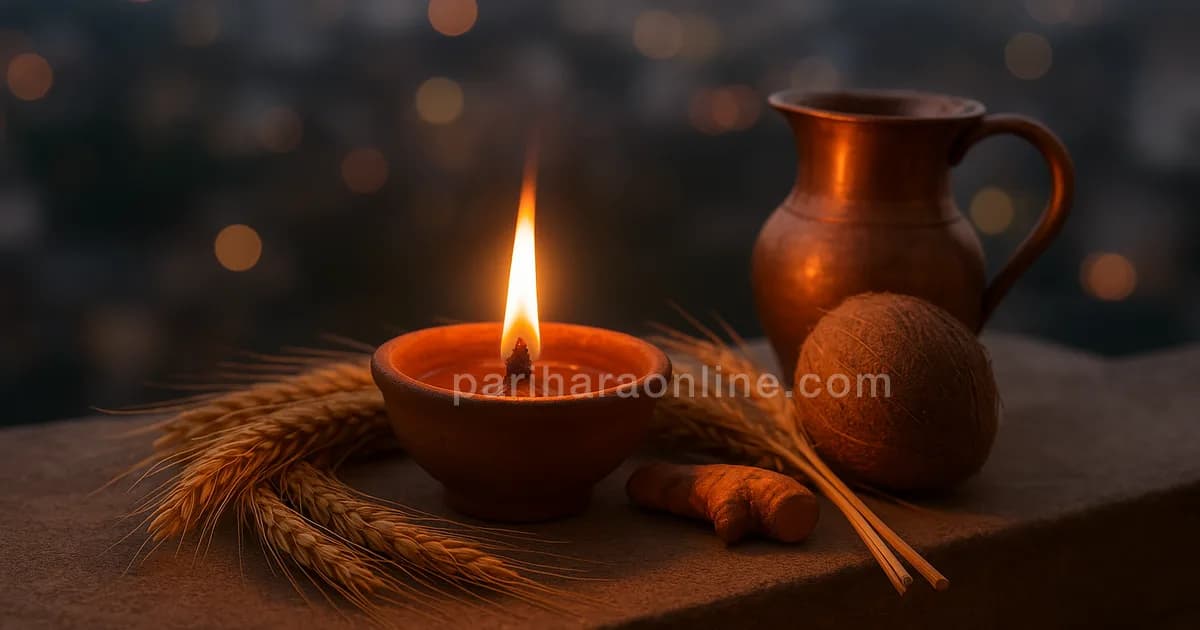
It is a lawyer's story, and a very old kind of joke. Every rule the king made to protect himself had a gap in it, and the gap was the in-between: the doorway, the twilight, the creature that is two things at once. Tradition returns to thresholds again and again, the lamp at the door and the prayer at dusk, as the story of why Hindus light lamps explains. The in-between is where the rules break, and where grace slips in.
What do the colours mean?
The morning belongs to someone else entirely. In the folk songs of Braj, where Krishna grew up, the dark-skinned boy complains to his mother that Radha is so fair and he is so dark. Yashoda laughs and tells him to go and colour Radha's face whatever shade he likes. He does, and the whole village joins in.
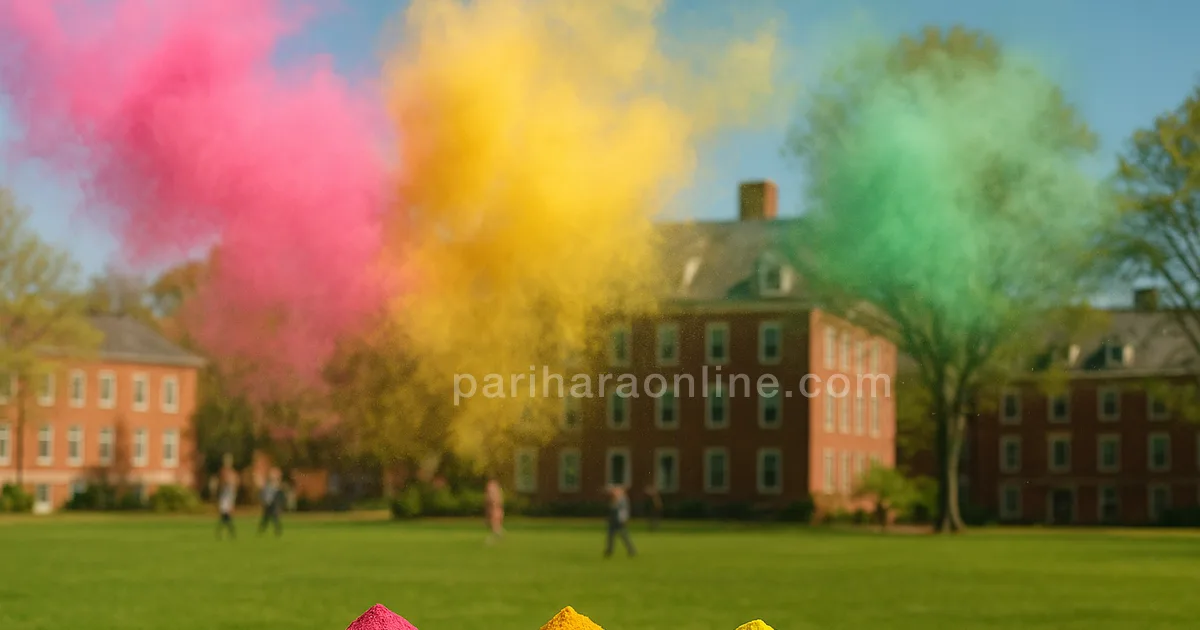
The dark god colouring the fair one is a small scene with a large idea. For one day, the markers people use to sort each other, fair and dark, high and low, old and young, man and woman, get smeared until nobody can tell. Holi comes in spring, in Phalguna, when the fields are full and the cold is over, and for one morning the social rules are suspended. You can throw colour at your boss. Your grandmother can throw it at you.
The Holi story also travels well. If colleagues or friends ask why is Holi celebrated, you can tell them both halves in a minute; the tips on explaining Hindu festivals to coworkers help with the wording. And families far from India are finding their own ways to play, as Holi in America describes.
Before the colours
The two halves belong together. You burn something first, then you play. Before you step into the colour, spend five minutes by a flame, even a single lamp, and think about what you would like to burn: a grudge, a fear, a habit you have outgrown. Let it go into the fire the way Holika did. Then wash your face, go outside and play like someone who has just survived something. In a way, you have.
Questions people ask
What is the story behind Holika Dahan?
In the Bhagavata Purana, the demon king Hiranyakashipu demanded everyone worship him, but his son Prahlad stayed devoted to Vishnu. The king's sister Holika, who could not be harmed by fire, sat in a pyre with Prahlad on her lap. She burned; Prahlad walked out unharmed. The Holika Dahan bonfire on the eve of Holi remembers this.
Why is Holi celebrated with colours?
The colours come from Krishna's story in Braj. Tradition says the dark-skinned Krishna worried that fair Radha would not like him, and his mother Yashoda playfully suggested he colour her face. Holi in Mathura and Vrindavan still re-enacts that play. More broadly, colour marks spring and the one day when age, caste and status are set aside in fun.
How is Narasimha connected to Holi?
After the Holika episode, Hiranyakashipu's boon said he could be killed neither by man nor beast, neither by day nor night, neither indoors nor outdoors. Vishnu appeared as Narasimha, half man, half lion, at dusk, on the threshold of the palace, and ended his tyranny. Holi's story therefore honours Prahlad's faith and Vishnu's protection together.
Enjoying this?
To get more Holi posts like this, subscribe for free.
Written by
Reads the old stories for what they still mean
Hariharan writes about the myths, symbols and festival stories that most of us grew up hearing but were rarely asked to think about. He tells the story first, then asks what it is really about, and leaves the conclusion to you.