Why Do Hindus Light Lamps? The Meaning of the Flame
Why do Hindus light lamps? What the flame means in Hindu tradition, from the old prayer to be led from darkness to light to the lamp lit at your door each dusk.
· 4 min read
In short
Hindus light lamps because light symbolises knowledge and the divine presence, echoing the Upanishadic prayer 'lead me from darkness to light'.
Tradition reads the lamp symbolically: oil as our tendencies, the wick as ego, and the upward flame as awareness.
Lighting a lamp at dusk and before every puja welcomes the sacred into the home.
There is a prayer in the Brihadaranyaka Upanishad, one of the oldest philosophical texts in the world: tamaso ma jyotir gamaya, lead me from darkness to light. Nobody recites it while lighting the evening lamp, exactly. But every lamp lit at dusk in every Hindu home is a small, practical answer to it. So why do Hindus light lamps? Because light, in the tradition, stands for knowledge and for the presence of the divine, and a lamp is the smallest possible way to invite both into a room.
Why do Hindus light lamps at home?
Ask a grandmother and she will give you one of three answers, often all at once.
The first is knowledge. Darkness is ignorance, the state of not seeing clearly; light is understanding. The significance of the lamp in Hinduism begins there. Lighting a lamp before study, before a new venture, before a ceremony, says: let me see what I am doing.
The second is witness. The flame is treated as a presence that watches over whatever happens in its light. This is why a lamp is lit before every pooja, and why many families will not begin worship until it is burning. In many South Indian homes, the lamp itself is decorated with kumkum and flowers and worshipped as a form of the Goddess.
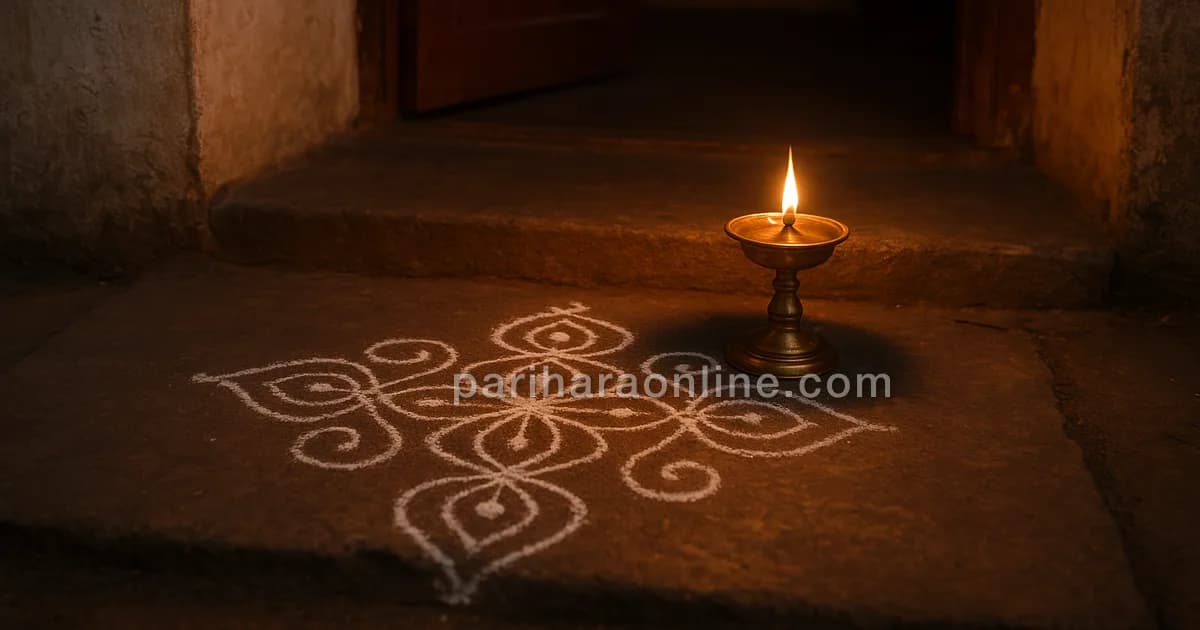
The third is welcome. A lamp at the door at dusk says the house is awake and ready to receive. The story says it is so that Lakshmi, the goddess of prosperity, can find the way in. Underneath, it is about being the kind of household that is prepared for good things, attentive at the hour when attention usually drains away. That evening custom has its own name and rhythm, described in the dusk lamp ritual.
What does the flame symbolise?
The tradition reads the lamp like a sentence. The oil is our tendencies, the habits and desires that fuel us. The wick is the ego, the small self. The flame is awareness. When the lamp burns, the oil is slowly consumed and the wick blackens, but the light goes on. The meaning of lighting a diya, in this reading, is that awareness grows by burning up what we cling to.
Notice, too, that a flame always points upward. Turn the lamp any way you like and the fire still climbs. That was not lost on anyone. It became a picture of what the mind is meant to do.
Then there is Agni, fire as a god. The very first hymn of the Rig Veda is addressed to Agni, the messenger who carries offerings from humans to the gods. A lamp is Agni made small enough to sit on a shelf. Which oil you feed it is its own conversation; ghee lamp or oil lamp looks at what tradition says.
Many families also teach children a short prayer for the moment of lighting, the deepa jyothi mantra, which begins "deepa jyoti parabrahma" and salutes the lamp's light as the supreme reality itself.
The lamp in the day and the year
Daily, the lamp marks the thresholds: dawn and dusk, the hinges of the day. Before any pooja, it marks the start of sacred time.
Yearly, the lamp becomes a festival. On Deepavali, which falls on the new-moon night around late October or November, rows of lamps push back the darkest night of the month; why Diwali is celebrated tells the stories behind it. On Karthigai Deepam, at the full moon of the Tamil month of Karthigai, lamps are lit for Shiva, who in the old story appeared as an endless column of fire that neither Brahma nor Vishnu could find the end of. It is a story about the limits of looking; the significance of Karthigai Deepam unpacks it.
One lamp, one minute
This evening, light one lamp before you switch on the electric lights. It does not matter whether it is brass or clay, ghee or oil; how to light a diya covers the basics if you need them. Then sit with it for one minute before you do anything else. You do not need to pray. Just watch the flame find its shape. Darkness is not evil. It is simply honest about how little we see. A lamp is honest too: it lasts only as long as someone tends it.
Questions people ask
What is the meaning of lighting a diya?
Lighting a diya symbolises dispelling ignorance with knowledge and welcoming the divine. The flame always rises upward, which is read as a reminder to direct the mind higher. Many families light a lamp at dawn and dusk because these are threshold times, and the lamp marks a pause between one part of the day and the next.
What is the deepa jyothi mantra?
It is a short Sanskrit prayer recited while lighting a lamp, beginning 'Deepa jyoti parabrahma'. It salutes the lamp's light as the supreme reality and asks it to remove darkness and bring auspiciousness. Families often teach it to children as a first prayer. If you do not know it, a simple heartfelt word works too.
Why is a lamp lit before every puja?
The lamp is treated as a witness to the worship and as a form of Agni, the fire that carries offerings to the divine. Lighting it first marks the start of sacred time. In many South Indian homes, the lamp itself is worshipped with kumkum and flowers as a presence of the Goddess.
Enjoying this?
To get more Lamps posts like this, subscribe for free.
Written by
Reads the old stories for what they still mean
Hariharan writes about the myths, symbols and festival stories that most of us grew up hearing but were rarely asked to think about. He tells the story first, then asks what it is really about, and leaves the conclusion to you.