Jyeshtha Nakshatra (Kettai): The Eldest's Burden
Jyeshtha nakshatra, Kettai in Tamil: Indra and Budha, the earring and umbrella, the weight of being the eldest, and the Pasupathi Kovil temple.
· 4 min read
In short
Jyeshtha, Kettai in Tamil, is presided over by Indra with Budha (Mercury) as its ruling planet; its symbols are an earring and an umbrella.
Folk fears about Kettai are custom, not scripture; tradition also reads the star as protection and responsibility.
The Varadaraja Perumal temple at Pasupathi Kovil is traditionally associated with Jyeshtha nakshatra.
Jyeshtha nakshatra, Kettai in Tamil, is the star of the eldest. Its god is Indra, its planet is Mercury, and one of its symbols is an umbrella, the kind once held over a king. A friend in Houston, the eldest of four, once told me on a late call that he has been holding an umbrella over his siblings since he was twelve. School fees, weddings, his father's surgery, a sister's visa. He said it without complaint, the way you describe the weather.
Jyeshtha nakshatra: Indra, Mercury and the eldest's umbrella
At every family function I grew up in, somebody knew everybody's star. What they knew, without saying so, was the Jyotish scheme in which each birth star has a god and a ruling planet, the adhipati. For Kettai the god is Indra, king of the gods, and the adhipati is Budha, Mercury, the planet of intellect, speech and quick thinking. The star is the last in Vrischika, the scorpion, and its name means the eldest, the senior one.
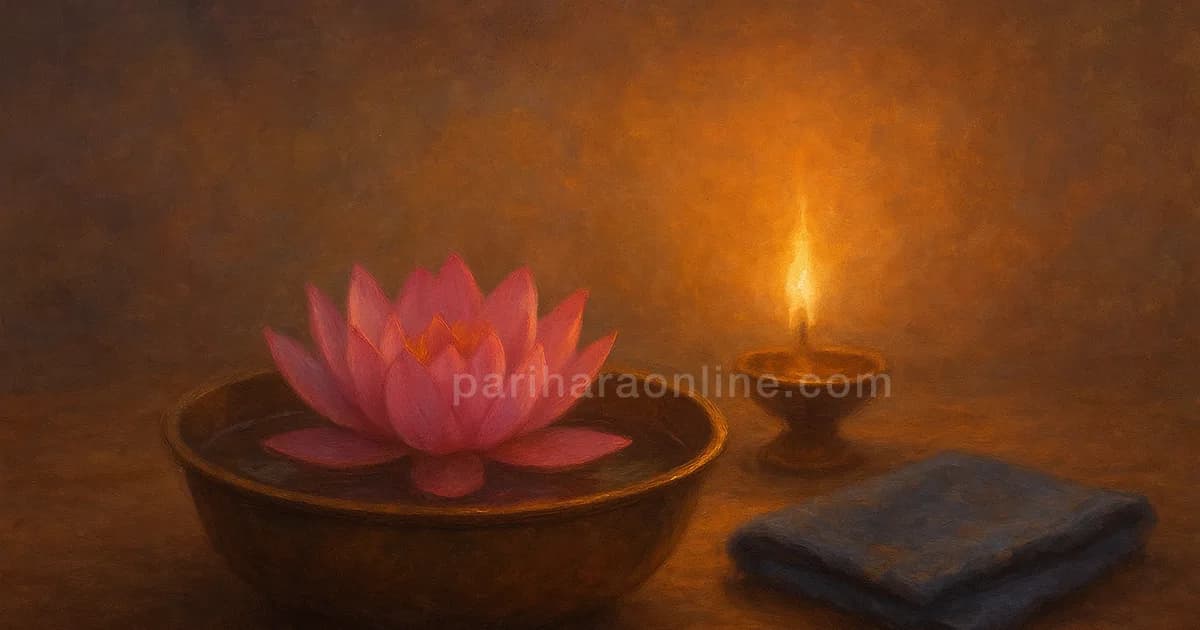
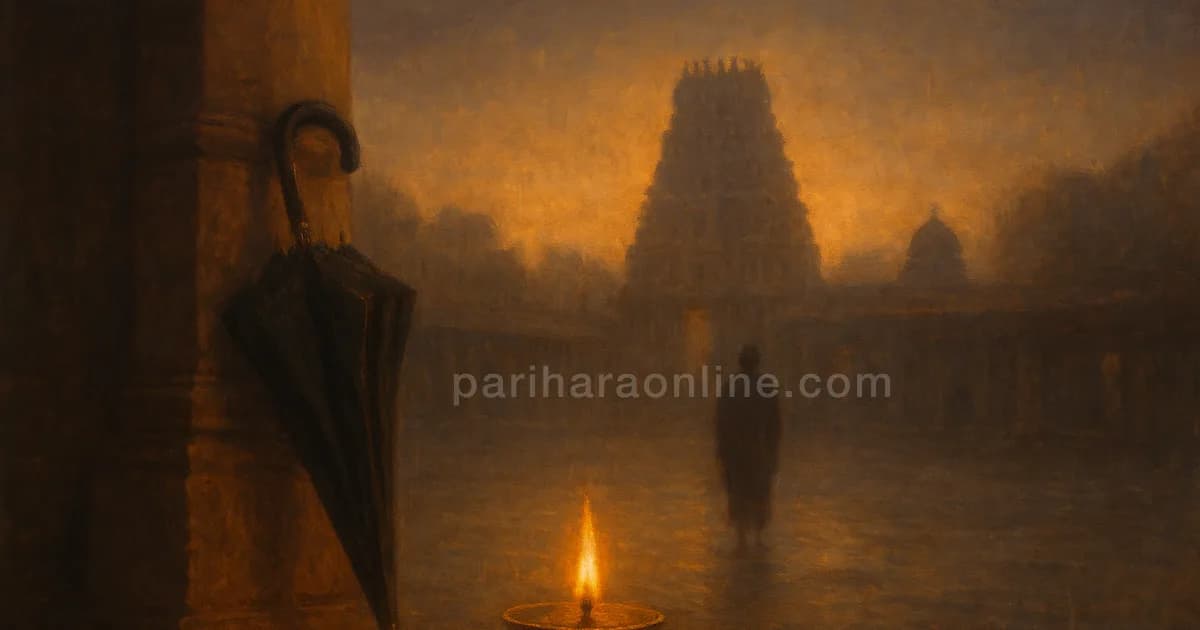
Its symbols are a circular earring, an ornament of rank, and the umbrella. Both are about protection and seniority. The umbrella shelters whoever stands under it, and somebody has to hold it up.
Tradition describes Kettai-born people as responsible, protective, sharp-witted and sometimes lonely at the top. They are said to take charge. My friend in Houston is not Kettai, as it happens, which tells you how widely the description applies. It is a description, not a decree.
The star follows Anuradha, the star of friendship.
Is Kettai really an unlucky star?
Kettai has a reputation, mostly from folk sayings. The best known is that a Kettai-born child brings difficulty to an elder brother, and you will still hear it in matchmaking conversations. My aunt in Chennai mentions it every time a Kettai baby is born in the extended family. Our astrologer in Madurai, who has never frightened anyone, treats such sayings as custom, not scripture.
The name has an older echo too. Jyeshtha Devi, the elder sister of Lakshmi, was once widely worshipped in Tamil temples, and old stone images of her still stand in some temple corridors. Later she came to be seen as the goddess of misfortune, and her worship faded. The idea behind her is not frightening, though. She is the elder who comes first, the one who takes what is difficult so the younger can have what is pleasant.
The figure many Kettai families turn to is Hanuman, strength used for others and never for himself. In the Kamba Ramayanam, Kamban calls him "sollin selvan", the one rich in words. For a star ruled by the planet of speech, that fits well: strength and the right word, both in service. Families who pray to him weekly usually keep the Hanuman Chalisa on Saturdays, the way my North Indian colleagues keep their Tuesdays.
Temple, star day and Hanuman
The temple our elders, and the widely shared Tamil star list, name for Kettai is the Varadaraja Perumal temple at Pasupathi Kovil, near Thanjavur. My grandmother lived in Thanjavur, and she used to say that every village in the district had a temple someone's star belonged to.
The observances are simple. Hanuman worship on Saturdays, with a lamp and a few verses. Wednesday prayers for Mercury, since he rules the star, following the pattern in how Budha is worshipped. On the monthly Kettai day, when the Moon returns to your birth star, a single lamp. And when Kettai returns in the month someone was born, families often mark it with a Hanuman archana, his names chanted with flowers at the temple.
The next star, Mula, the root star, carries a similar reputation and deserves the same kinder reading.
One small thing to carry into this week
If you are the one holding the umbrella for others, let someone hold it for you once this week. Let a sibling pay for dinner, or let a colleague take the difficult call. It will feel strange at first.
Even Indra, king of the gods, had to be rescued in the old stories, more than once. Nobody holds the umbrella forever, and the eldest's real strength is knowing when to hand it over.
Questions people ask
Is Kettai nakshatra bad?
No star is bad. Some folk sayings warn about Kettai, especially regarding elder brothers-in-law, but these are regional custom rather than scripture, and many astrologers set them aside in favour of the whole chart. Tradition also describes Kettai as the star of the eldest, protective and capable. A star name is never a reason to judge a person or a match.
Which temple is the Kettai nakshatra temple?
The widely cited Tamil list of nakshatra temples names the Varadaraja Perumal temple at Pasupathi Kovil, near Thanjavur, as the Kettai nakshatra temple. Kettai-born devotees often visit on their monthly star day, or arrange archana there from afar. Many also worship Hanuman on Saturdays, a practice families commonly associate with the star's theme of strength in service.
What are Jyeshtha star characteristics?
Tradition describes Jyeshtha-born people as responsible, protective, intelligent, resourceful and often carrying more than their share, with pride or secrecy as possible shadows. The umbrella symbol captures seniority and protection. These Jyeshtha star characteristics are tradition's portrait of the star, not fixed traits; the full chart and personal choices matter far more.
Enjoying this?
To get more Nakshatra posts like this, subscribe for free.
Written by
The Sunday column: festivals and rituals meeting ordinary weeks
Manikandan writes the Sunday column, where festivals and rituals meet commutes, hospital corridors and video calls with parents far away. Each piece closes with one small thing to carry into the week ahead.