Shivaratri Fasting for Working People, After a Long Week
Shivaratri fasting for working people: a reflection on keeping the night of Shiva after a long week, with a verse, a small vigil and one thing to carry forward.
· 5 min read

In short
If you work, Shivaratri can be kept with intention, one offering and a stretch of wakeful quiet, even if a full fast and all-night vigil are not possible.
A tired mind sitting honestly in the dark with Om Namah Shivaya is still keeping vigil; the tradition values sincerity over stamina.
Shivaratri landed on a Thursday. I got home at eight, too tired to fast properly and too stubborn to skip it, and sat down on the living room floor in the dark anyway. That evening taught me something about Shivaratri fasting for working people: what the night asks for is intention, one offering and some wakefulness. A full fast and all four watches are beautiful, but they can bend. You can keep the night honestly even after a long week at a desk.
Shivaratri fasting for working people
My grandmother kept Shivaratri the full way. No food from morning, the temple at dusk, four rounds of abhishekam through the night, a bath at dawn. I grew up thinking that was the only version that counted. Then I got a job with a commute and a manager in another time zone, and the only version that counted became the one I kept skipping.
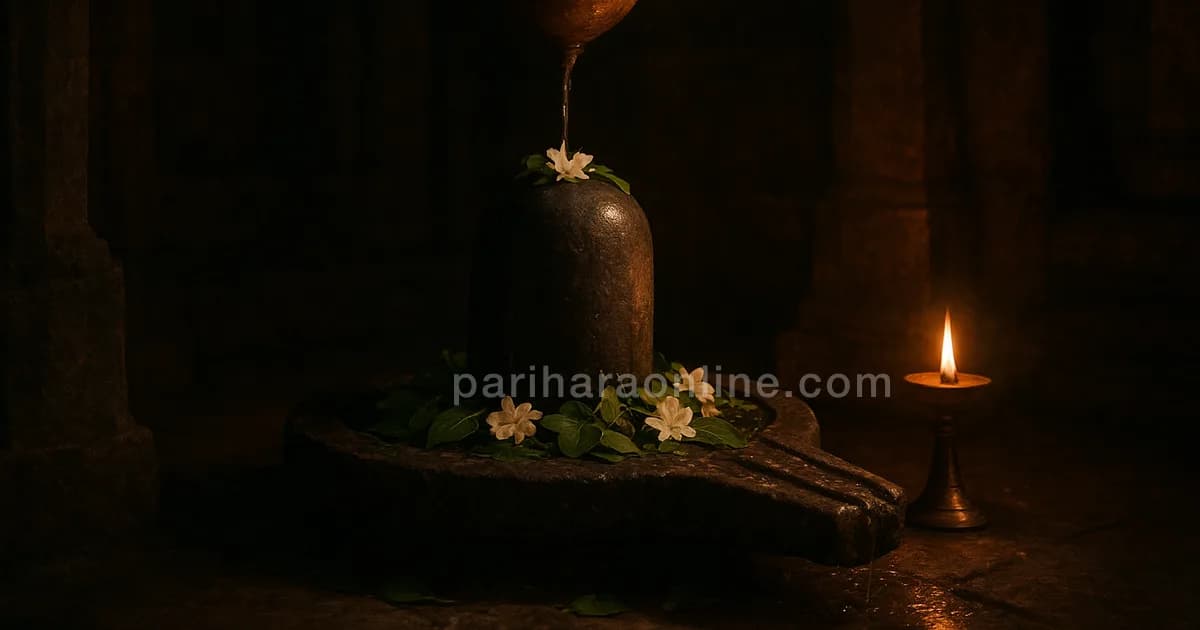
So I started asking what is essential. Three things, I think. First, intention: a quiet moment in the morning where you decide that today is Shivaratri for you, even if nobody at work knows. Second, one offering: water poured over a small linga, or a single lamp in front of a picture of Shiva. Third, some wakefulness: a stretch of time in the evening, with the lights off, when you are awake on purpose.
What can bend? The full fast, if your work or health needs food. Eat simply, fruit and milk and one light meal, and let that be your fast. And all four praharas, the three-hour watches of the traditional vigil. If you want to try them, there is a good guide to keeping the Shivaratri vigil at home. If you cannot, one watch is still a watch.
Can a tired mind still keep vigil?
That Thursday I sat in the dark and could not stop thinking about a spreadsheet. I felt like a fraud. I remember wondering whether a tired, distracted mind could keep vigil at all.
Appar, the Tamil saint whose hymns are gathered in the Thevaram, has a line I love. He says the shade of the Lord's feet is like a faultless veena, like the evening moon, like a southern breeze, like a pond humming with bees. None of those images is dramatic. They are the ordinary sweetness of a quiet evening. I read that line again recently, and it occurred to me that Appar was not describing an ecstatic devotee. He was describing rest.
Tiredness, then, is not a failure of devotion. It can be an honest offering. You bring what you have. The story at the heart of the night is about a hunter who did not even know he was praying, and the Shiva Purana still counted his sleepless fear as worship; you can read it in the meaning of Maha Shivaratri. A tired office worker sitting in the dark with Om Namah Shivaya is not doing worse than that hunter.
A small Shivaratri after a long week
Here is what I do now, and what I would suggest if you are asking how to observe Shivaratri while working, especially when it falls on a weekday.
When you get home, wash your face and hands and change into something loose. Pour a little water slowly over a linga, or into a bowl before a picture. Light one lamp. Turn off every other light. Put your phone in another room, not face down beside you, actually in another room. Then sit and chant Om Namah Shivaya for thirty minutes. Out loud if you live alone, in a whisper if you do not.
If thirty minutes of chanting feels long, start with ten and let the rest be silence. The notes on chanting for beginners helped me stop worrying about getting it right. And if even that feels like too much on a weeknight, the twice-monthly Pradosham evening is a gentler way to build the habit before the big night comes round again.
Then go to bed. It is all right to sleep on Shivaratri if your body needs it. The night will not hold it against you.
One thing to carry into next week
The morning after that Thursday, I felt oddly clear. Not because I had achieved anything, but because I had stopped for half an hour in the dark and nothing had been asked of me.
So here is the small thing to carry into the coming week: five minutes of sitting in the dark before sleep. Lights off, phone away, a few rounds of Om Namah Shivaya or just your own breathing. It is a tiny Shivaratri, every night, and it fits after even the longest day. If you are also trying to fast with a desk job on other days, you will find the two practices keep each other company.
Questions people ask
How can I observe Shivaratri while working?
Keep what is essential and let the rest bend. Eat lightly or keep a fruit fast through the workday if your health allows. In the evening, offer water and a leaf or flower to a Shiva linga or picture, light a lamp and chant Om Namah Shivaya. Stay awake as long as you honestly can, perhaps through one prahara.
Is it okay to sleep on Shivaratri night?
Tradition encourages staying awake, but no one is judged for their body's limits. Many devotees keep vigil until midnight, the most important time, and then rest. Others wake before dawn for the last prahara. If you must sleep, sleep after a sincere offering and a quiet sitting. The alertness you bring matters more than the hours.
What is the simplest way to celebrate Shivaratri at home?
Light a lamp, pour a little water over a Shiva linga or place it before a picture of Shiva, offer a leaf or flower, and chant Om Namah Shivaya for a few minutes. Switch off the lights and sit quietly in the lamplight. This simple act, done with attention, holds the essence of the whole night.
Enjoying this?
To get more Maha Shivaratri posts like this, subscribe for free.
Written by
The Sunday column: festivals and rituals meeting ordinary weeks
Manikandan writes the Sunday column, where festivals and rituals meet commutes, hospital corridors and video calls with parents far away. Each piece closes with one small thing to carry into the week ahead.