When a Parent Dies in India and You Live Abroad
When a parent dies in India and you live abroad: a gentle guide to Hindu last rites for NRIs, what can wait, what you can do from afar, and the first year.
· 4 min read

In short
If you cannot reach India in time, cremation and early rites can be performed by a sibling, relative or priest; your absence does not cancel your love or your role.
Many families schedule the thirteenth-day and monthly rituals so children abroad can attend or join remotely.
Temples can perform tarpanam or tila homam on your behalf.
When a parent dies in India and you live abroad, the first thing to know is that the rites do not depend on you arriving in time. A sibling, a relative or a priest can perform the cremation and early rituals, and your love and your place in the family remain whole. The call often comes at two in the morning. This piece is for the hours and months after, when you are grieving and also quietly working out what the rituals ask of you from far away.
When a parent dies in India: the first days, travelling or not
Hindu custom prefers that cremation happen soon, often within a day. For a child in New Jersey or California, that is usually not enough time to get home. So families do what families have always done: someone steps in. A son is traditionally the one who lights the pyre, but where he is absent, a brother, a nephew, a son-in-law or a family priest performs the rite in his place. In many homes now, daughters do it too.
A friend of mine watched her father's cremation on a cousin's phone, sitting on the floor of a departure lounge, her flight still eleven hours away. She told me later that the guilt about the flight times hurt more than the distance. If you are in that lounge, please hear this: tradition made room for you long before airlines existed. Being absent at the hour is not the same as being absent from the rite.
What are the 10th, 13th day and monthly rituals?
After cremation come the collecting of the ashes, asthi sanchayana, and their immersion in a river or the sea. Daily offerings continue for about ten to thirteen days, depending on region and community, and end with a larger ceremony that marks the soul's onward journey and the family's return to ordinary life. The thirteenth day ceremony is often the one NRI children travel for, and many families deliberately schedule it so those abroad can attend, or join by video if they cannot.
Then come the monthly rites, masikam, through the first year, and the first annual shraddha, the remembrance ceremony on the lunar anniversary of the death. These are spread out, which is a mercy. If you missed the first days, you can plan to be present for one of the monthly rites or for the first annual one, and a priest will guide you through what to say. There is a longer explanation of how families keep Pitru Paksha, the fortnight of the ancestors, from abroad, which becomes part of the rhythm from the second year onward.
Can I do the rites from abroad?
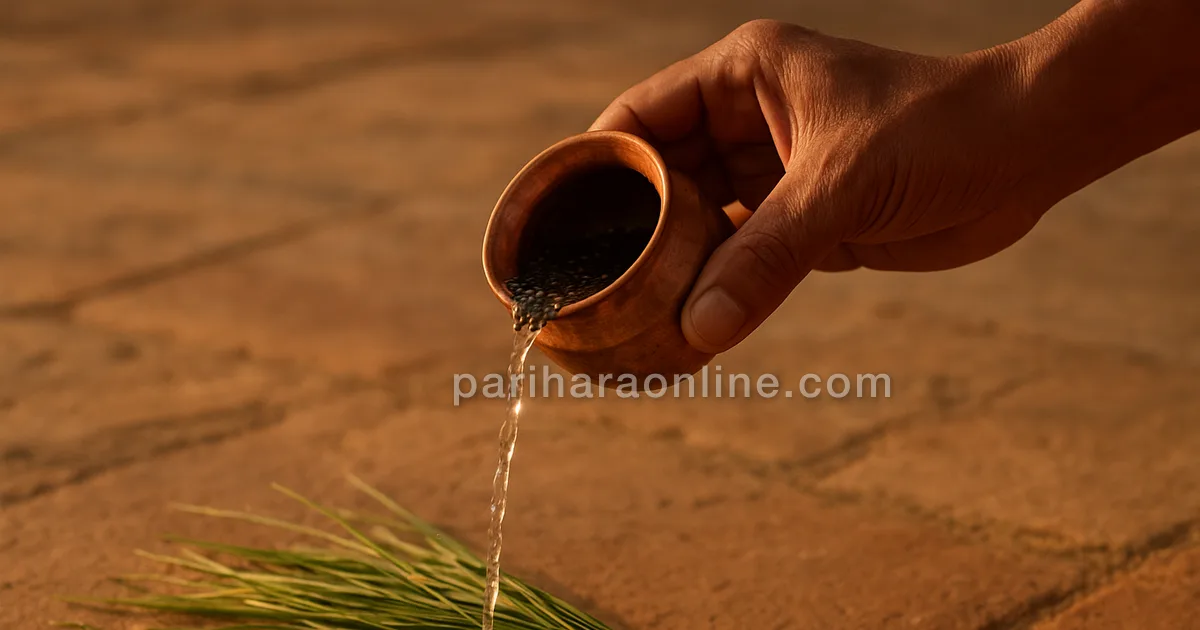
Yes, in several ways. Many temples in the US conduct shraddha or tarpanam, the offering of water and sesame to the departed, with a resident priest. Priests in India can perform the rite on your behalf while you join online, giving the sankalpam, the spoken intention, with your parent's name and gotra, the family lineage. If you want to understand the difference between these formats, this comparison of a homam and a puja is a useful starting point, and the guide on joining a puja across time zones covers the practical side of an early-morning video call.
Some families ask for a tila homam, a fire ritual with sesame offered for the departed, traditionally performed at Rameswaram; you can read what the tila homam at Rameswaram means before deciding. And one offering needs no priest at all: annadhanam, giving food in your parent's name, which can be done from any city on earth.
Keeping one small daily act for the first year
In the Bhagavad Gita, Krishna tells Arjuna that just as a person sets aside worn clothes and puts on new ones, the self sets aside a worn body. I did not find that verse comforting in the first week after a death in our own family. I found it comforting around the fourth month, when grief had softened enough to let a larger thought in. Give yourself that time.
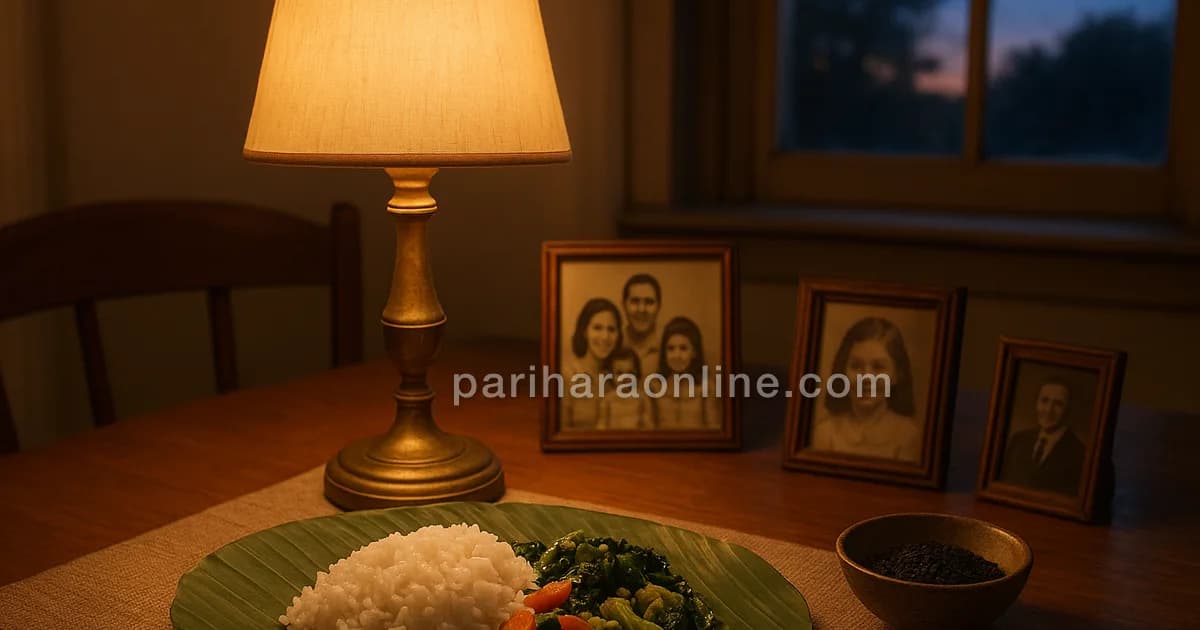
Meanwhile, keep one small act each day. A photo on a shelf with a lamp beside it. Their name said once in your morning prayer. A dish they loved, cooked on Sundays. Call your siblings more than feels necessary. Let the formal rites be done by those who can be there, and send your love with them; carrying it is part of what the rite is for. If sorrow becomes too heavy to carry, please also talk to a counsellor or doctor. Grief is not a ritual failure, and asking for help is not one either.
Questions people ask
What if I cannot reach India in time for my parent's cremation?
Hindu custom prefers prompt cremation, so families often proceed with a son, brother, nephew or other relative performing the rites, sometimes with the absent child joining by video. Tradition allows for this. Many children abroad then travel for the tenth, thirteenth day or first monthly ceremony, or perform their own offerings later with a priest's guidance.
What are the hindu funeral rites after the cremation?
After cremation come the asthi sanchayana, collecting the ashes, and their immersion in a river or sea. Daily offerings continue for about ten to thirteen days, ending with a ceremony that marks the soul's onward journey. Monthly rites called masikam follow through the first year, then the annual shraddha. Customs vary widely by region and community.
Can I perform shraddha from abroad?
Yes. Many temples in the US and elsewhere conduct shraddha or tarpanam with a priest, and priests in India can perform it on your behalf while you join online, offering the sankalpam with your parent's name and gotra. Giving food in your parent's name, annadhanam, is also a widely respected offering from anywhere.
How do I grieve as a Hindu when I live far from family?
Keep a photo with a small lamp, say your parent's name in prayer each day, and let yourself join rituals remotely without apology. Talking with siblings, cooking their favourite food and visiting a local temple can all help. Grief is not a ritual failure. If sorrow becomes overwhelming, please also reach out to a counsellor or doctor.
Enjoying this?
To get more Ancestors posts like this, subscribe for free.
Written by
The Sunday column: festivals and rituals meeting ordinary weeks
Manikandan writes the Sunday column, where festivals and rituals meet commutes, hospital corridors and video calls with parents far away. Each piece closes with one small thing to carry into the week ahead.