Navratri Fasting Rules, Reasons and Kindness
Navratri fasting rules explained plainly: what people eat and avoid, why, how to fast safely with work and health, and gentler options that still count.
· 4 min read
In short
Common Navratri fasting rules avoid grains, onion, garlic, meat and alcohol, and use fruit, milk, sabudana, buckwheat flour and rock salt instead.
A partial fast kept with steady attention is as traditional as a strict one; anyone with a health condition should adapt it with a doctor's advice.
A fast is not a punishment for the body. For nine nights, it is a way of making the body lighter so that attention can move somewhere else. The common Navratri fasting rules are simple: no grains, no onion or garlic, no meat, eggs or alcohol; instead fruit, milk, nuts, a few specific flours and rock salt, often as one meal a day. Everything beyond that varies by family. What matters more than the list is why you are doing it, and whether you can keep it kindly for all nine days.
Navratri fasting rules, the common version
Most households follow some form of this pattern:
- Avoid: rice, wheat and other everyday grains; lentils in many homes; onion and garlic; meat, fish, eggs and alcohol; regular table salt.
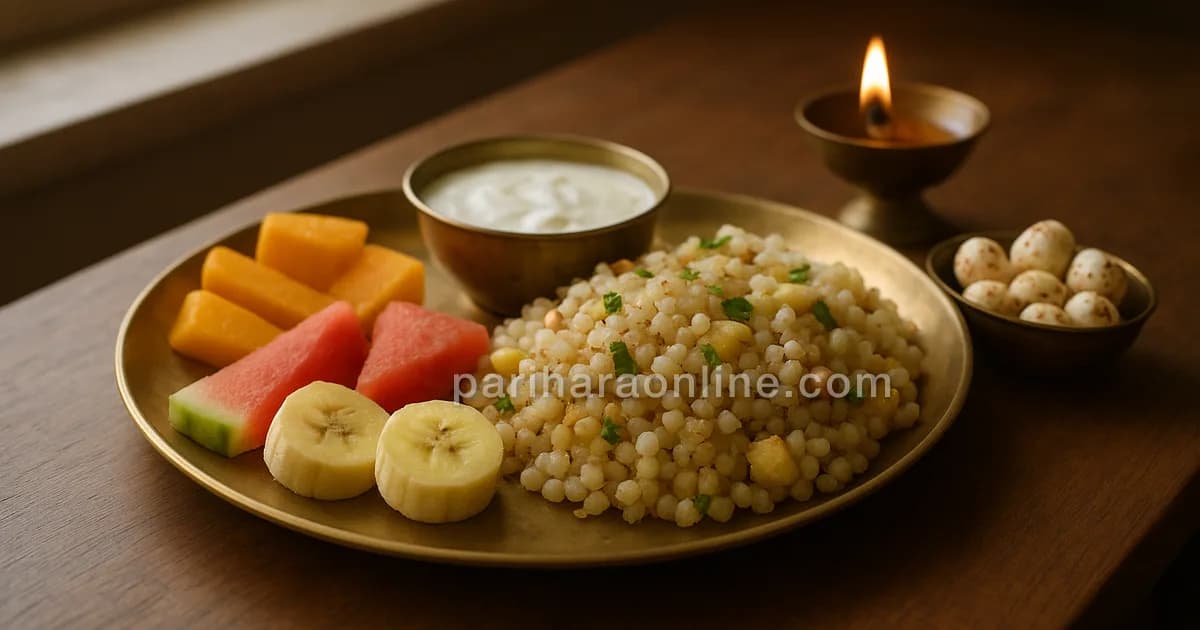
- Eat: fruit, milk, curd, paneer and ghee; nuts; potatoes, sweet potatoes and other root vegetables; sabudana, the small pearls made from tapioca; kuttu, buckwheat flour, and singhara, water chestnut flour; samak rice, a small millet that is treated as a fasting food.
- Salt: sendha namak, rock salt, in place of ordinary salt.
Some people eat one full meal after sunset and nothing before. Others keep phalahar, a diet of fruit and milk, through the day. A few observe a stricter fast on the first and last days only. None of these is the real one. They are all real.
What about coffee? Many families allow tea or coffee with milk, since milk is a fasting food; others give it up as part of the discipline. If you are unsure, follow your household's custom, or simply try the nine days without it and see what happens.
Why these rules?
Look at the list again with your body rather than your rulebook. Grains are heavy. Onion, garlic and meat are stimulating. Fruit, milk and root vegetables are light and warm. The tradition calls this sattvic food, food that leaves the mind clear rather than dull or restless. Navratri arrives at the change of season, when the monsoon is ending and digestion is often sluggish. A lighter plate at that hinge makes sense whether or not you think of it as religious.
But the deeper function is reminder. Every time you reach for bread and stop, you remember what these nine nights are for. The fast becomes a small bell ringing through the day. It is not a feat of endurance. Nobody gets a prize for being the hungriest person in the family.
Many people find that by the fourth day something shifts. The first days are mostly about food: planning it, missing it, thinking about dinner at eleven in the morning. Then the noise drops. You have a little more space in the head for the evening lamp, for the chanting, for the stories of why Navratri lasts nine nights.
What if you cannot fast fully?
Then do not. The tradition has always made room for the body. If you are pregnant, diabetic, on regular medication, recovering from illness, elderly, or working long physical shifts, talk to your doctor before changing how you eat, and choose something gentle.
Gentle options that still count:
- One sattvic meal a day, with normal food at other times.
- Giving up one thing for nine days: sugar, coffee, social media after dinner.
- Keeping the fast only on the eighth or ninth day.
- Fasting from grains but eating well otherwise.
The same principle runs through other fasts in the calendar; fasting and focus looks at what many people notice when they try.
Try this for the nine days
Before the first night, decide what your fast will be and write it on a piece of paper. Make it something you can keep on the busiest day of the nine, not the easiest. Stick it on the fridge.
Then pay attention. Notice when the craving comes, what time of day, what it is really asking for. Notice your sleep. Notice your temper. By day four, note one thing that has changed.
If you are setting up a Golu in a small apartment or reading the Durga Saptashati for the first time, let the fast support that rather than compete with it. And on the tenth day, Dussehra and the story of Ravana is a good moment to break it slowly: something warm, something simple, eaten without hurry.
Questions people ask
What can you eat during a Navratri fast?
Most families allow fruits, milk, curd, paneer, nuts, potatoes, sweet potato, sabudana, and flours such as kuttu (buckwheat), singhara (water chestnut) and rajgira (amaranth). Food is cooked with rock salt, ghee or groundnut oil. Grains like rice and wheat, onion, garlic, meat, eggs and alcohol are avoided. Customs differ between regions, so family practice is the best guide.
Can I drink coffee or tea during Navratri fast?
Many people do drink tea or coffee with milk during a Navratri fast, especially on a fruit-and-milk fast, while stricter observers avoid them as stimulants. There is no single scriptural rule. If you are fasting through a working day, a cup of tea may be what keeps the fast gentle. Decide once at the start and stay consistent.
Is it okay to fast for only some days of Navratri?
Yes. Many devotees fast on the first and last days, or on Ashtami alone, and eat simply on the others. Others give up one thing, such as grains or sweets, for all nine nights. The tradition values sincerity and steadiness over severity. People with diabetes, pregnancy or other health needs should shape any fast with their doctor.
Enjoying this?
To get more Navratri posts like this, subscribe for free.
Written by
Writes about practice: attention, breath, the body, the lamp
Archana writes about ritual as something you do rather than something you believe: the lamp, the breath, the fast, the few quiet minutes before the day begins. Her pieces usually end with a small practice to try for a week and notice what changes.