Kumbha Rasi (Aquarius): Saturn's Water-Bearer
Kumbha rasi as a practice: Saturn's water-bearer, the pot poured out for others, the nature tradition describes, and the Kumbakonam temple link.
· 4 min read
In short
Kumbha rasi is the eleventh sign in Jyotish, ruled by Shani (Saturn) and symbolised by a water-bearer's pot; rasi means the Moon sign at birth.
Tradition describes Kumbha natives as humanitarian, independent and inventive, with detachment as the shadow.
Thirunallar and the Adi Kumbeswarar temple at Kumbakonam are traditionally linked with Kumbha through its ruler and symbol.
The water-bearer's pot is only useful when it is poured. Held on the shoulder forever, it is just weight. Kumbha rasi, the sign of the water-bearer, is often described as independent and humanitarian, and its practice is simple to name and hard to do: give what you carry. It starts with noticing how much you are holding on to.
Kumbha rasi in Jyotish: the water-bearer and Saturn
Kumbha rasi is the eleventh sign of the Jyotish zodiac, and like every rasi it describes the Moon's place at your birth. It holds the last half of Dhanishta, the drum star, all of Shatabhisha, the star of a hundred healers, and the first three quarters of Purva Bhadrapada. Its ruling planet is Shani, Saturn, who also rules Makara, the sign before. In Tamil it is Kumbam; in a Western horoscope, Aquarius, measured from a slightly different starting point.
The symbol, in the Indian tradition, is a man carrying a pot on his shoulder, and in many depictions the pot is empty. That detail is the whole teaching.
Why is the water-bearer's pot empty?
Tradition's portrait of Kumbha is humanitarian, independent, inventive and principled: the person who thinks about the whole community, invents a better way of doing something, and does not much care whether anyone approves. The shadow is detachment, caring for humanity while forgetting the person in the next chair, and stubbornness. You may recognise some of this, or none of it. None of it is binding; it is a sketch to test against yourself.
There is an old story connected to the sign's very name. When the great flood came at the end of an age, Brahma is said to have placed the seed of creation and the nectar of immortality in a pot, a kumbham, and set it afloat. It drifted south and came to rest in the Kaveri delta. Shiva, in the form of a hunter, shot an arrow that broke the pot, and the amrita spilled across the land, making it holy. The town that grew there is Kumbakonam, the corner of the pot.
The story is usually told as a tale about a sacred place. Look at it from the pot's side. The nectar did nothing while it was sealed. It became holy only when the pot broke and the amrita reached the ground. The empty pot on the water-bearer's shoulder is not a failure. It is the sign of someone who has already poured.
The practice follows: give before you feel full. Most of us wait until we have enough time, enough money, enough energy before we share any. That moment rarely comes. The pot is never quite full enough. So pour anyway, a little, and notice that the pot seems to refill.
Temples and poojas traditionally linked through Shani and the pot
Saturn's own shrine is Thirunallar, where King Nala is said to have been released from his long trial. A visit is easier with the Thirunallar Saniswaran temple guide in hand.
The pot has its own temple too: the Adi Kumbeswarar temple at Kumbakonam, where Shiva is worshipped in a lingam said to have been shaped from the sand and nectar of the broken pot. For a Kumbha person it is a natural place of pilgrimage, whether in person or in the mind.
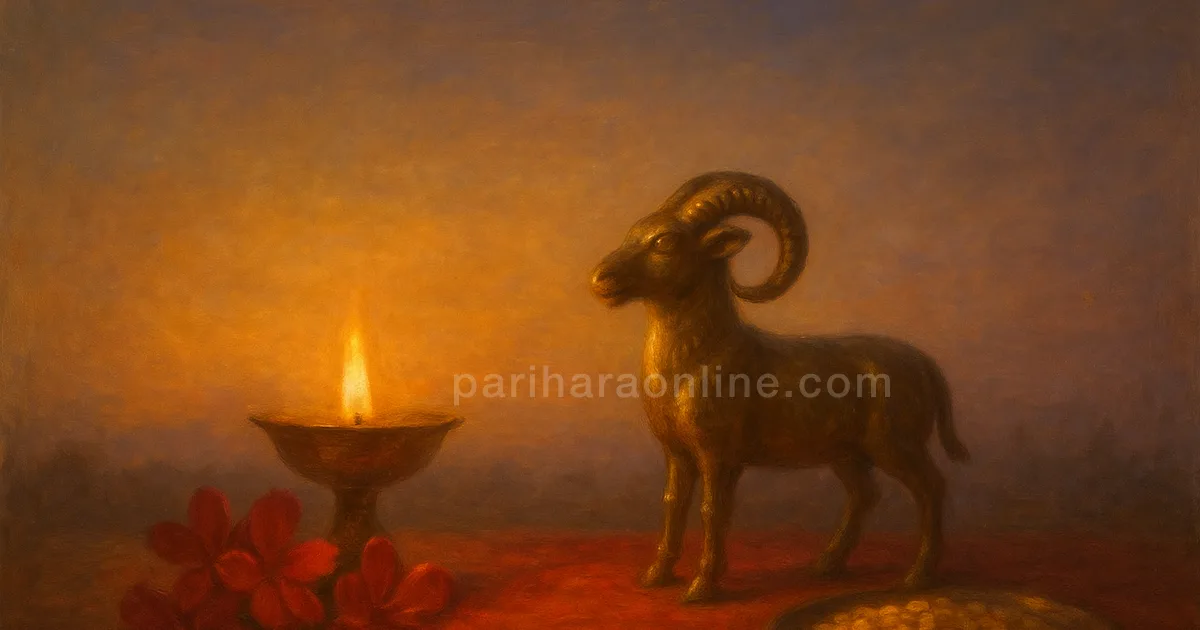
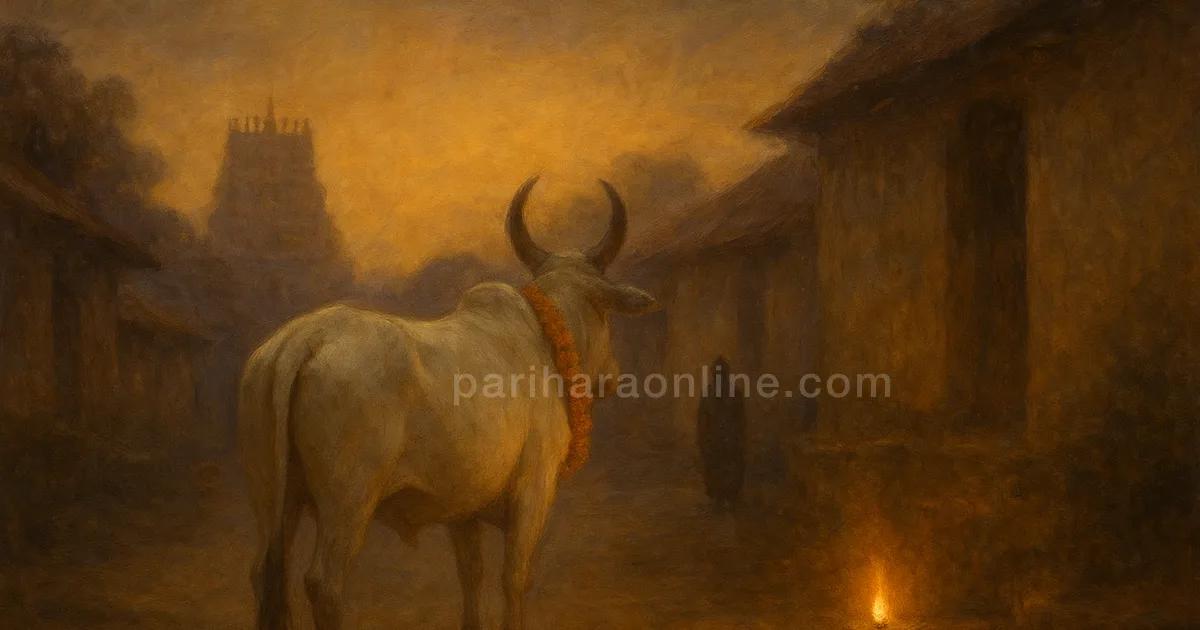
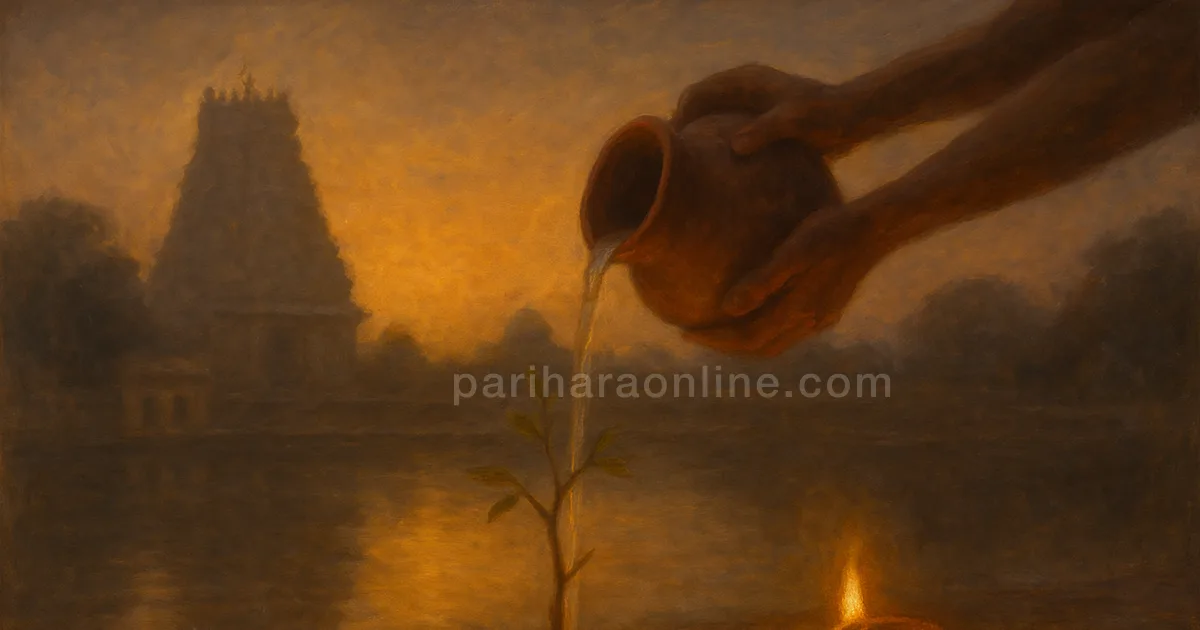
Saturday sesame-oil lamps are the traditional observance for Shani, and water offerings, poured slowly at the base of a tree or a tulsi plant, suit a water-bearer's sign. The sign's most natural seva, or service, is annadhanam, feeding people as an act of worship. The next sign, Meena, carries the same generosity into letting go.
Try this for a week
Each day, give one thing away. Water to a plant. Food to someone. An hour of help to a neighbour, a colleague, a parent. It does not have to be large. It has to be given without waiting until you feel you have plenty.
On Saturday, light a sesame lamp and sit with it for five minutes. Notice how the pot feels. Many people find it is lighter than it was on Monday, and that the lightness is not emptiness. It is room.
Questions people ask
Which god should Kumbha rasi people worship?
Because Shani rules Kumbha, many families light sesame lamps on Saturdays and pray to Hanuman, Venkateswara or Shiva. Some visit Thirunallar, the Shani shrine among the Navagraha temples, or Adi Kumbeswarar at Kumbakonam, named for the pot. Tradition offers these as supports for a giving, steady life, not as protection from fear.
What are Kumbha rasi characteristics?
Tradition describes people with the Moon in Kumbha as idealistic, independent, inventive, friendly and devoted to causes larger than themselves, with detachment, stubbornness or aloofness as possible shadows. These Kumbha rasi characteristics come from Shani's rulership and the water-bearer's generosity. They are tradition's descriptions of the Moon sign, not certainties.
Which temple is linked to Kumbam rasi?
Kumbam, the Tamil name for Kumbha, is traditionally linked with Thirunallar, near Karaikal, where Shani is worshipped among the Navagraha temples. The Adi Kumbeswarar temple at Kumbakonam, whose legend tells of Shiva breaking the pot of nectar, is also associated with the sign's symbol. These links vary by family and region.
Enjoying this?
To get more Rasi posts like this, subscribe for free.
Written by
Writes about practice: attention, breath, the body, the lamp
Archana writes about ritual as something you do rather than something you believe: the lamp, the breath, the fast, the few quiet minutes before the day begins. Her pieces usually end with a small practice to try for a week and notice what changes.