Panakam and Neer Mor: Ram Navami's Cooling Drinks
A panakam recipe with neer mor alongside: jaggery water with dry ginger and cardamom, spiced buttermilk, and why both are offered on Ram Navami in hot months.
· 4 min read
In short
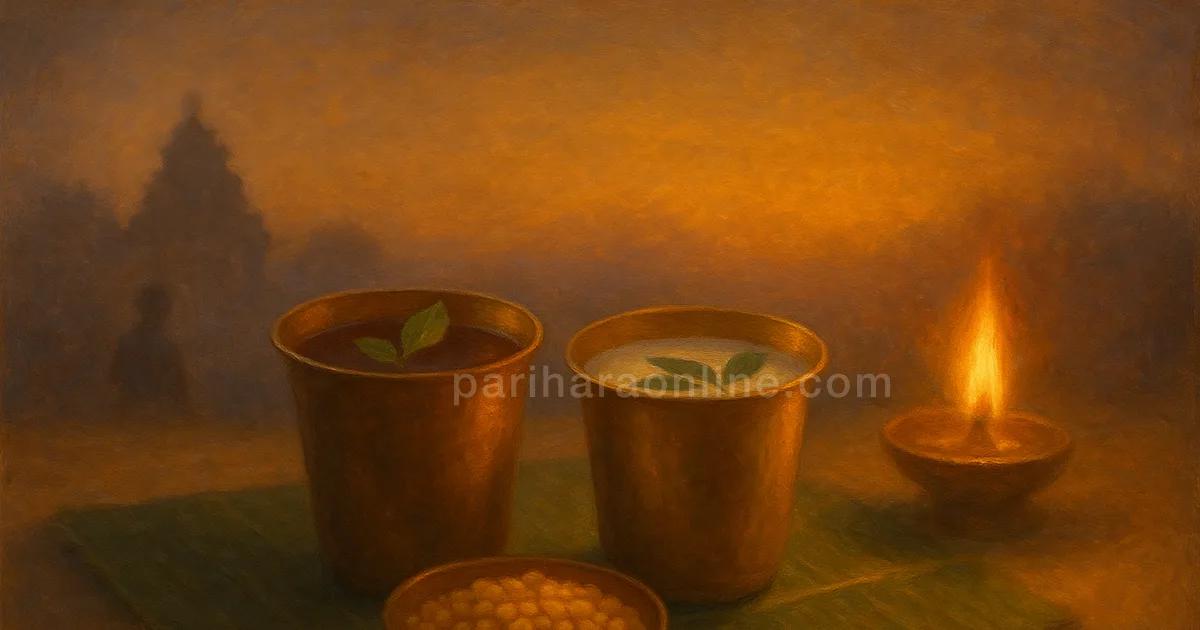
Panakam is jaggery dissolved in water with dry ginger, cardamom, pepper and lemon; neer mor is thin salted buttermilk with ginger, chilli and curry leaves.
Both are traditional Ram Navami offerings, made in the hot season around March or April, offered at the lamp and then shared.
Ram Navami arrives when the heat does, and the naivedyam, the food offered to the deity, knows it. Two drinks carry the festival: panakam, sweet and peppery, and neer mor, thin buttermilk with ginger. This panakam recipe and its buttermilk companion take five minutes each and no stove, which makes them some of the easiest offerings in the whole year. You mix, you strain, you offer a cup at the lamp, and then you pour for everyone.
Panakam recipe: jaggery, dry ginger, cardamom, water
Ingredients (about four glasses)
- 100 g grated jaggery (½ cup)
- 750 ml cold water (3 cups)
- ½ teaspoon dry ginger powder (sukku)
- ¼ teaspoon cardamom powder
- A pinch of crushed black pepper
- Juice of half a lemon
- A few tulsi leaves, optional
- A pinch of salt
Method
- Stir the jaggery into the water until it dissolves completely.
- Strain through a fine sieve or cloth; jaggery often carries a little grit.
- Add dry ginger, cardamom, pepper, lemon juice and salt. Stir well.
- Tear in the tulsi leaves just before offering.
Taste it once, for the family jug only. It should be sweet first, then warm at the back of the throat. That second note is the pepper and dry ginger, and it is what makes panakam different from plain sweet water.
Neer mor: buttermilk made thin and bright
Neer mor means water buttermilk, and that is exactly what it is: curd thinned right down until it runs like water, then seasoned.
Ingredients
- 125 g plain curd (½ cup)
- 500 ml cold water (2 cups)
- Salt to taste
- A small piece of ginger, crushed
- 1 green chilli, slit
- A few curry leaves and a little chopped coriander
- Optional tempering: ½ teaspoon mustard seeds and a pinch of asafoetida in a spoon of oil
Method
- Whisk the curd until smooth, then whisk in the water and salt.
- Add the ginger, chilli, curry leaves and coriander. Let it sit ten minutes so the flavours move into the liquid.
- Pour over the tempering if using, and strain before serving if you prefer it clear.
On Ram Navami, these two drinks usually come with vada paruppu: soaked moong dal drained and tossed with grated coconut, diced cucumber, a little green chilli, salt and lemon. No cooking there either.
Why are these offered on Ram Navami?
Ram Navami celebrates the birth of Rama on the ninth day of the waxing moon in the month of Chaitra, usually March or April. Across much of India this is the start of real heat, and tradition treats both panakam and neer mor as cooling drinks for the season. In temples and homes, they are poured out to anyone who comes, and in some towns volunteers stand on street corners handing out cups.
Panakam has an older fame too. At the Panakala Narasimha temple in Mangalagiri, panakam itself is the offering, poured for the deity in quantity. If you want the fuller shape of the festival day, Ram Navami puja at home walks through it, and Rama as maryada purushottama explains the ideal of a person who keeps to what is right.
Offer each drink in a small vessel before the lamp, then pour it out for the household and whoever visits.
One jug of each, and an open door
Try this on the next hot evening, festival or not. Make one jug of panakam and one of neer mor. Offer a cup of each at the lamp, sit for a minute, and then hand out the rest to whoever walks in.
Notice how people respond to being handed a cold drink without asking. That small act of hospitality is most of what the festival is doing. The same no-fuss spirit runs through sweet aval for Krishna Jayanthi and the crisp seedai made for Gokulashtami, when the next festival comes round.
Questions people ask
What is the neer mor recipe for pooja?
Whisk a cup of plain curd with three or four cups of cold water until smooth. Add salt, a little crushed ginger, a slit green chilli, torn curry leaves and chopped coriander. Some add a tempering of mustard seeds and asafoetida in a little oil. Leave out onion for the offering, and serve it chilled after the pooja.
What prasadam is made for Ram Navami?
The classic Ram Navami prasadam in South India is panakam, neer mor and vada paruppu, a salad of soaked moong dal with coconut and cucumber. Many families add sweet pongal, payasam or kosambari. In north India, fruit, panchamrit and kheer are common. Offer what you can make with care, then share it with family and neighbours.
Why is panakam made for Ram Navami?
Ram Navami falls in the hot season, and panakam made for Ram Navami is traditionally seen as a refreshing, energising drink for devotees who fast or sing bhajans through the day. Panakam is also associated with Narasimha, famously at the Mangalagiri temple in Andhra Pradesh, and with other Vishnu forms. The ingredients are simple, and it needs no cooking.
Can I use brown sugar instead of jaggery for panakam?
Jaggery gives panakam its earthy, mineral taste, and Indian grocery stores in the US usually carry it as blocks or powder. Panela or piloncillo from Latin American stores are close substitutes. Dark brown sugar works in a pinch, though the flavour is flatter. Always strain dissolved jaggery to remove any grit.
Enjoying this?
To get more Recipes posts like this, subscribe for free.
Written by
Writes about practice: attention, breath, the body, the lamp
Archana writes about ritual as something you do rather than something you believe: the lamp, the breath, the fast, the few quiet minutes before the day begins. Her pieces usually end with a small practice to try for a week and notice what changes.