Aval for Krishna: Sweet Poha and Sudama's Gift
An aval recipe for Krishna Jayanthi with Sudama's story: thin beaten rice, jaggery, coconut and cardamom, the humble gift the Bhagavata says Krishna loved.
· 4 min read
In short
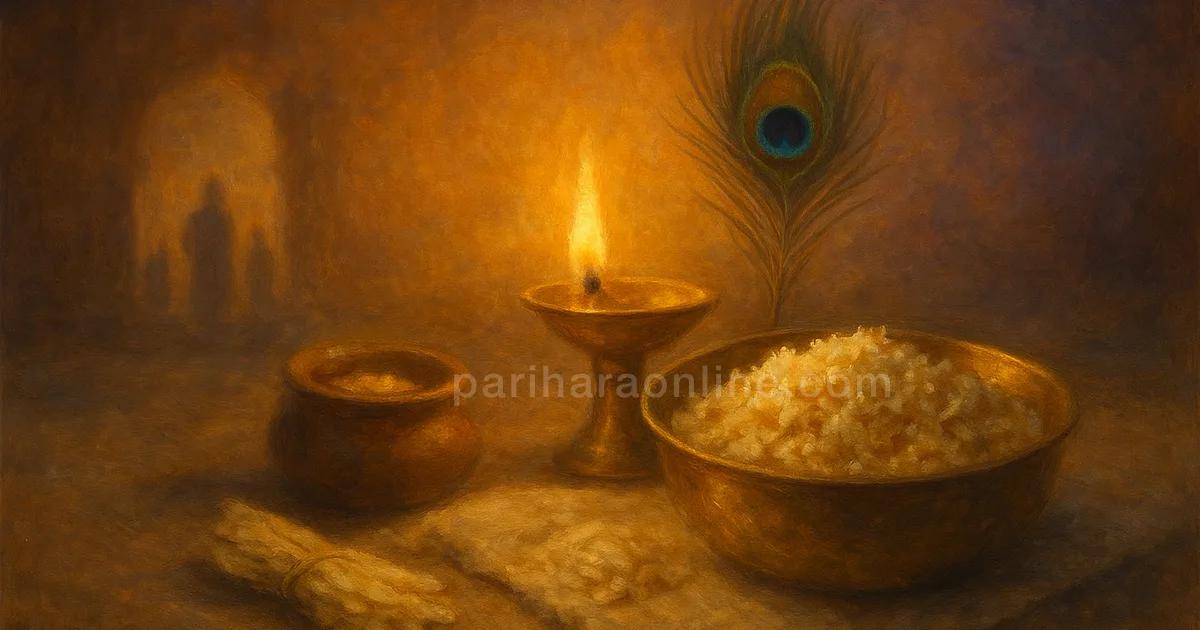
Sweet aval is thin beaten rice folded into warm jaggery syrup with coconut, cardamom and ghee, and it takes about ten minutes without cooking the aval.
It is offered on Krishna Jayanthi in memory of Sudama, whose humble handful of beaten rice, the Bhagavata says, Krishna ate with joy.
A poor man walks to a palace with a handful of beaten rice tied in the corner of his cloth. He is too ashamed to offer it. The king snatches it from him and eats it with joy. That handful is why aval, flattened rice, sits on so many Krishna Jayanthi plates, and why the simplest aval recipe for Krishna Jayanthi, rice flakes stirred into jaggery syrup with coconut, may be the most meaningful dish on the table.
What does Sudama's handful mean?
The Bhagavata Purana tells the story. Sudama, called Kuchela in the south, had studied with Krishna as a boy in the hermitage of their teacher. Years later, Krishna is a king in Dwaraka and Sudama is so poor that his family goes hungry. His wife urges him to visit his old friend. He has nothing to bring except a few handfuls of aval, begged from neighbours and knotted into his worn cloth.
At the palace, Krishna runs to meet him, washes his feet, sits him down, and talks about their school days. Sudama keeps the bundle hidden. Krishna notices, pulls it out, and eats a fistful with delight. When he reaches for a second, Rukmini gently stops his hand. Sudama walks home without having asked for anything, and finds his hut has become a house.
The story says a gift made him rich. The story is really about being seen by someone who wants nothing from you. Sudama's shame was that his offering was too small. Krishna's answer was not to reassure him but to eat it, eagerly, as though it were the best thing he had been given all day. The riches at the end are almost an afterthought. What changed Sudama was the welcome.
Aval recipe for Krishna Jayanthi
This is a no-cook sweet. The aval itself is never put on the stove.
Ingredients (serves four)
- 100 g thin aval, also sold as poha (about 2 cups)
- 100 g grated jaggery (½ cup)
- 60 ml water (¼ cup)
- 3 tablespoons grated coconut
- ¼ teaspoon cardamom powder
- 1 teaspoon ghee
Method
- Rinse the aval once in a colander and drain it at once. Thin aval softens almost immediately; do not soak it.
- Melt the jaggery in the water over low heat, strain, and simmer for two or three minutes until it thickens slightly into a light syrup.
- Turn off the heat. Stir in coconut, cardamom and ghee.
- Fold the aval through the warm syrup gently, so the flakes stay separate.
Some families skip the syrup altogether and simply mix dry aval with grated jaggery, coconut and a little milk. Sudama, one imagines, would approve of either.
When is it offered?
Krishna Jayanthi falls on the eighth day of the waning moon in the month the Tamil calendar calls Avani, known elsewhere as Shravana or Bhadrapada; it usually comes in August or September, and regional timing differs. The offering is made at night, the hour of Krishna's birth, with butter, milk, fruit and crisp seedai for Gokulashtami. For the shape of the whole evening, Krishna Janmashtami at home walks through it.
At Guruvayur in Kerala, one day in the Malayalam month of Dhanu is kept as Kuchela day, when devotees bring aval to the temple in memory of that knotted cloth. Anyone planning a visit can start with the guide to the Guruvayur temple.
Krishna's stories often turn on this kind of reversal, the great taking the side of the small. The story of Krishna lifting Govardhana is another.
The smallest gift in the story
Make the simplest possible aval this Krishna Jayanthi. Do not apologise for it, to the deity or to guests. Offer it at the lamp, and when you share it, remember that of all the gifts in the Bhagavata Purana, the smallest is the one that was eaten.
Questions people ask
What is the Kuchela aval story?
In the Bhagavata Purana, Sudama, known as Kuchela in South India, is Krishna's poor childhood friend. His wife sends him to Dwaraka with a handful of beaten rice. Krishna welcomes him, eats the aval with delight, and Sudama returns home to find his family provided for. The story honours humble, sincere offering.
How do I make sweet aval for pooja?
This sweet poha recipe starts simply: rinse thin poha once and drain it well. Melt jaggery in a little water, strain it, and simmer briefly into a light syrup. Stir in grated coconut, cardamom and a spoon of ghee, then fold in the poha off the heat. Rest for five minutes so the flakes soften. Offer before tasting.
What is on the Krishna Jayanthi naivedyam list?
A typical Krishna Jayanthi naivedyam list in South India includes sweet aval, butter, curd, milk, uppu seedai and vella seedai, murukku, thattai, appam, payasam and fruit such as banana. In north India, panjiri, makhan mishri and panchamrit are common. Families vary, and even a single item offered with care is enough.
Can I use thick poha for sweet aval?
Thin poha absorbs jaggery syrup quickly without cooking, so it is the easiest choice. Thick poha works too, but soak it for a few minutes first and let it rest longer in the syrup. Red rice aval, available in many Indian stores, gives a nuttier flavour and is popular in Kerala.
Enjoying this?
To get more Recipes posts like this, subscribe for free.
Written by
Reads the old stories for what they still mean
Hariharan writes about the myths, symbols and festival stories that most of us grew up hearing but were rarely asked to think about. He tells the story first, then asks what it is really about, and leaves the conclusion to you.