Tula Rasi (Libra): Venus and the Art of Balance
Tula rasi explained: the scales, Venus as ruling planet, the story of Krishna weighed against a tulsi leaf, and the Kanjanur temple linked to it.
· 4 min read
In short
Tula rasi is the seventh sign in Jyotish, ruled by Shukra (Venus) and symbolised by scales; rasi means the sign the Moon occupied at birth.
Tradition describes Tula natives as fair, diplomatic and graceful, with indecision as the shadow.
Kanjanur, the Sukra temple, and Friday Lakshmi worship are traditionally linked with Tula through its ruling planet.
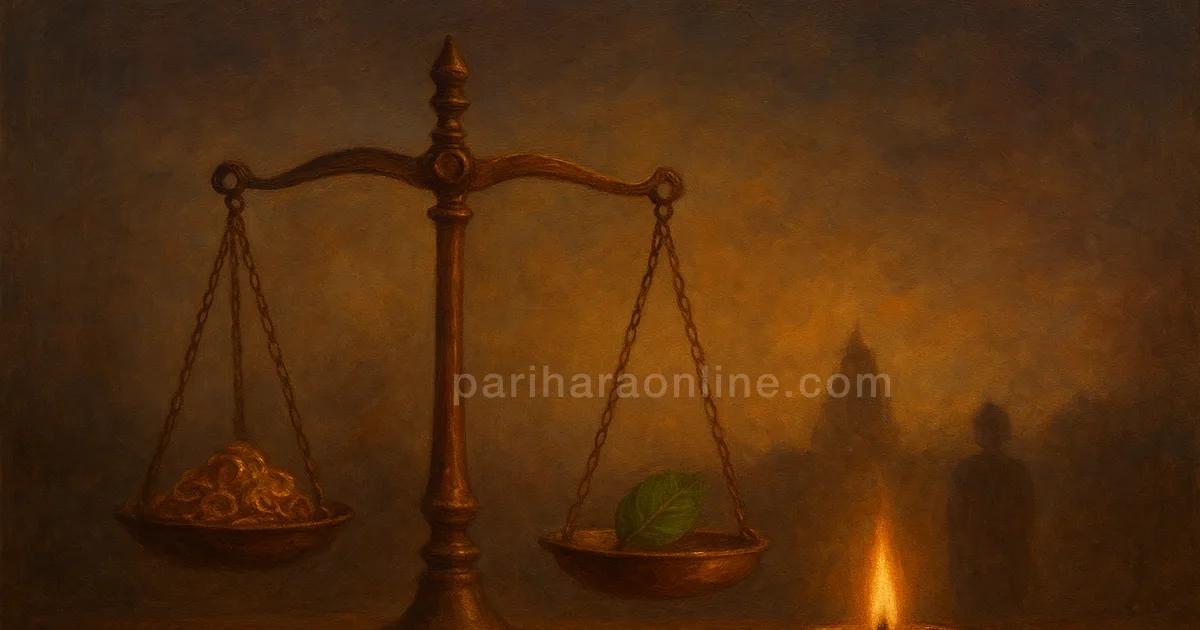
Satyabhama piled all her gold on one side of the scales and could not lift Krishna. Rukmini laid down a single tulsi leaf, and the scales balanced. Tula rasi is the sign of the scales, and that story is its best teacher. It tells you what the scales are for, and what they cannot measure.
What is Tula rasi, and what do the scales weigh?
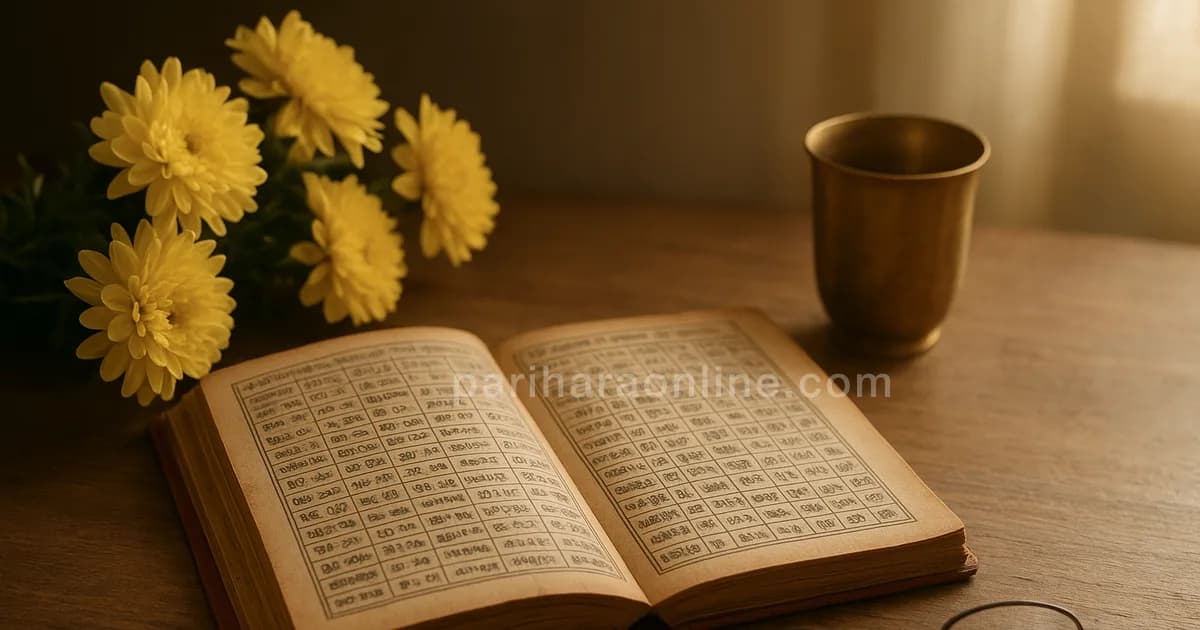
Tula rasi is the seventh sign, the one that sits exactly opposite the beginning of the zodiac. Rasi, remember, refers to the Moon at your birth. It holds the last half of Chitra, all of Swati, and the first three quarters of Vishakha. Its ruling planet is Shukra, Venus, and Shani, Saturn, is said to be exalted here, at his strongest. Thulam in Tamil, Libra in the West, with the usual shift between the two zodiacs.
The symbol is not an abstract pair of scales but a man holding them in the marketplace: a trader weighing grain, a merchant settling an account. Tula is the sign of fair exchange. It belongs to the bazaar before it belongs to the courtroom, and that is a useful thing to remember.
Why did a tulsi leaf outweigh the gold?
The story is told in Krishna traditions across India, in several versions. In one, the sage Narada, who enjoyed stirring things up, persuaded Satyabhama, the proudest of Krishna's queens, to give Krishna to him as a gift, and then to buy him back with his weight in gold. Satyabhama agreed at once. She was rich. How heavy could a husband be?
Krishna sat on one side of the great scales. Satyabhama heaped her gold on the other. It was not enough. She added her jewellery, then everything she owned. The scales did not move. At last Rukmini came, quietly, took a single leaf from the tulsi plant, said Krishna's name, and placed it on the heap. The scales balanced at once.
The story says devotion is heavier than wealth. The story is really about what a balanced life actually measures. Satyabhama was not wicked; she was measuring the wrong thing. She thought the question was how much. Rukmini understood that the question was what. The scales, in the end, weigh what we put our hearts in.
The temperament the tradition gives Tula follows from the story: fair, diplomatic, graceful, sociable, with a fine sense of proportion and a love of harmony. When it goes wrong, it goes wrong as indecision, the scales that keep wobbling because every option has something on the other side. The tradition offers this as a sketch; the scales would not want it used as a sentence.
Kanjanur, Fridays and the tulabharam offering
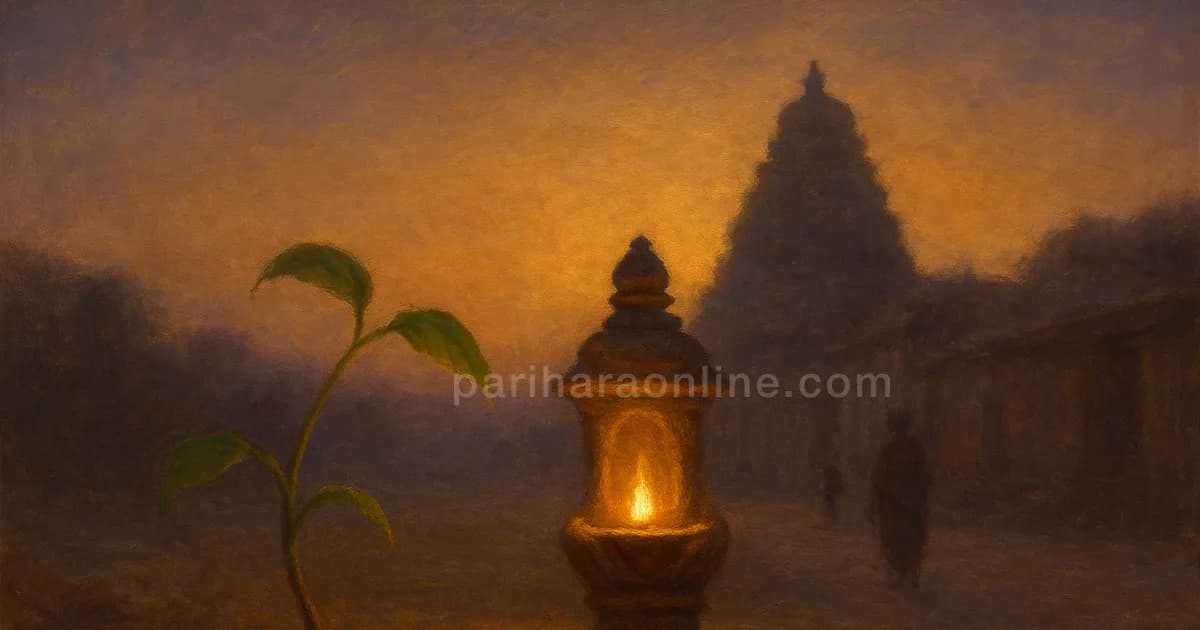
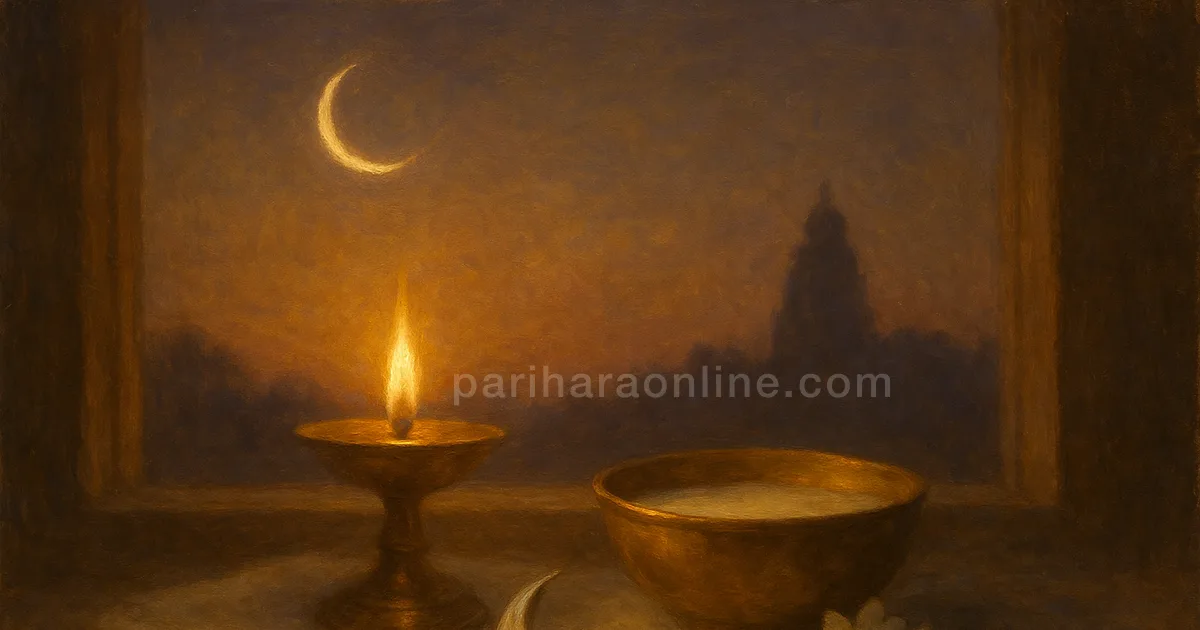
Venus has its temple at Kanjanur, near Kumbakonam, and that is where Tula devotion traditionally turns. The guide to Shukra and Friday worship covers the traditional observances. In most South Indian homes Friday belongs to Lakshmi, and a Friday lamp for her is the natural practice for the sign; the steps are in Friday Lakshmi pooja at home.
The story of the scales survives in a living offering. At Guruvayur and many other temples, devotees make a tulabharam: they sit on one side of a great balance while the other is filled with grain, fruit, sugar, jaggery or even coins until it tips, and the offering is given to the temple. Families do it in thanksgiving, after a recovery or a birth. The guide to the Guruvayur temple describes what a devotee sees there. It is the Satyabhama story turned into gratitude: not buying the Lord, but offering your own weight.
Every nakshatra inside a rasi carries its own deity and story; Swati, the wind's independent star, which sits wholly in Tula, shows how much a single star can hold. The next sign, Vrischika, shows what happens when balance gives way to depth.
Setting something down
The scales do not ask you to be perfectly still. They ask you to notice when one side is too heavy. That is all balance ever is: noticing, and adjusting, again and again.
If your Moon is in Tula, set down one heavy thing this week. A grudge, an overcommitment, a decision you have been weighing too long. Put a tulsi leaf on the other side instead: one small act of devotion, however light. See which way the scales go.
Questions people ask
Which god should Tula rasi people worship?
Because Shukra rules Tula, many families worship Lakshmi on Fridays and some visit Kanjanur, the Sukra shrine among the Navagraha temples. Krishna is a popular choice too, and the tulabharam offering, being weighed against grain or sugar, suits the scales. Tradition offers these as supports, not obligations; steadiness matters more than scale.
What are Tula rasi characteristics?
Tradition describes people with the Moon in Tula as fair-minded, charming, diplomatic, artistic and relationship-oriented, with indecision or people-pleasing as possible shadows. These Tula rasi characteristics come from Shukra's rulership and the scales' search for balance. They are tradition's portrait of the Moon sign, not certainties; the full chart matters more.
Which temple is linked to Thulam rasi?
Thulam, the Tamil name for Tula, is traditionally linked with Kanjanur, near Kumbakonam, where Shukra is worshipped among the Navagraha temples. Some families offer tulabharam at temples such as Guruvayur, fitting the scales symbol. These associations come through the ruling planet and symbol rather than a fixed canonical list, and customs vary.
Enjoying this?
To get more Rasi posts like this, subscribe for free.
Written by
Reads the old stories for what they still mean
Hariharan writes about the myths, symbols and festival stories that most of us grew up hearing but were rarely asked to think about. He tells the story first, then asks what it is really about, and leaves the conclusion to you.