Women in Hinduism: What the Goddess Stories Say
Women in Hinduism, honestly: what the Goddess stories, the Vedic women seers and the Tamil women saints say, and where social practice has fallen short of them.
· 4 min read
In short
Hindu texts honour the feminine as Shakti, the power behind creation, and preserve the voices of women seers, poets and saints.
Social practice has often fallen short of those ideals, and reformers within the tradition have long said so.
A fair view holds both: a Goddess-centred theology and a history of real restrictions that many Hindus have worked to change.
The tradition that says the whole universe is the Goddess has not always treated its daughters that way. Both facts are true, and a fair answer about women in Hinduism holds them together. The texts contain women seers, women philosophers and a supreme Goddess who acts where the gods cannot. They also contain law books that restrict women's freedom. Across the centuries, women poets and saints spoke with an authority the tradition still sings, and reformers used the tradition's own texts to argue for change.
What do the texts say about women in Hinduism?
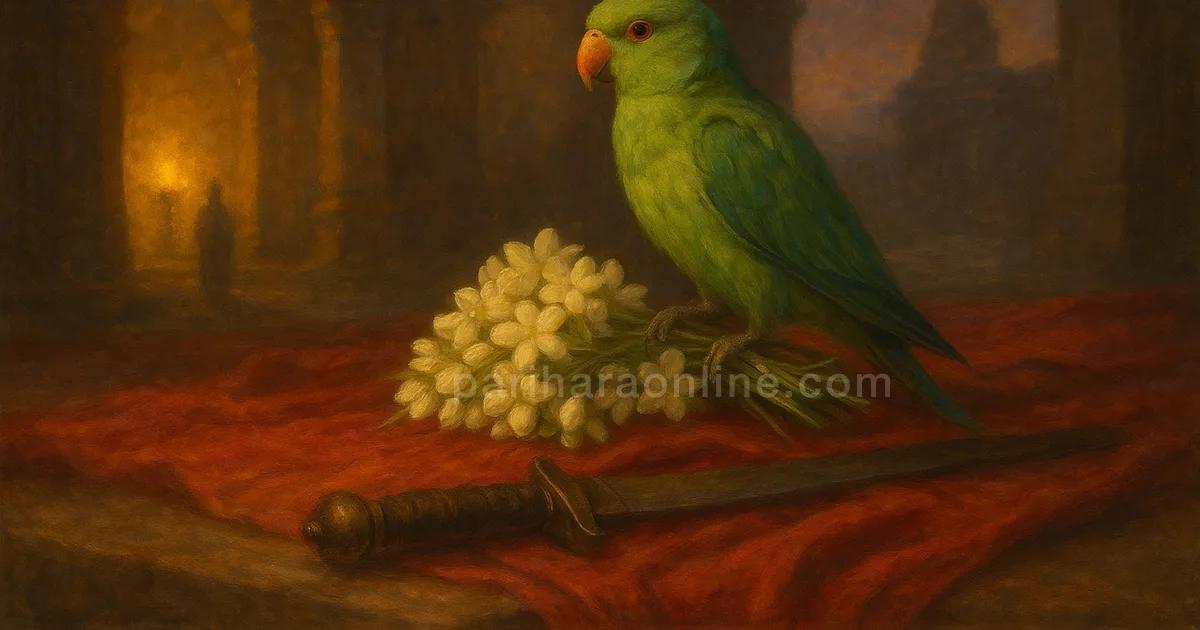
Begin with the Devi Mahatmyam. In its central story, the gods face a buffalo demon they cannot defeat. Their combined anger takes shape as the Goddess, who rides out and does what none of them could. She is not a helper to the gods. She is the power the gods themselves depend on.
The Rig Veda credits some of its hymns to women seers. Ghosha, afflicted by illness and long unmarried, composed hymns to the Ashvins. Lopamudra appears in a hymn in conversation with her husband, the sage Agastya, speaking frankly of her own desires. The list of women sages in the Vedas is short, but it exists, and the tradition preserved their names.
The Brihadaranyaka Upanishad goes further. At King Janaka's court, the philosopher Gargi rises to question the great teacher Yajnavalkya, pressing him with question after question about what the world is woven on, until he warns her not to push past the limits of asking. Elsewhere in the same text, Maitreyi, offered a share of her husband's wealth before he leaves for the forest, asks the question that matters: will this make me immortal? When he says no, she says she has no use for it. Gargi and Maitreyi are remembered not as wives but as minds.
Women who shaped the tradition
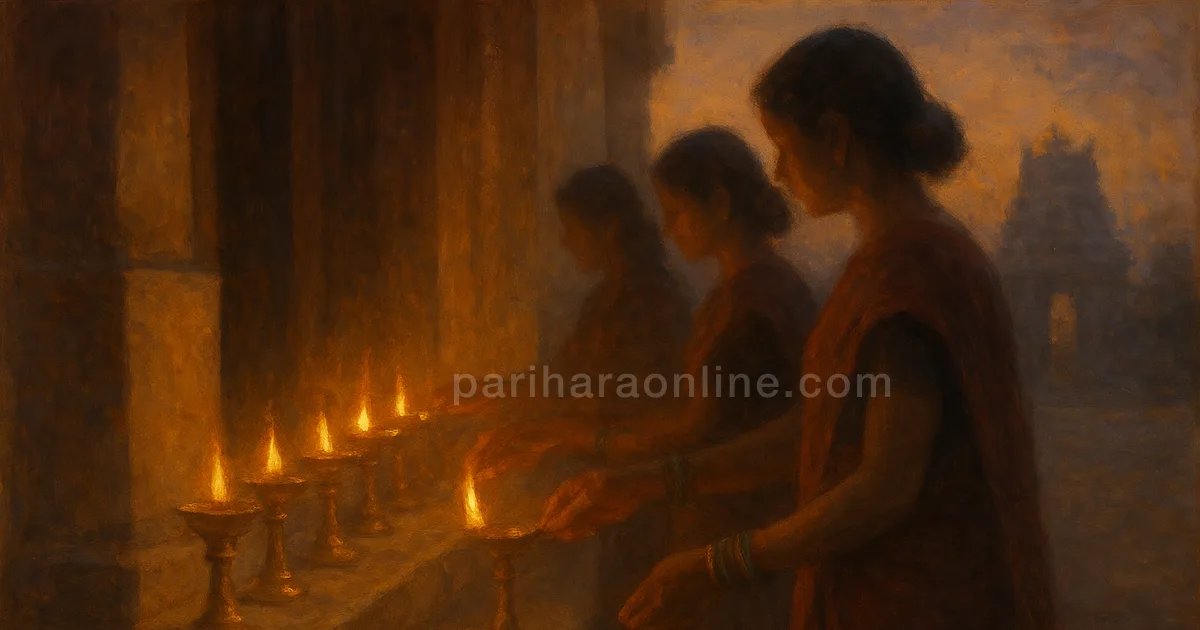
In Tamil country, the voices multiply. Andal, the only woman among the twelve Alvars, wrote the Tiruppavai, sung every winter morning in the month of Margazhi. Karaikkal Ammaiyar, one of the earliest Tamil Shaiva poets, gave up her beauty for devotion and was called Mother by Shiva himself. Avvaiyar, the poet-grandmother, taught generations of children their first moral lines.
Further north, Akka Mahadevi walked away from a king's palace to wander in devotion to Shiva, writing vachanas, short free verses, that are still startling in their directness. Mirabai sang to Krishna against the wishes of her royal in-laws. In Madurai, the story of Meenakshi, the queen who ruled, puts a warrior woman on the throne before any wedding.
These are not footnotes. They are voices the tradition kept, copied, set to music and placed in temples.
Where did practice diverge?
Honesty requires the other side. Some dharmashastras, the law books, contain restrictive passages. The best known says a woman should be protected by her father in childhood, her husband in youth and her sons in old age, and is not fit for independence. Customs grew up that limited girls' education, restricted widows harshly, and kept property in men's hands.
The status of women in Hindu scriptures, then, depends on which scripture you open, and which custom a region adopted. The texts disagree with one another. That is a feature of the tradition, not a secret it hides.
What is striking is how reform came from within. In the nineteenth century, Raja Ram Mohan Roy argued against widow-burning by pointing to older texts that did not demand it. Ishwar Chandra Vidyasagar campaigned for widow remarriage citing the Parashara Smriti. They did not abandon the tradition. They argued with it, in its own language, which is a very old Hindu habit, the habit the tradition called shastrartha, or debate as devotion.
Letting her speak for herself
It is tempting to settle the question with a slogan, either "Hinduism worships women" or "Hinduism oppresses women." Neither survives contact with the actual texts. A household can place a Goddess at the centre of its shrine and still expect its daughters to eat last. A tradition can do both, and many families are still working out which part they want to carry forward. Rituals such as Kanya puja, where young girls are honoured as the Goddess, can be a reminder of what the ideal was meant to be.
The best way to form your own view is to read the women directly. This month, find one pasuram of Andal or one line of Avvaiyar, in translation if you need it, and read it slowly. Not what someone says about her. Her own words. Let her speak for herself, and notice how little she sounds like anyone's footnote.
Questions people ask
Who were Gargi and Maitreyi?
Gargi and Maitreyi appear in the Brihadaranyaka Upanishad. Gargi Vachaknavi questioned the sage Yajnavalkya so sharply in King Janaka's court that he warned her not to push further. Maitreyi, one of Yajnavalkya's wives, turned down wealth and asked him instead what leads to immortality. Both are remembered as women of philosophical depth.
Were there women sages in the Vedas?
Yes. Several Rig Vedic hymns are traditionally credited to women seers, called rishikas or brahmavadinis, including Ghosha, Lopamudra, Apala and Vak, whose hymn speaks as the power behind all gods. Scholars debate how many there were and how composition worked, but the tradition itself remembered women as seers of sacred verses.
What is the status of women in Hindu scriptures?
It varies by text. The Devi Mahatmyam and Shakta texts place the feminine at the summit of reality, while some dharmashastras contain restrictive rules about women's independence. Epics show strong women such as Draupadi and Savitri. Many Hindus read the restrictive passages as products of their time and look to the broader tradition for guidance.
Enjoying this?
To get more Goddess posts like this, subscribe for free.
Written by
Reads the old stories for what they still mean
Hariharan writes about the myths, symbols and festival stories that most of us grew up hearing but were rarely asked to think about. He tells the story first, then asks what it is really about, and leaves the conclusion to you.