Shivaratri Puja at Home: A Night Vigil, Hour by Hour
How to do Shivaratri puja at home: an hour-by-hour night vigil with the four praharas, simple abhishekam, chanting, fasting options and staying awake gently.
· 4 min read
In short
To do Shivaratri puja at home, set up a small linga or image, and offer water, milk and bilva leaves in each of the night's four praharas.
Dividing the night into four watches of about three hours, each with a short abhishekam and chant, makes an all-night vigil manageable.
Staying awake all night is not the point. Staying aware for one night is, and the body can be taught to do that with a little structure. Shivaratri puja at home works best when you stop treating the night as an endurance test and start treating it as four short sittings with rest in between. You need a small linga or a picture of Shiva, some water and milk, a few leaves, a lamp and a mat. The rest is attention.
How to do Shivaratri puja at home: set up
Before sunset, clean the space you will use. Not the whole house, just one corner, properly. Sweep, wipe the floor, put down a mat or folded blanket you can sit on for a while. This matters more than it sounds. A clean, uncluttered space tells the body that something different is about to happen.
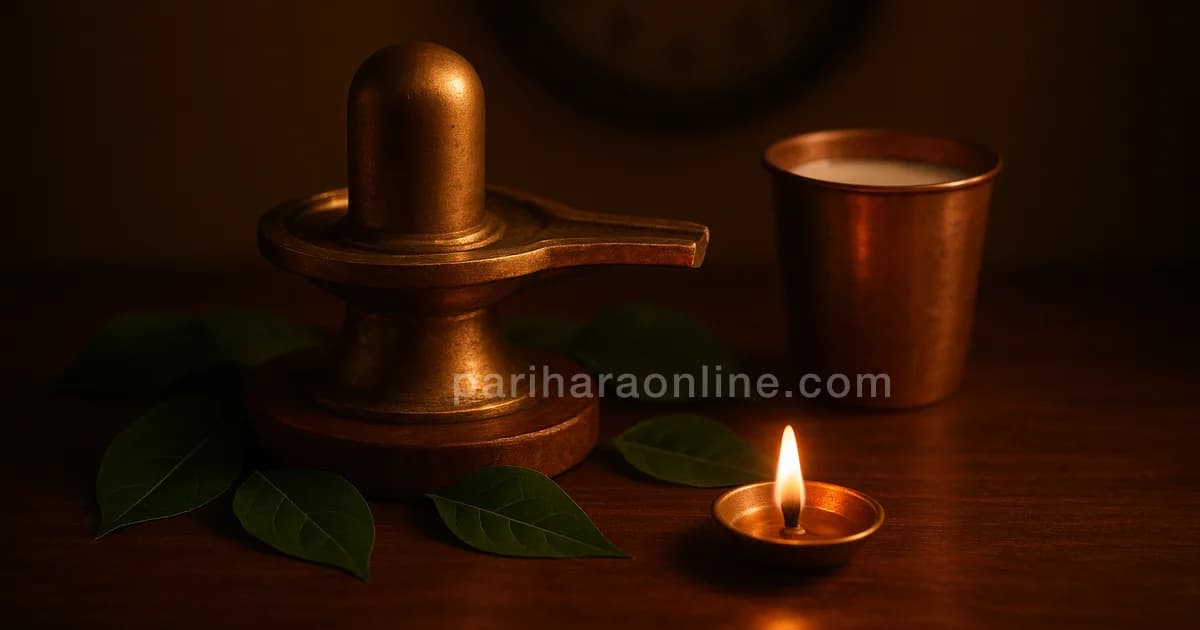
Place a small Shiva linga on a plate or shallow bowl so the water has somewhere to go. If you do not have a linga, a picture of Shiva works; offer the water into a bowl in front of it. Keep ready a jug of water, a little milk, bilva leaves if you can find them (Indian grocery stores sometimes stock them near the festival), or any fresh green leaves if you cannot. Light one lamp, ghee or sesame oil, and keep it burning through the night. If you want to be careful with a flame left for hours, the notes on how to light a diya safely help.
Keep a bottle of drinking water and a shawl within reach. You will want both around two in the morning.
What are the four praharas?
The four prahara puja on Shivaratri divides the night into four watches of roughly three hours each, from sunset to sunrise. In each watch you do the same short sequence: a Shivaratri abhishekam at home, which simply means pouring water or milk slowly over the linga, then offering a few leaves, then chanting.
A simple rhythm for each prahara looks like this:
- Five minutes of abhishekam: water first, then milk, then water again, poured slowly, eyes on the stream.
- Offer three bilva leaves, one at a time.
- Chant Om Namah Shivaya for fifteen to twenty minutes. If you are new to this, the guide to chanting for beginners will help you find a pace.
- Then get up. Walk, stretch, drink water, sit outside if you can.
Temples traditionally change the offering in each watch, moving through milk, curd, ghee and honey, but water alone is complete. The structure is what carries you. You are not asked to stay sharp for twelve hours. You are asked to arrive four times. The story behind why this night asks for wakefulness is told in the meaning of Maha Shivaratri.
Fasting and staying awake without harming yourself
Fasting is a way of paying attention to hunger, not a punishment for the body. Many people drink only water through the day; many take fruit and milk; many eat one simple meal. If you are asking what to eat on the Shivaratri fast, keep it light and cooling: fruit, milk, curd, sabudana, roasted peanuts. Avoid heavy fried food, which makes the midnight hours much harder. Anyone who is pregnant, diabetic, on medication or unwell should eat and rest as they need; the tradition has always made room for that.
Staying awake is easier with a few physical tricks:
- Sit upright, spine unsupported, for the chanting. Lying down to chant is how most vigils end.
- Walk for ten minutes around midnight. Outside if possible, cool air on the face.
- Keep the lights low but not off during breaks. Total darkness plus a warm shawl is a sleeping pill.
- Sip water through the night rather than drinking a lot at once.
If you start nodding off and your head drops, do not fight it with coffee at three in the morning. Stand up, splash cold water on your face, walk. If that fails, rest. A short, honest sleep is better than a groggy, resentful vigil. There is a gentler way through this night in Shivaratri after a long week.
If a full night is too much
Try this instead. Pick one prahara, whichever suits your life, and keep it fully. Three hours, awake and alert, the abhishekam done slowly, the chant unbroken, the phone in another room. Do that one watch well, the way you might keep one evening of Karthigai Deepam at home with full attention rather than a whole festival distractedly. Notice how you feel the next morning. Next year, add a second watch, or do not. Either way, you will have been awake for Shiva's night in the only way that counts.
Questions people ask
How do you do Shivaratri puja at home?
Clean your puja space before sunset and set up a small Shiva linga or picture. Offer water, then milk, curd, honey or just water again, followed by bilva or other leaves, flowers and a lamp. Chant Om Namah Shivaya or the Shiva Panchakshara stotram. Repeat a short version in each prahara of the night and close with arati.
What is the four prahara puja on Shivaratri?
The night of Shivaratri is divided into four praharas, watches of roughly three hours each, from sunset to sunrise. In temples a separate abhishekam is performed in each, often with milk, curd, ghee and honey in turn. At home you can do a brief offering and chant at the start of each prahara and meditate or read in between.
What can I eat during the Shivaratri fast?
Strict observers take only water through the day and night. Many others eat fruit, milk, nuts, sabudana or a single simple meal without grains, onion or garlic, breaking the fast after the morning puja the next day. Anyone with a health condition, pregnancy or medication should keep a gentle fast and ask a doctor before going without food.
Enjoying this?
To get more Maha Shivaratri posts like this, subscribe for free.
Written by
Writes about practice: attention, breath, the body, the lamp
Archana writes about ritual as something you do rather than something you believe: the lamp, the breath, the fast, the few quiet minutes before the day begins. Her pieces usually end with a small practice to try for a week and notice what changes.