Mahamrityunjaya Mantra Meaning, Word by Word
Mahamrityunjaya mantra benefits start with its meaning. A word-by-word guide to the Rig Veda verse, the Markandeya story, and how people chant it for healing.
· 4 min read
In short
The Mahamrityunjaya mantra is a Rig Veda verse to Shiva as the three-eyed one, asking to be freed from death like a ripe cucumber from its vine.
Tradition chants it for health, recovery and long life, and the Mrityunjaya homam uses it as the central offering.
It is prayer that accompanies medical care; its deeper request is for nourishment and fearless release.
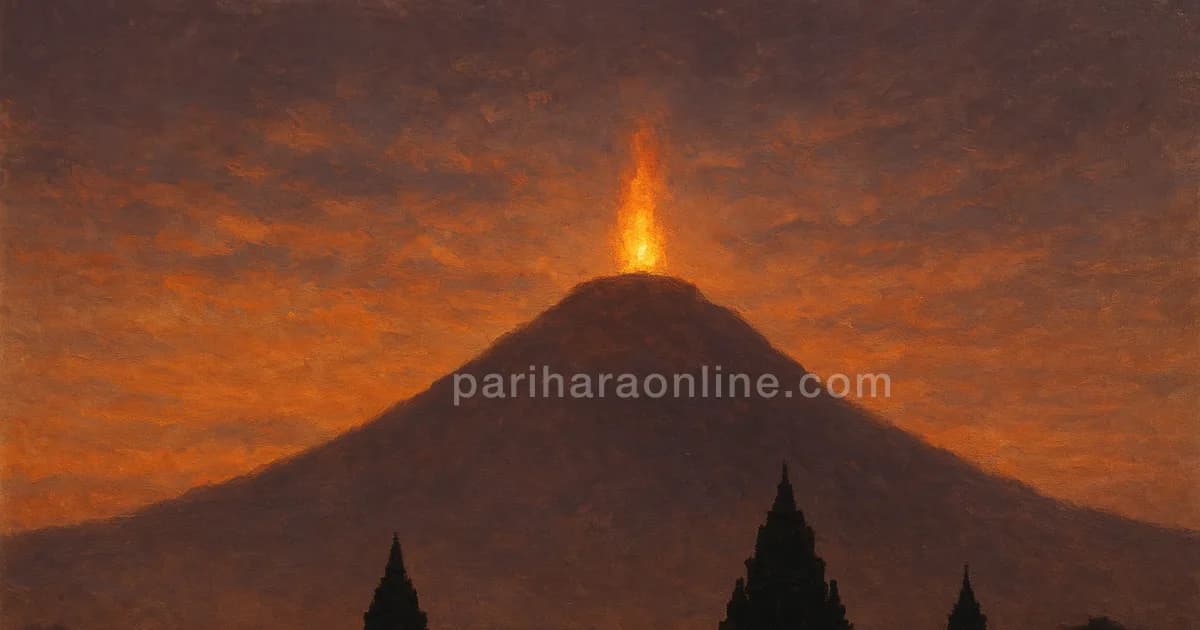
A boy of sixteen runs into a Shiva temple and throws his arms around the lingam, the rounded stone form of Shiva. Behind him comes Yama, lord of death, whose noose falls around the boy and the stone together. Shiva bursts out of the lingam and pushes Yama back. The boy is Markandeya, and the Puranas tell his story to explain a name: Mrityunjaya, the one who conquers death. The Mahamrityunjaya mantra meaning grows out of that scene. It is a Vedic prayer to Shiva asking to be released from death the way a ripe fruit is released from its vine, gently and when it is ready.
Mahamrityunjaya mantra meaning, word by word
The verse is old. It appears in the Rig Veda, in the seventh book, and again in the Yajur Veda, which is why priests treat it as shruti, revealed sound, rather than a later hymn. Here is the Mahamrityunjaya mantra meaning in English, one piece at a time.
- Om tryambakam: the three-eyed one. Shiva's third eye sees what the other two miss.
- Yajamahe: we worship, we offer.
- Sugandhim: the fragrant one. Fragrance is presence you cannot hold in your hand.
- Pushtivardhanam: the one who increases nourishment, who makes things grow.
- Urvarukam iva bandhanan: like a cucumber from its bond, the stalk that ties it to the vine.
- Mrityor mukshiya: may I be freed from death.
- Maamritat: but not from immortality, not from the deathless.
Put together, it reads: we worship the three-eyed, fragrant one who nourishes all life; as the ripe cucumber slips from its vine, may he free us from death and not from the deathless. If you are new to this kind of chanting, the piece on what a mantra actually is explains why the sound matters as much as the translation.
What does "freed from death like a ripe cucumber" really mean?
This is the strangest line in the verse, and the most important. Why a cucumber? Because a ripe cucumber does not need to be cut. When it is ready, the stalk simply lets go. An unripe one clings, and pulling it tears the vine.
The story of Markandeya says Shiva defeated death. The story is really about something quieter. Markandeya did not become immortal in the ordinary sense; the Puranas say he was granted to remain sixteen forever, which is another way of saying he stopped living in fear of the noose. The mantra does not ask for a body that never ends. It asks to ripen, so that when the letting go comes, it comes without struggle. Maamritat, "not from the deathless", is the part people skip. It says: loosen my grip on what dies, and keep me close to what does not.
Mahamrityunjaya mantra benefits, as tradition describes them
Families reach for this verse in hospital corridors. It is chanted for someone who is ill, before surgery, for an elder whose health is fading, and on birthdays as a prayer for long life. Tradition calls its benefits health, recovery and courage. What people describe is steadiness: a fixed sound to hold when everything else is uncertain. If you are chanting for someone far away, praying for a sick parent from abroad walks through what that can look like day to day.
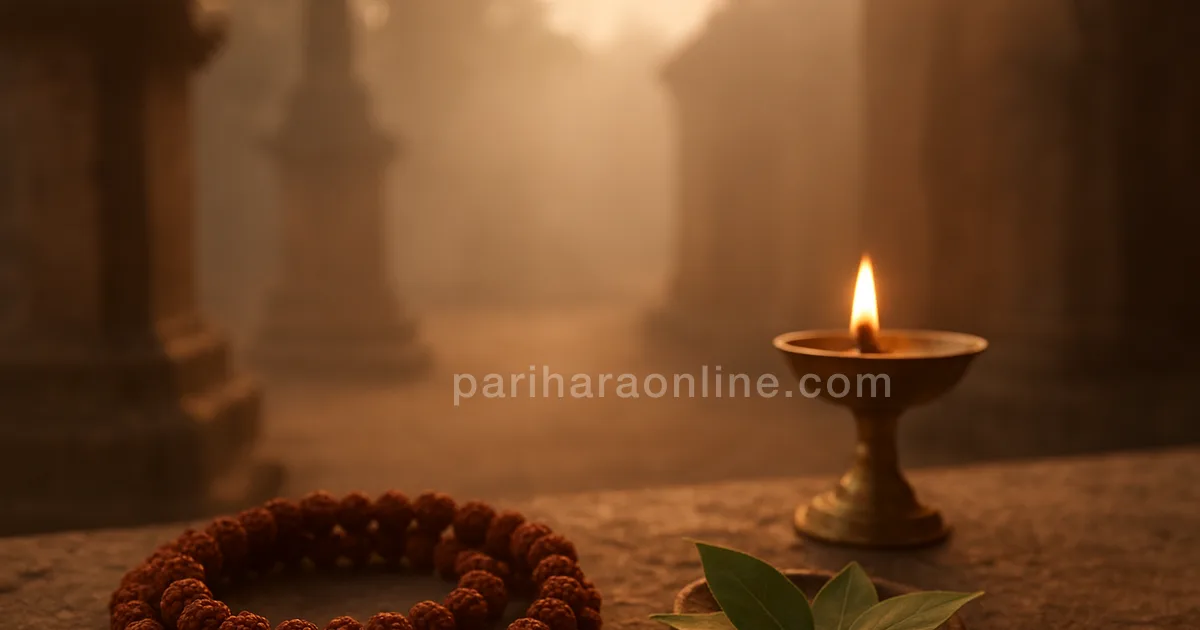
How many times to chant the Mahamrityunjaya mantra? One hundred and eight, on a rudraksha mala, a string of prayer beads made from the seeds of the rudraksha tree, is the usual count. Three, eleven or twenty-one are also traditional. For a more formal offering, families arrange a Mrityunjaya homam, a fire ritual in which priests chant the verse many times and offer ghee into the flames with each repetition. Our guide to what happens in a homam covers the steps.
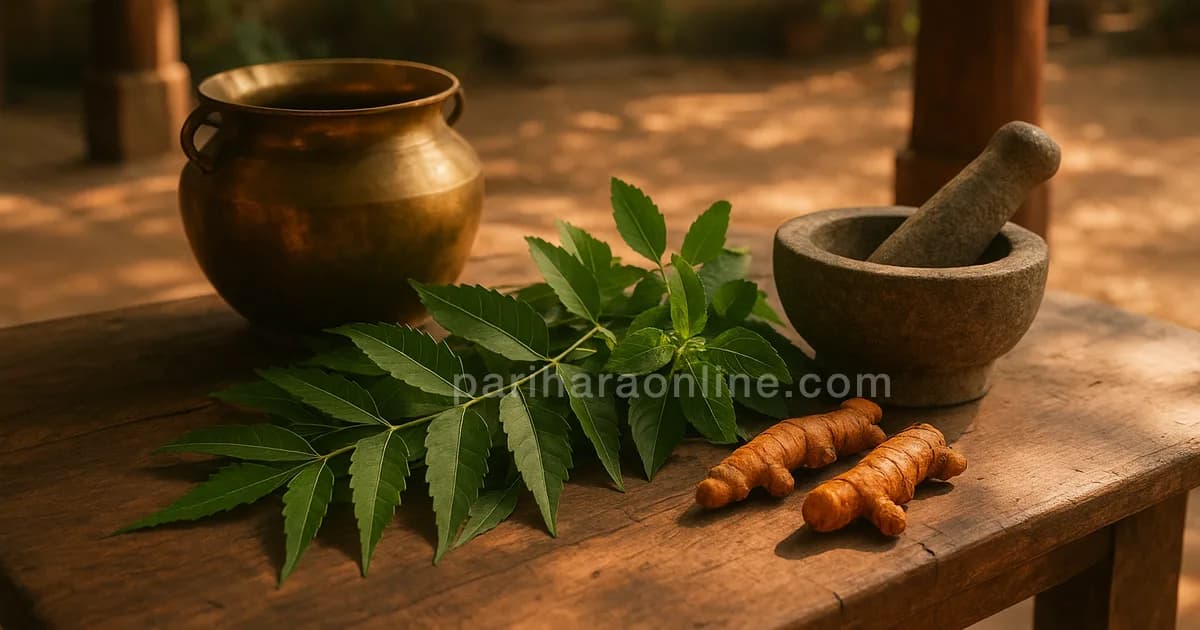
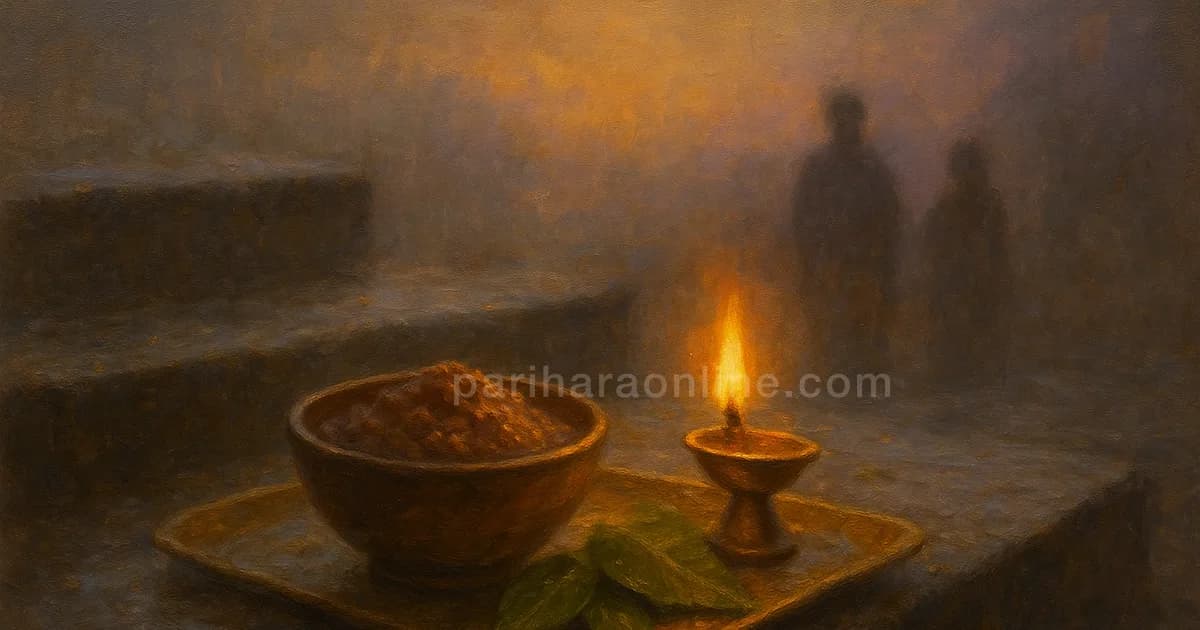
None of this replaces a doctor. The tradition that gave us this mantra also gave us Dhanvantari, the god who arrives carrying medicine, and the Dhanvantari homam and healing sits comfortably beside a hospital's care. Prayer and treatment walk together.
A prayer for how to live
Read the verse again and notice what it asks for first. Not escape. Nourishment: pushtivardhanam, the one who makes things grow. Only then does it ask for release, and even then it asks to be ripe for it.
That makes the Mahamrityunjaya a prayer for the healthy as much as the sick. It asks to be fed well by life, to grow fully, and to let go without tearing. You can chant it slowly once, tonight, with no count at all. Say the cucumber line twice. It is the one that stays with people.
Questions people ask
What is the meaning of the Mahamrityunjaya mantra in English?
A close translation is: We worship the three-eyed one, fragrant, who nourishes all beings. As the ripe cucumber is freed from its vine, may he free us from death, not from immortality. The verse appears in the Rig Veda and the Yajur Veda and is addressed to Shiva, also called Rudra.
How many times should the Mahamrityunjaya mantra be chanted?
One hundred and eight times, using a mala, is the most common count, though three, eleven or twenty-one repetitions are also traditional. For someone who is unwell, families sometimes chant together in turns over several days. A single slow recitation with full attention is still a complete prayer.
What is a Mrityunjaya homam?
A Mrityunjaya homam is a Vedic fire ritual in which priests offer oblations while chanting the Mahamrityunjaya mantra many times. Families often arrange it for someone recovering from illness or surgery, for elders, or on birthdays. Tradition sees it as prayer for strength and longevity, performed alongside, never instead of, medical treatment.
Enjoying this?
To get more Mantra posts like this, subscribe for free.
Written by
Reads the old stories for what they still mean
Hariharan writes about the myths, symbols and festival stories that most of us grew up hearing but were rarely asked to think about. He tells the story first, then asks what it is really about, and leaves the conclusion to you.