Magha Nakshatra (Magam): The Ancestors' Throne
Magha nakshatra, Magam in Tamil: the Pitrs and Ketu, the royal throne, the saying 'Magam rules the world', and the Mahalingeswarar temple for the star.
· 4 min read
In short
Magha, Magam in Tamil, is presided over by the Pitrs, the ancestors, with Ketu as its ruling planet and a royal throne as its symbol.
Tradition links Magha with lineage, dignity and remembrance, and Masi Magam is a major temple festival on this star.
Nakshatra temple lists differ for Magha; one widely shared list names the Mahalingeswarar temple at Thavasimedai.
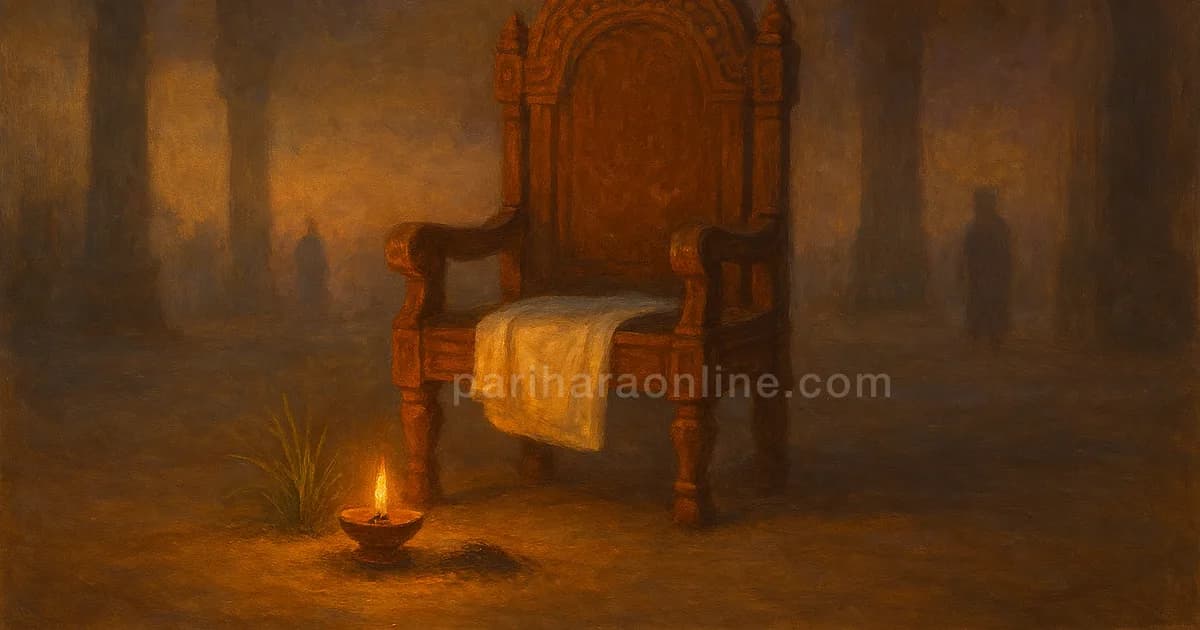
There is a Tamil saying, "Magathil pirandhal jagathai aalvaan": born in Magam, you will rule the world. Parents of Magam babies hear it often, usually from a smiling relative. Magha nakshatra is indeed a royal star, with a throne for its symbol. But the throne, when you look at it closely, belongs to the dead.
Magha nakshatra: the Pitrs' throne
Most of the twenty-seven nakshatras, the Moon's birth stars, have a god presiding over them. Magha has the Pitrs, the ancestors, the generations who came before us and who, in the tradition, are still owed remembrance. Its ruling planet is Ketu, the shadow planet associated with the past, with detachment and with what is left behind. Magha opens Simha, the sign of the lion; Simha rasi describes the sign.
The symbol is a throne, or in some lists a palanquin. Both are seats of honour, and both are carried or inherited. Nobody builds their own throne. It is handed down.
Matchmakers expect a Magam-born person to be dignified, loyal to the lineage, generous, a little proud and fond of ceremony, someone who takes family seriously. It fits plenty of people born under other stars too, which is a good reason not to read it as a forecast.
Why does a royal star belong to the ancestors?
There is a tale told around Mahalaya Paksha, the fortnight of the ancestors, that is not found in the Mahabharata itself but has grown up around its greatest giver. Karna, famous for never refusing anyone who asked, dies at Kurukshetra and goes to the heavens. There he is served gold and jewels instead of food. Everything he touches is precious and inedible.
He asks why. He is told: in life you gave gold freely, but you never offered food or water to your ancestors. You did not know who they were, raised as you were by a charioteer's family, and so you never fed them. Karna is sent back to earth for a fortnight to make offerings of food and water in their name, and that fortnight, the story says, is Mahalaya Paksha.
The story says greatness is inherited, or earned by generosity. The story is really about what we owe to those behind us. Karna gave to everyone in front of him and forgot the line he stood at the end of. A throne without ancestors is just a chair.
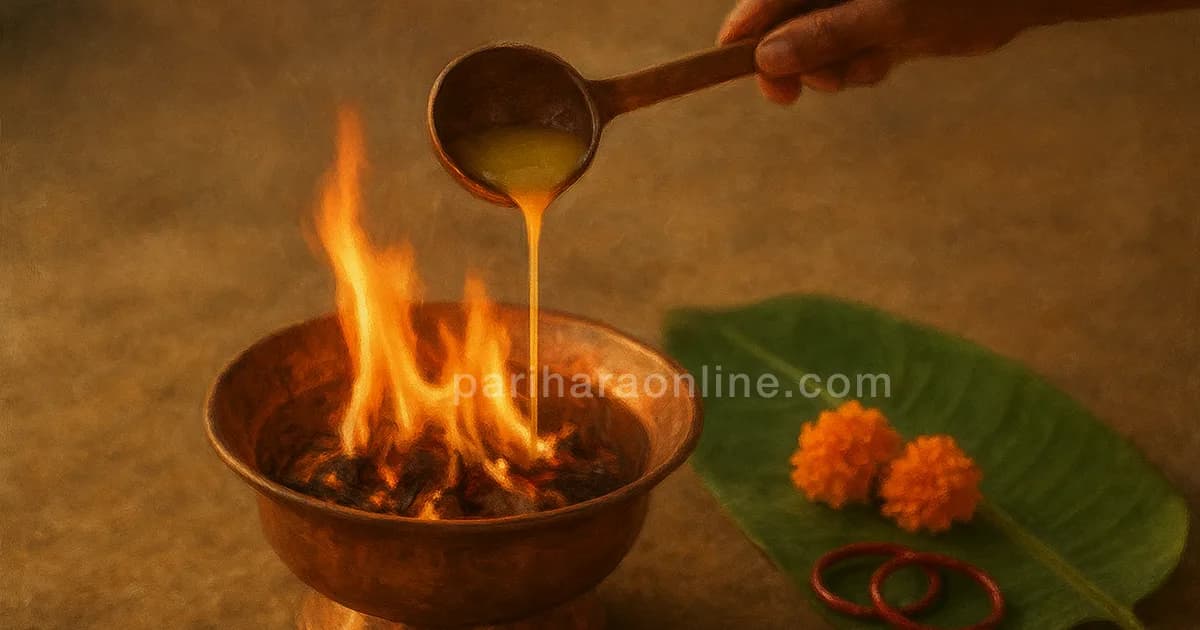
This is why the ancestral rites fit Magha so naturally. Tarpanam, the offering of water mixed with sesame to the ancestors, and tila homam, a fire ritual with sesame for the same purpose, are the traditional ways of setting the table for them. Both are described in the guide to tarpanam at home and in Amavasya and the ancestors.
Temple, star day and Masi Magam
Nakshatra temple lists differ for Magha. One widely shared list names the Mahalingeswarar temple at Thavasimedai, with the village spelt several ways, while other lists name other shrines, so check locally before travelling. Magam-born devotees who cannot travel ask for an archana, the chanting of Shiva's names over flowers, at whatever temple is near.
The star's great day is Masi Magam, when the full moon falls on Magam in the Tamil month of Masi, in late winter. On that day temple deities across Tamil Nadu are carried in procession to the sea or to the temple tank for a ritual bath, and devotees bathe with them. Kumbakonam's Mahamaham tank draws huge crowds on the rare years when the conjunction is especially auspicious.
On the monthly janma nakshatra, the day each month when the Moon comes back to Magam, a lamp for the ancestors is enough. The star birthday, Magam's return in your birth month, is a fitting day to remember elders, living and gone. The star before is Ashlesha, the serpent's star, and the one after is Purva Phalguni, the star of rest.
A throne is only a chair
On your Magam day, say the names of three people who came before you, aloud. A grandparent, a great-grandparent, anyone whose name you know. If you do not know three names, ask someone who does, and write them down. That small act is the whole of Magha. A throne is only a chair until someone remembers who sat in it.
Questions people ask
Which temple is associated with Magam nakshatra?
The widely cited Tamil list of nakshatra temples names a Mahalingeswarar temple at Thavasimedai, sometimes written simply as Medai, as the Magam nakshatra temple. Lists differ for Magam, and some name other shrines; village spellings also vary, so check locally before travelling. Many Magam-born devotees also honour their ancestors through tarpanam, especially on Amavasya and during the ancestral fortnight.
Why is Magha nakshatra connected to ancestors?
The presiding deities of Magha are the Pitrs, the ancestral fathers, so the link with ancestors is built into the star itself. Tradition therefore treats Magam as a natural day for remembering forebears, offering water and sesame, feeding others, or arranging ancestral rites such as tila homam. It is a star of lineage, not only of personal ambition.
What does 'Magathil pirandhal jagathai aalvaan' mean?
It is a Tamil saying meaning 'one born in Magam will rule the world'. It reflects tradition's image of Magam-born people as dignified, capable and drawn to leadership, echoing the throne symbol. Like all such sayings it is affectionate folk wisdom, not a forecast. A throne in the star's own story belongs to the ancestors who made us.
Enjoying this?
To get more Nakshatra posts like this, subscribe for free.
Written by
Reads the old stories for what they still mean
Hariharan writes about the myths, symbols and festival stories that most of us grew up hearing but were rarely asked to think about. He tells the story first, then asks what it is really about, and leaves the conclusion to you.