Dhanvantari Homam, Healing and the Body as a Temple
The Dhanvantari homam honours the god of Ayurveda. What Dhanvantari represents, how the homam is performed, and how to treat the body as an instrument of care.
· 4 min read
In short
Dhanvantari is the physician of the gods in Hindu tradition, who emerged from the churning ocean carrying amrita and is honoured as the patron of Ayurveda.
The Dhanvantari homam is a fire ritual for health and recovery, performed as prayer alongside, never instead of, medical care.
Dhanvantari's gift is attention: sleep, food and breath treated as daily offerings to the body.
Look carefully at how the god of healing arrives. When the gods and demons churned the ocean, Dhanvantari rose out of it holding a pot of amrita, the nectar of immortality. Not a thunderbolt. Not a spell. A vessel of medicine. The Dhanvantari homam, the fire ritual offered to him for health and recovery, carries that same spirit: it is prayer for the body, done by people who also take the body seriously. If you want to understand the homam, start by noticing what he holds in his hands.
Who is Dhanvantari?
The Bhagavata Purana and the Vishnu Purana tell of the samudra manthan, the churning of the cosmic ocean, when the gods and the asuras, their demon rivals, pulled on a great serpent wound around a mountain to draw out what lay in the deep. Poison came first. Then treasures. Last of all came Dhanvantari, a form of Vishnu, carrying the amrita everyone had been working for.
So who is Lord Dhanvantari? He is the physician of the gods and the patron of Ayurveda, the traditional Indian system of medicine. Physicians in the Ayurvedic lineage still begin their study with a prayer to him. He is honoured on Dhanteras, the first day of the Diwali festival, which is also called Dhanvantari Trayodashi; the five days of Diwali begin with him, quite literally with health before wealth.
What I find useful in this story is the order. The amrita came at the end, after long effort and after the poison. Healing, in this picture, is not instant. It is what surfaces when you keep working.
What happens in a Dhanvantari homam?
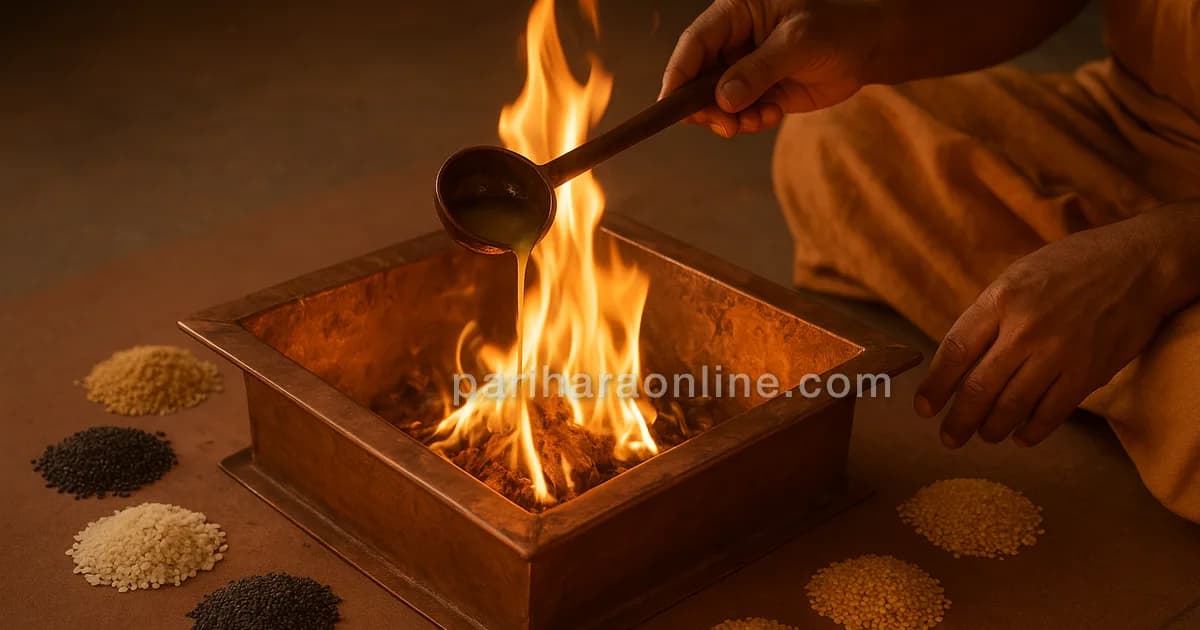
A homam is a Vedic fire ritual in which offerings of ghee, herbs and grains are poured into a consecrated fire while mantras are chanted. If you are new to the idea, what a homam is and how it works walks through the basics.
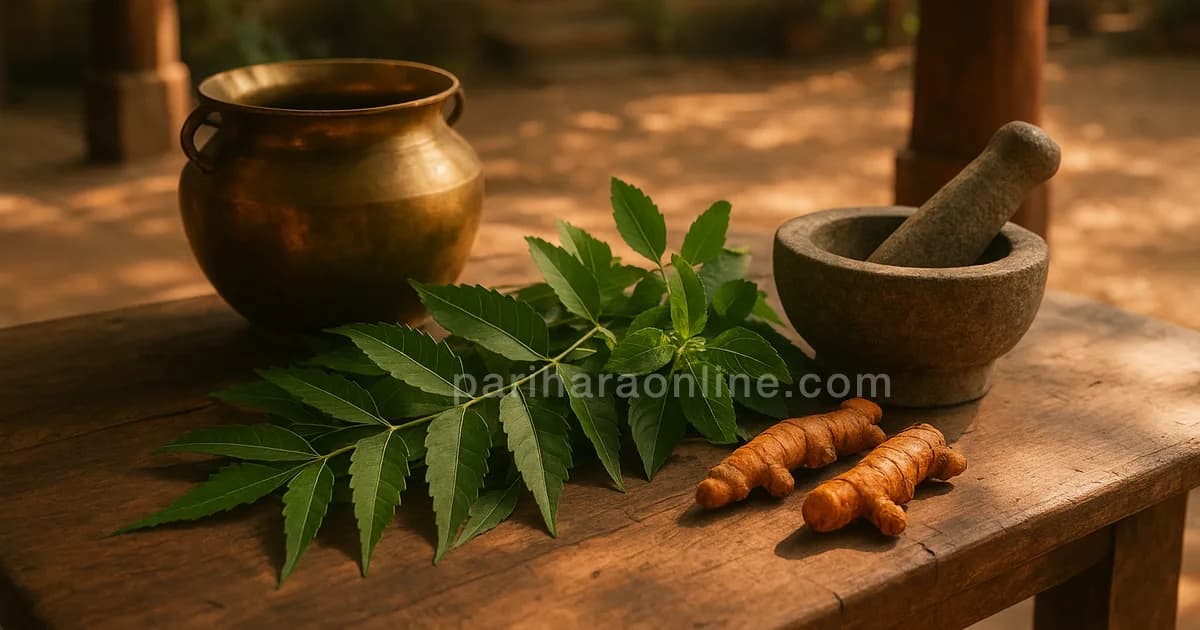
In a Dhanvantari homam, priests begin with a prayer to Ganesha and a sankalpam, the spoken statement of intention, that names the person whose health is being prayed for, often with their birth star. The central mantra is the Dhanvantari mantra, which begins "Om Namo Bhagavate Vasudevaya Dhanvantaraye Amrita Kalasha Hastaya", saluting the one who holds the pot of nectar. Herbs associated with healing are offered into the fire with each repetition, and the ritual closes with a final full offering and prasadam, the blessed food shared afterwards.
Families arrange it for elders, for someone facing a long treatment, or after a hospital stay. The Dhanvantari homam benefits people describe are steadiness and hope, for the patient and for everyone waiting outside the ward. It works best when it stands beside medical care, never in place of it. The same is true of the verse many families chant alongside it, which you can read about in the Mahamrityunjaya mantra, word by word.
Is the body a temple or an instrument?
People like to say the body is a temple. I would put it differently: the body is the instrument through which any practice happens, including prayer. You cannot chant well on four hours of sleep. You cannot sit before a fire with attention if you have been eating in a rush all week.
Dhanvantari points in this direction. Ayurveda was never only about medicines. It was about daily routine: when you wake, what you eat and how, how you breathe, when you rest. These are offerings too, made every day, and they are the ones the body notices most. Many people find that the moment they start treating a meal as something to pay attention to, their relationship with food shifts. The mind settles a little. Digestion often follows.
Ayurveda and prayer are not rivals. One tends the body directly; the other tends the attention with which you live in it.
Try this for a week
Choose one meal a day. Before you eat it, sit, put the phone in another room, and say the Dhanvantari mantra once, slowly, letting the breath settle first. Then eat that meal without a screen, tasting each mouthful. That is all.
Notice what changes by the fifth day: how hungry you really were, when you feel full, how you feel an hour later. If you are praying for someone else's health, praying for a sick parent from far away offers another small daily practice. Attention is the part of healing that belongs to you.
Questions people ask
Who is Lord Dhanvantari?
Dhanvantari is regarded as the physician of the gods and a form of Vishnu. The Puranas describe him rising from the churning of the cosmic ocean holding a pot of amrita, the nectar of immortality. He is honoured as the patron of Ayurveda, and Dhanteras, the first day of Diwali, is also observed as Dhanvantari Trayodashi.
What are the benefits of Dhanvantari homam?
Tradition performs the Dhanvantari homam to pray for recovery from illness, relief in chronic conditions and general wellbeing. Families often arrange it for elders or someone undergoing treatment. It is understood as prayer and intention, offered in the person's name through a sankalpam, and it supports rather than replaces medical advice and care.
What is the Dhanvantari mantra?
A widely chanted Dhanvantari mantra begins Om Namo Bhagavate Vasudevaya Dhanvantaraye Amrita Kalasha Hastaya, saluting the Lord who holds the pot of nectar and removes disease. Many people recite it before taking medicine or meals, or eleven or one hundred and eight times daily. Recite it slowly, letting the breath settle first.
Enjoying this?
To get more Dhanvantari posts like this, subscribe for free.
Written by
Writes about practice: attention, breath, the body, the lamp
Archana writes about ritual as something you do rather than something you believe: the lamp, the breath, the fast, the few quiet minutes before the day begins. Her pieces usually end with a small practice to try for a week and notice what changes.