Madurai Meenakshi Temple: A Devotee's Guide
The Meenakshi temple in Madurai: the fish-eyed warrior queen, her wedding to Sundareswarar, the nightly journey to his shrine, and what to notice inside.
· 4 min read
In short
The Meenakshi temple in Madurai honours Meenakshi, a warrior queen and form of Parvati, and her consort Sundareswarar, a form of Shiva.
Their wedding, Meenakshi Thirukalyanam, is celebrated in the spring month of Chithirai and draws the whole city.
You can join from afar with a pooja to Meenakshi in your family's name.
Most temples are named after the god. The Meenakshi Temple in Madurai is named after the goddess, the city grew up around it, and Madurai still arranges its whole year around her. Shiva is here too, as Sundareswarar, the beautiful lord, but he is the one who came to her city to marry her. If you go, or if you worship from far away, it helps to know that you are visiting a queen first and a bride second.
Who is the Meenakshi this temple honours?
The Thiruvilayadal Puranam, the Tamil book of Shiva's sacred plays at Madurai, tells her story: a girl born from a Pandya king's sacrificial fire, raised as an heir rather than a princess, crowned queen, who conquered the directions until she met Shiva at Kailash and brought him home to marry her. What that story says about power and the feminine is the subject of Meenakshi, the queen who ruled.
Meenakshi means fish-eyed. The usual explanation is lovely: fish were believed never to close their eyes, and a mother fish was said to nourish her young simply by looking at them. The goddess watches over her city in the same way, without blinking.
What happens at the Chithirai wedding?
Every spring, in the Tamil month of Chithirai, Madurai celebrates the Meenakshi Thirukalyanam, the divine wedding of Meenakshi and Sundareswarar. Over several days there is a coronation, processions of the deities through the streets, the wedding itself, and a great chariot festival. Alongside it, Alagar, Vishnu as Meenakshi's brother, sets out from his hill temple to attend and give away the bride. In the story he arrives late and turns back at the river, which gives the city another day of festivities. The days of the festival, one by one, are in the Meenakshi Thirukalyanam festival.
Notice how a wedding becomes a whole town's festival. Families renew their own thalis, the marriage threads, on the day. People who have never met share food on the street. A private event is made public on purpose, so that everyone can take part in it.
What to notice inside
The temple is enormous, with towering gopurams, the gateway towers, covered in painted figures. It is easy to spend a visit looking upward and miss the details. A few worth noticing:
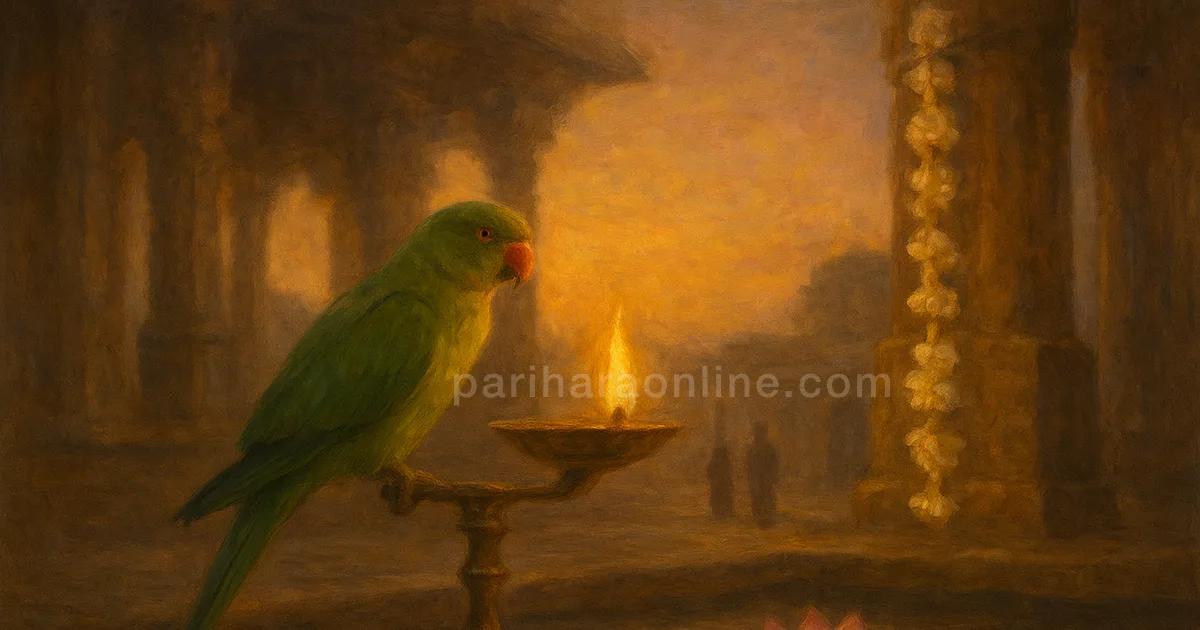
The parrot on Meenakshi's hand. She holds it the way someone holds a thought they want to keep close. Devotees say it carries their prayers to her.
The Golden Lotus Tank, Potramarai Kulam, in the heart of the complex. Tradition says the Tamil poets' academy once tested new works here.
The palli arai ritual at night, when Sundareswarar is carried in a palanquin to Meenakshi's chamber and the temple closes with lullabies. It is the most domestic thing a great temple can do.
Try this if you are there. Stand by the tank for three minutes. Do not take a picture. Let your breath slow to the pace of the crowd moving around the water. You will find the temple is less a building than a rhythm, and you can fall into step with it.
Many pilgrims go on from here to the coast, to the Rameswaram temple and its sand lingam.
Keeping the connection from afar
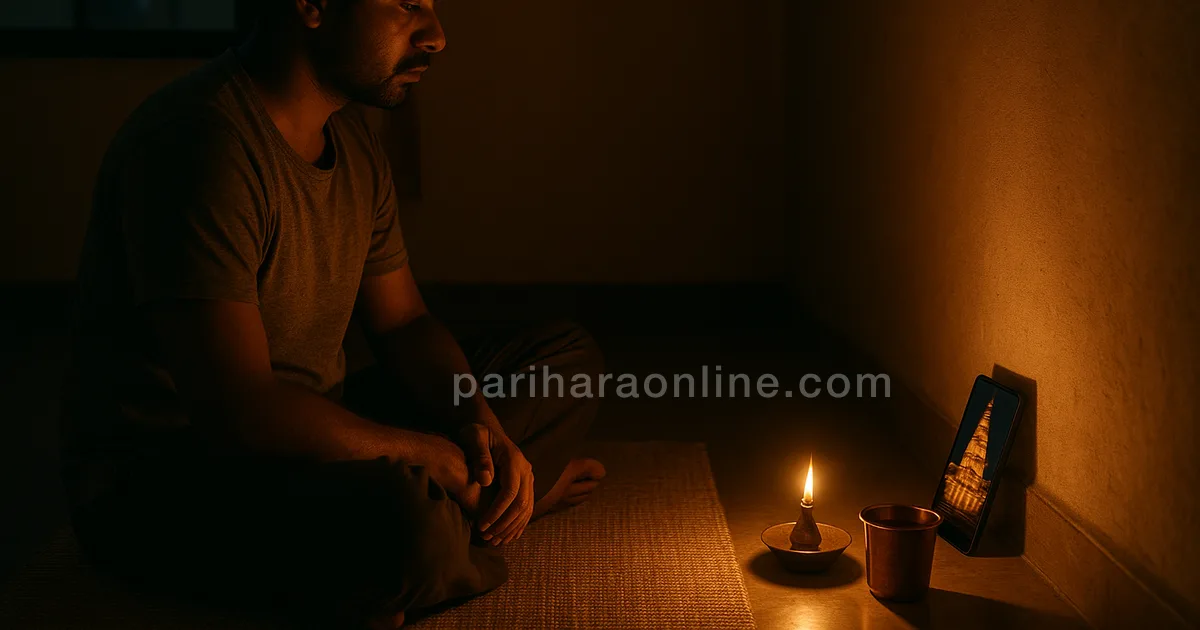
Friday is the Goddess's day in Tamil homes, which makes it a natural day to turn toward Meenakshi. From far away, a pooja to her in your family's name keeps the thread. At home, something simpler works too: light a lamp, offer a pinch of kumkum, the red powder of the Goddess, and sit for a few minutes. A Friday Lakshmi pooja gives a simple structure you can adapt.
Try it for four Fridays. Same time, same place, one lamp. Notice what shifts in how you begin the weekend when you begin it by greeting a queen.
Questions people ask
What is Meenakshi Thirukalyanam?
Meenakshi Thirukalyanam is the divine wedding of Meenakshi and Sundareswarar, re-enacted at the Madurai temple during the Chithirai festival, usually in April or May. The deities are adorned as bride and groom, sacred threads are tied, and married women often renew their own thali threads. It is one of the most joyful temple festivals in Tamil Nadu.
What is the Meenakshi Amman story?
The Thiruvilayadal Puranam tells of a Pandya king who performed a sacrifice for a child and received a girl, Thadathagai, born with three breasts. A voice said the third would vanish when she met her husband. She grew into a warrior queen, conquered every direction, and at Kailash met Shiva. The third breast vanished, and she married him in Madurai.
Is Sundareswarar worshipped at the Madurai Meenakshi temple?
Yes. Sundareswarar, the beautiful lord, is Shiva's form at Madurai, and his shrine is part of the same temple complex. Tradition asks devotees to visit Meenakshi first, then Sundareswarar. Every night his processional image is carried to her chamber in the palli arai ceremony, a gentle reminder that the goddess is the heart of this temple.
Enjoying this?
To get more Temple Guides posts like this, subscribe for free.
Written by
Writes about practice: attention, breath, the body, the lamp
Archana writes about ritual as something you do rather than something you believe: the lamp, the breath, the fast, the few quiet minutes before the day begins. Her pieces usually end with a small practice to try for a week and notice what changes.