Durga Saptashati for Beginners: How to Begin
Durga Saptashati for beginners: what the 700 verses contain, how to start reading them at home a few minutes a day, and what to do if Sanskrit feels hard.
· 4 min read
In short
The Durga Saptashati, also called the Devi Mahatmyam, is a 700-verse text in 13 chapters that tells three stories of the Goddess defeating demons.
Beginners can start with one chapter a day, in translation if needed; steady attention matters more than speed or perfect Sanskrit.
Many readers spread the full text across the nine nights of Navratri.
Durga Saptashati for beginners starts smaller than most people expect. You do not need to finish all seven hundred verses on the first day, or even in the first Navratri. Try this: read one chapter, slowly, in a language you understand, at the same time each morning for a week. Sit with it. Notice what happens to your attention for the rest of the day. The text has been recited in homes and temples for centuries, and almost everyone who recites it well began by reading it badly and returning anyway.
What is in the Durga Saptashati?
Durga Saptashati means "seven hundred verses to Durga". It is the same text as the Devi Mahatmyam, a section of the Markandeya Purana, and it is arranged in 13 chapters. The frame is human: a king who has lost his kingdom and a merchant thrown out by his family meet in a forest. Both are still anxious about the people who wronged them. They ask a sage, Medhas, why the mind clings like this, and he answers by telling them about the Goddess.
The answer comes as three stories. The first, in chapter one, tells of Mahakali and the demons Madhu and Kaitabha, born while Vishnu sleeps. The second, chapters two to four, is the great battle with Mahishasura, the buffalo demon, where the Goddess is formed from the combined radiance of all the gods. The third, chapters five to thirteen, follows the demons Shumbha and Nishumbha and ends with hymns of praise and the boons granted to the king and the merchant.
You can read these Devi Mahatmyam chapters as myth, as prayer, or as a map of the mind: sluggishness, pride and craving, each met by a different face of the same power. The tradition holds all three readings at once.
Durga Saptashati for beginners: how to read it at home
Keep it simple and physical. The body is the first instrument, so settle it before the book.
- A clean seat. Sit on a mat or folded cloth, the same spot each day. Bathe first if you can.
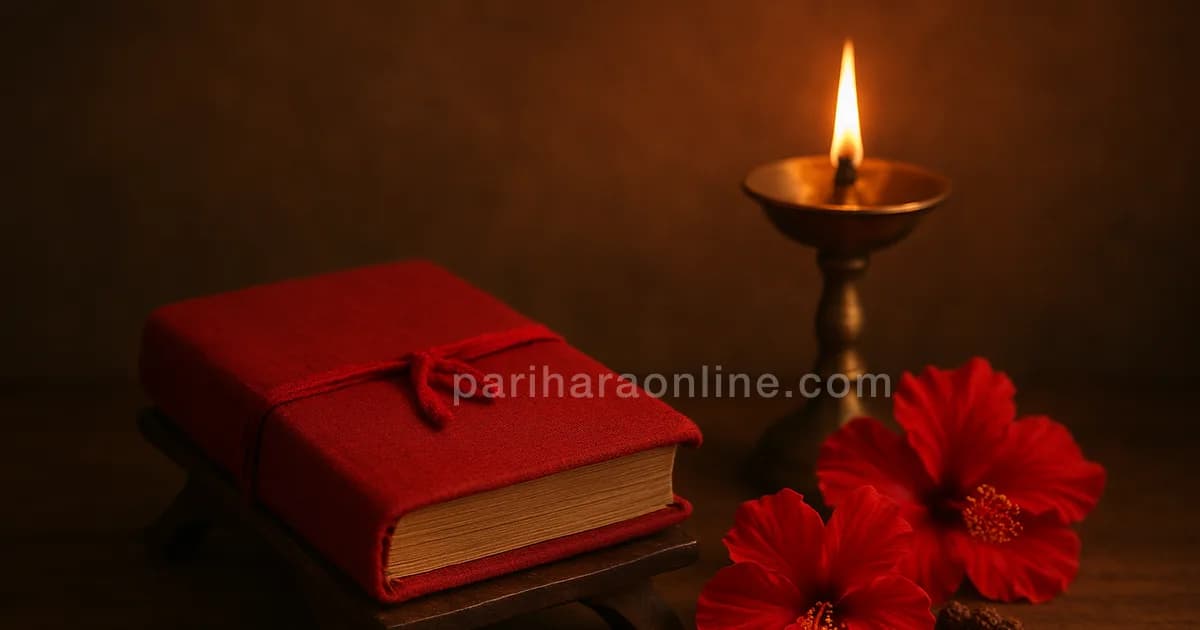
- A lamp. Light one lamp in front of an image of the Goddess, or simply in front of you.
- A short sankalpam. Sankalpam is the spoken statement of intention before a puja; say your name and why you are reading, in a sentence. The idea is explained in what is sankalpam.
- Translation first. Read the meaning before the Sanskrit. A bilingual edition helps.
- A chapter a day. Durga Saptashati in Navratri is often read across the nine nights, a few chapters each evening. Beginners can take one chapter a day and let the reading spill beyond the festival.
If you are also fasting, keep the reading before the meal, when the mind is quieter; the kinder guide to Navratri fasting has gentle options.
Is it okay to read it without perfect Sanskrit?
Yes. Many people find this is where they stall: afraid of mispronouncing, they never begin. The tradition does value correct sound, and trained priests spend years on it. But you are not a priest, and a sincere reading in your own language is still a reading.
Try this. Listen to a clear recording of one chapter while following the text. Then read the translation aloud. After a week, try the Sanskrit of a few verses alongside the recording. Your mouth will learn slowly, the way it learns any song. If you want to build that muscle more generally, chanting for beginners offers a seven-day practice.
For a full recitation of all seven hundred verses with every rule observed, for a specific intention, it is reasonable to ask trained priests to chant it on your behalf, and many families do exactly that during Navratri. Reading it yourself and having it chanted are not rivals. One trains your attention; the other is an offering.
Try the first chapter for seven days
Here is the practice. For the next seven mornings, read only the first chapter, the story of the king, the merchant and the sleeping Vishnu. Same seat, same lamp, same time. Do not rush ahead.
By the fourth day you will notice which lines you remember without trying. By the seventh you will know whether you want to go on. If you do, take the second chapter the following week. If you are drawn to learning and speech, the companion Goddess of the final night appears in Saraswati and Hayagriva, and the text itself flows into Ayudha Pooja at the end of the festival.
Questions people ask
How do I start reading Durga Saptashati at home?
Sit in a clean spot, light a lamp and state your intention silently or aloud. Begin with the first chapter, reading slowly in Sanskrit or a trusted translation. Many beginners read one chapter a day, so the thirteen chapters stretch comfortably across Navratri or two weeks. Close with a short prayer and sit quietly for a minute.
What are the three parts of the Devi Mahatmyam?
The text is divided into three episodes. The first chapter tells of the Goddess as Mahakali defeating Madhu and Kaitabha. Chapters two to four describe Mahalakshmi slaying the buffalo demon Mahishasura. Chapters five to thirteen tell of Mahasaraswati destroying Shumbha and Nishumbha. Each part is also read as a stage of inner transformation.
Can I read Durga Saptashati without knowing Sanskrit?
Yes. Many devotees read a translation in their own language, or listen to a recording while following the meaning. Tradition values correct pronunciation for formal recitation, which is why families often book priests for a full parayanam, but a sincere personal reading in any language is widely accepted as devotion rather than error.
Do I need to read all 700 verses in one day?
No. Reading the whole text in one sitting takes a few hours and is usually done by trained reciters. For personal practice, reading a chapter or a section each day is traditional and practical. What matters is regularity and attention. You can complete the text over Navratri, over a month, or keep returning to a favourite chapter.
Enjoying this?
To get more Durga Saptashati posts like this, subscribe for free.
Written by
Writes about practice: attention, breath, the body, the lamp
Archana writes about ritual as something you do rather than something you believe: the lamp, the breath, the fast, the few quiet minutes before the day begins. Her pieces usually end with a small practice to try for a week and notice what changes.