Ayudha Pooja Meaning: Why We Bless Our Tools
Ayudha Pooja meaning, simply: why South Indian homes bless tools, books, cars and laptops on Navami, and how to do a small version at your own desk.
· 4 min read
In short
Ayudha Pooja is the day South Indian families honour the tools of their livelihood, from ploughs and spanners to laptops and cars, on Navami of Navratri.
The idea is gratitude: the things that help us work are cleaned, decorated and rested, and work begins afresh on Vijayadashami.
On the ninth day of Navratri, the mechanic near my mother's house in Chennai used to line up his spanners on a clean sack, each one smeared with sandal paste and a dot of kumkum, the red powder of worship, a string of jasmine draped over the air compressor. That is the Ayudha Pooja meaning in a single picture. Ayudha means instrument or weapon, and on this day we thank the things that feed us: tools, machines, books, the vehicle that gets us to work. We clean them, bless them and, for one evening, let them rest.
Ayudha Pooja meaning: worship of the instruments
The day falls on Navami, the ninth day of Navratri, just before Vijayadashami. In Tamil and Kannada homes it is often called Saraswati Pooja as well, because books, musical instruments and pens are placed before the Goddess of learning alongside the hammers and sewing machines.
The story most families tell comes from the Mahabharata. Before their final year in hiding at King Virata's court, the Pandavas wrapped their weapons and hid them in the branches of a shami tree outside the city. When the year ended, Arjuna climbed the tree and took down his bow, Gandiva, and they found everything exactly where they had left it. The weapons had waited. The tradition says that is why tools are honoured on this day and why shami leaves are exchanged on Dussehra; you can read how the tenth day grew its own stories in the meaning of Dussehra and the burning of Ravana.
I like that the story is not about a battle. It is about a pause. The Pandavas put their instruments down for a long time, and the instruments were still good when they returned.
Why bless a laptop or a car?
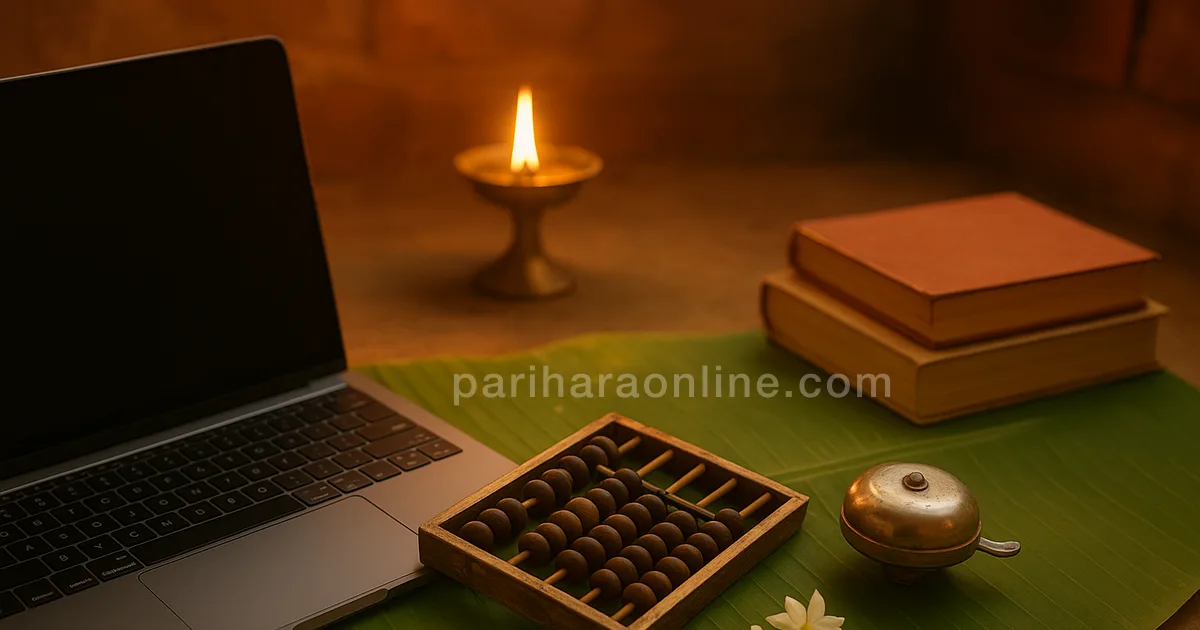
My first Ayudha Pooja in New Jersey, I felt faintly silly putting kumkum on the corner of my laptop. It seemed like something the mechanic did, not someone who writes emails for a living. Then I counted the hours. That machine had carried most of my working life for four years. It had been in hospital waiting rooms with me and on the kitchen table at midnight. If anything in the house was my ayudha, it was that.
The Bhagavad Gita has a line I return to often: "yogah karmasu kaushalam", yoga is skill in action. It does not say yoga is escape from action. The tools are part of the skill. Honouring them is a way of saying that work itself can be a form of worship, that the hands and the things they hold are not separate from prayer.
There is also something quietly radical about the rest. For one evening, the laptop stays closed. The car stays in the driveway. Children leave their schoolbooks in front of the lamp and, by custom, do not study until the next morning. Many of them treat it as the best rule in the whole calendar.
A small Ayudha Pooja at home or at your desk
You do not need a workshop to keep this day. Here is the version we do in a small apartment:
- Clean first. Wipe down the laptop, the phone, the car keys, the kitchen knives, the child's pencil box. Cleaning is half the pooja.
- Arrange. Place the items on a cloth near your prayer corner, books at the front.
- Mark them. A small dot of sandal paste and kumkum on each, not on screens or anything that will stain.
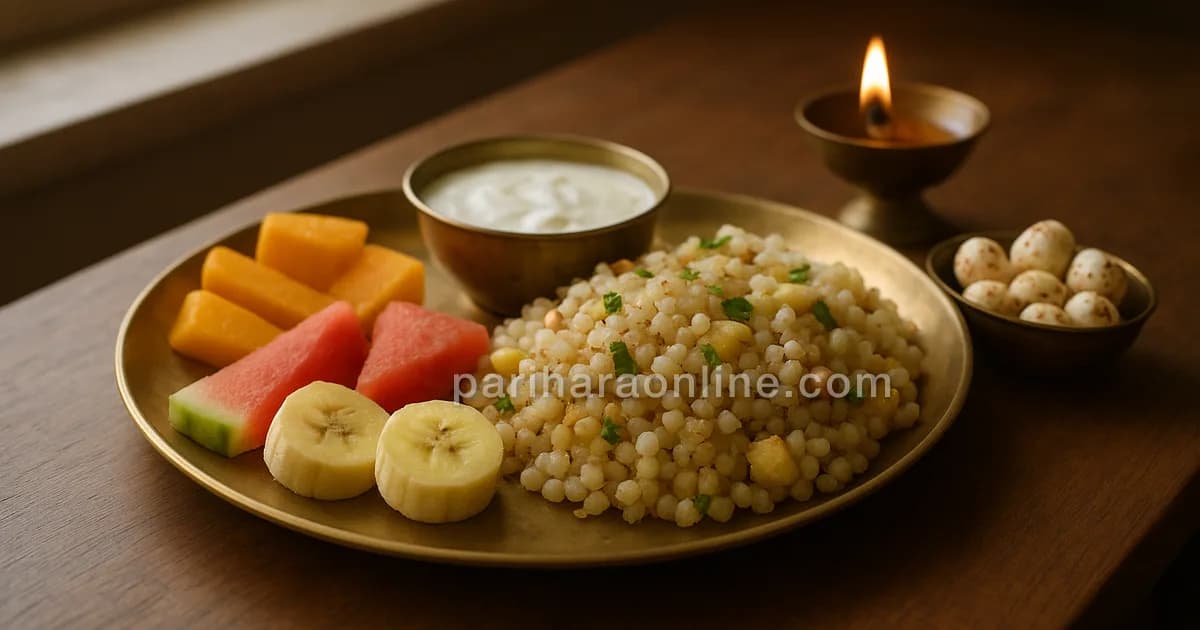
- Offer. A flower on top, a lamp lit in front, a few fruits or some puffed rice and jaggery.
- Pray simply. A short prayer to Saraswati for clear thinking and to Ganesha for smooth work. If you have a student in the house, a prayer before exams fits naturally here.
- Let them rest until the next morning, when Vijayadashami begins. Many families start something new that day, such as a child's first letters, described in Vidyarambham and the first letters.
If you are fasting through Navratri, Ayudha Pooja is often a lighter day to break into a festive meal; the Navratri fasting rules explain how families handle the ninth and tenth days.
One small thing to carry into the week
Choose one tool you use every day and never think about: a pen, a knife, a phone, a steering wheel. Clean it properly. Put a flower on it. Let it rest for one evening. The next morning, when you pick it up again, notice whether you hold it a little differently.
Questions people ask
Why do we worship tools on Ayudha Pooja?
Ayudha means instrument or weapon. The day honours whatever helps you earn, learn and live, from a farmer's plough to a programmer's laptop. Tradition links it to the Pandavas retrieving their weapons from a shami tree after their exile in the Mahabharata. The deeper idea is gratitude: effort needs instruments, and instruments deserve care and a day of rest.
Is Ayudha Pooja the same as Saraswati Pooja?
In Tamil Nadu and much of South India they fall together on the Navami of Navratri. Books, musical instruments and school bags are placed before Saraswati, while vehicles and tools receive their own blessing. Elsewhere, Saraswati Puja may be observed on a different day of Navratri according to the nakshatra. Many homes simply honour learning and livelihood side by side.
Can I do Ayudha Pooja for my laptop and phone at home?
Yes, and many working families now do. Wipe the laptop, phone or car clean, place it on a clean cloth, apply a small dot of sandal paste and kumkum where it will not damage anything, offer a flower and light a lamp. Customarily you leave the items unused until the next morning, when work restarts on Vijayadashami.
Enjoying this?
To get more Ayudha Pooja posts like this, subscribe for free.
Written by
The Sunday column: festivals and rituals meeting ordinary weeks
Manikandan writes the Sunday column, where festivals and rituals meet commutes, hospital corridors and video calls with parents far away. Each piece closes with one small thing to carry into the week ahead.