Lakshmi Puja at Home When You Live Abroad
Lakshmi puja at home with no priest or Indian store nearby: what you really need, the order of steps, and how to keep the evening calm and focused.
· 4 min read

In short
You can do Lakshmi puja at home without a priest: clean the space, honour Ganesha first, light a lamp, offer flowers and a sweet, and perform aarti.
Most items have easy substitutes abroad; tea lights, grocery-store flowers and a plain coin are enough when the attention is real.
Lakshmi puja at home is not a shopping list. It is one evening where you pay attention to what sustains you, and you can do it with very little: a clean space, a lamp, a flower, a coin, a sweet, and twenty minutes where you are fully present. You do not need a priest, and you do not need an Indian store within driving distance. What you need is a settled body and a mind that has decided, for this short while, not to be anywhere else.
What you need for Lakshmi puja at home
Lakshmi is the goddess of wellbeing and plenty, and the tradition has always worshipped her with ordinary things. Here is the core, with what an ordinary American grocery can give you:
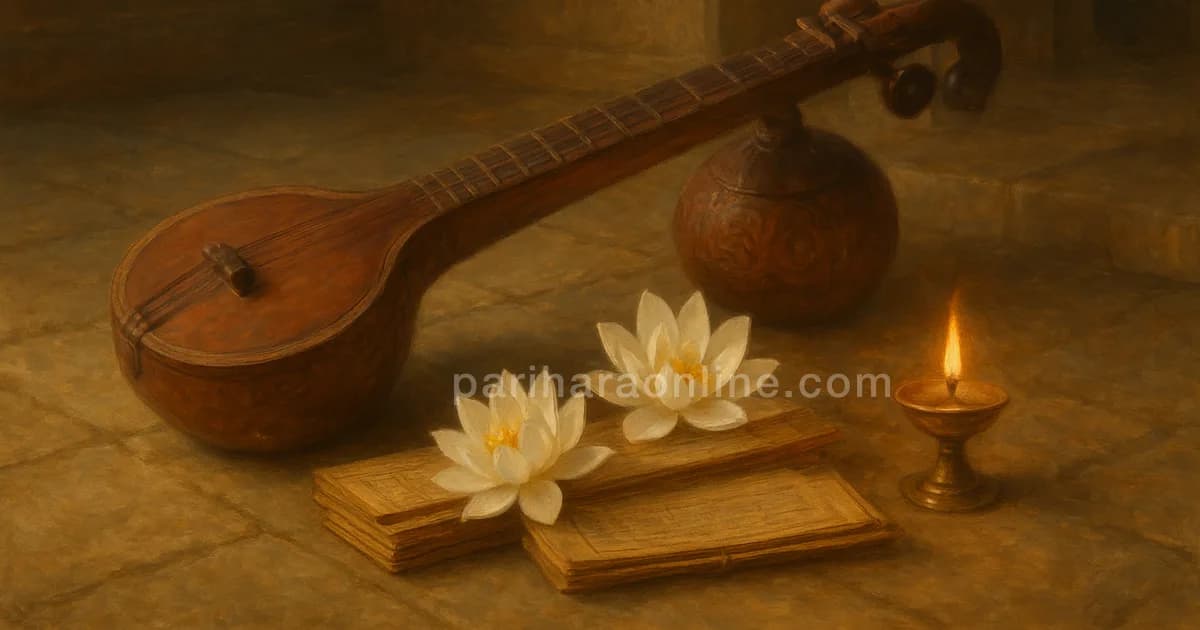
- A lamp. A brass or clay oil lamp with a cotton wick, or tea lights. Ghee is traditional; sesame or even olive oil will burn steadily.
- Flowers. Marigolds and lotuses are loved, but any fresh flower from the supermarket bucket is fine. Choose ones with a scent.
- Rice. A small bowl of uncooked rice, mixed with a pinch of turmeric if you have it. This is akshata, the unbroken grains offered as a sign of fullness.
- A coin or a note. Wash it. It stands for what you earn and spend.
- Something sweet. A homemade kheer, a piece of fudge, dates. Sweetness matters more than the recipe.
- Water in a small cup, and incense if you like it.
Put a picture or small idol of Lakshmi on a clean cloth, with Ganesha beside her. That is your altar. If you want help setting up a permanent corner, see how to make a small puja corner in an apartment.
The steps, in order
Bathe first, or at least wash your face, hands and feet. The body is the first instrument of any practice; notice how different you feel sitting down clean.
- Ganesha first. Offer a flower to Ganesha and ask that obstacles clear. Every puja begins here.
- Sankalpam. State your intention aloud: your name, your family, and why you are doing this. Keep it simple. There is a fuller explanation of what sankalpam means and why it opens every puja.
- Invite Lakshmi. Look at the image and, in your own words, invite her into the home.
- Offer. Water, a flower, a pinch of rice, the coin, incense, then the lamp and the sweet. Move slowly. Each offering is one breath.
- Her name. Repeat Om Shri Mahalakshmyai Namah, a salutation to the great Lakshmi, eleven or twenty-one times.
- Aarti. Wave the lit lamp in slow clockwise circles before the image. This is aarti, the offering of light that closes the worship.
- Silence. Sit for one minute. Do nothing.
That last step is the one most people skip, and it is the one that changes the evening.
Can you do it without a priest?
Yes. Household Lakshmi puja has always been done by families, often led by whoever in the home was most patient. A priest brings precision in chanting, and if you want that, many temples offer home visits or guidance by video. But the tradition does not ask for perfection. It asks for three things: cleanliness, attention and a steady mind.
Try this before you begin: sit in front of the altar for two minutes with the lamp unlit. Let the breath slow. Notice where the mind is racing, the work email, the dinner, the call to India. Then light the lamp. You will find the steps go more smoothly when the body has arrived before the ritual starts.
If you are unsure of the evening, read when Diwali falls in the USA; Lakshmi puja is usually done on the new-moon night itself, often in the hours after sunset. And if you are curious where it sits in the wider festival, there is a piece on the five days of Diwali.
Try this: the real offering
After the aarti, stay seated for two more minutes. With your eyes closed, list quietly what already feeds you. Not what you want: what you have. The paycheck, yes, but also the friend who calls, the body that carried you through the week, the food on the stove.
Lakshmi is usually described as wealth, but in the older sense she is whatever keeps life going. Most of us only notice it when it is missing. Two minutes of noticing, once a year or every Friday, is the offering the goddess actually receives. Light the lamp, then look at your life by its light.
Questions people ask
Can I do Lakshmi puja at home without a priest?
Yes. Household Lakshmi puja has always been performed by families themselves. Clean the space, bathe, set a picture or small idol of Lakshmi with Ganesha beside her, and offer a lamp, flowers, rice, a coin and a sweet. Chant a simple name such as Om Shri Mahalakshmyai Namah and finish with aarti. Sincerity matters more than perfect procedure.
What items do I need for Lakshmi puja in the USA?
Keep it simple: an oil lamp or tea lights, fresh flowers, uncooked rice, turmeric and kumkum if you have them, a few coins or notes, fruit, a homemade or store-bought sweet, incense and a small bell. Indian grocery stores stock puja kits before Diwali, but ordinary supermarkets cover nearly everything if you live far from one.
What is the order of steps in Lakshmi puja?
A common order is: purify the space and yourself, pray to Ganesha to remove obstacles, state your sankalpam or intention, invite Lakshmi, offer water, flowers, kumkum, incense, lamp and food, recite her names or a short hymn, perform aarti, and close with a prayer of thanks. Families vary this; follow your own tradition where you know it.
Enjoying this?
To get more Diwali posts like this, subscribe for free.
Written by
Writes about practice: attention, breath, the body, the lamp
Archana writes about ritual as something you do rather than something you believe: the lamp, the breath, the fast, the few quiet minutes before the day begins. Her pieces usually end with a small practice to try for a week and notice what changes.