Thiruvathirai Kali: The Sweet Offered to Nataraja
A thiruvathirai kali recipe with the story of Sendanar: roasted rice, moong dal, jaggery and coconut, offered to Nataraja in Margazhi with ezhu kari kootu.
· 4 min read
In short
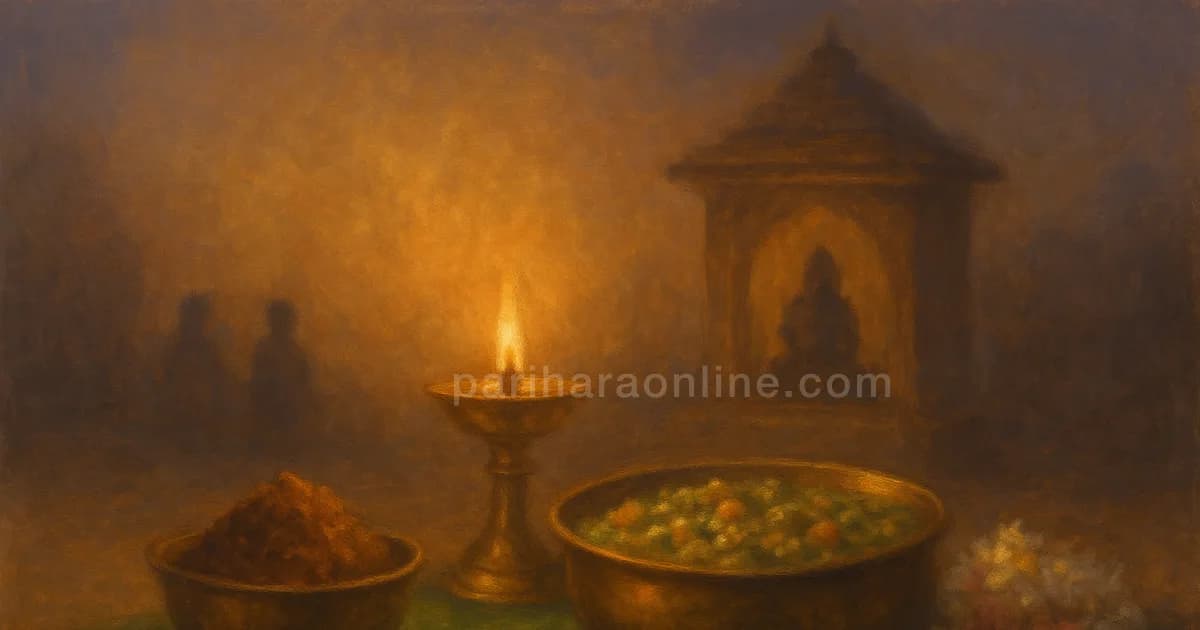
Thiruvathirai kali is roasted, broken rice and moong dal cooked in jaggery with coconut, cardamom and ghee until thick and soft.
It is offered to Nataraja on Arudra Darshanam in Margazhi, remembering Sendanar, the woodcutter whose humble kali Shiva accepted.
On Thiruvathirai morning my mother in Chennai makes kali before dawn, and when I call her I can hear the ladle knocking on the vessel. In Edison it is still dark and cold, which is exactly the right weather for it. Kali is a sweet, thick porridge of broken rice, moong dal, jaggery and coconut, and this thiruvathirai kali recipe is the one she reads out to me every year over a crackling line. It is offered to Nataraja, Shiva as the cosmic dancer, on Arudra Darshanam.
Why is kali offered to Nataraja?
It goes back to a poor woodcutter in Chidambaram. Sendanar fed a guest a plain kali of rice flour and jaggery one rainy Thiruvathirai, and the next morning the priests found grains of it on the Lord himself; the guest had been Shiva. The meaning of Arudra Darshan tells the story properly, along with the Thiruppallandu, the short hymn of blessing Sendanar is said to have sung.
There is a Tamil saying: "Thiruvathirai-kku oru vai kali," one mouthful of kali for Thiruvathirai. It means the smallest portion is enough, if it is given the way Sendanar gave it. I think of that saying in the weeks when life is reduced to what you can manage, when the pooja is a lamp and a spoon of something sweet and nothing more. One mouthful counts.
Thiruvathirai kali recipe
Ingredients (serves four)
- 100 g raw rice (½ cup)
- 2 tablespoons moong dal
- 150 g grated jaggery (¾ cup)
- 500 ml water (2 cups)
- 3 tablespoons grated coconut
- ½ teaspoon cardamom powder
- 2 tablespoons ghee
- 10 cashews
Method
- Dry-roast the rice in a pan until it turns light golden, then roast the moong dal separately until fragrant.
- Cool both and grind them together coarsely, to the texture of fine semolina. Not powder.
- Melt the jaggery in the water, strain it, and bring it back to a boil.
- Add the coconut, then pour in the ground rice and dal slowly, stirring so no lumps form.
- Cook on low heat, covered, stirring often, until the grains are soft and the kali is thick. A pressure cooker saves time here.
- Stir in cardamom. Fry the cashews in ghee and pour over.
Kali is traditionally served with ezhu kari kootu, a thick, mildly spiced kootu made with seven winter vegetables, often pumpkin, avarai beans, field beans, sweet potato, raw banana, yam and taro. The salt and the sweet go together.
When is Arudra Darshanam?
Arudra Darshanam falls on the day of the Thiruvathirai star in the Tamil month of Margazhi, near the full moon, usually December or January. It is the night that celebrates Nataraja's cosmic dance, and Chidambaram draws enormous crowds; the Chidambaram Nataraja temple describes the place itself. Check the current year's panchangam for the exact day, since the star and the full moon do not always fall together.
In our house the kali is offered at the morning pooja, often after watching part of the Chidambaram darshan on a laptop propped on the counter. My son asked once why Shiva is dancing on someone. That question needed more than a morning, and what the Nataraja form means is where I sent him later.
Margazhi mornings in our kitchen also turn to slow paal payasam on other days of the month, and on Saturdays to ellu urundai, the sesame balls of winter.
One small thing to carry into the week
This Margazhi, make a small pot of kali before work. It takes half an hour if you ground the rice the night before. Offer one spoon at the lamp, and eat one spoon yourself before the coffee. And remember Sendanar, who had almost nothing, and gave it anyway.
Questions people ask
What is the Sendanar kali story?
Sendanar was a poor woodcutter devotee in Chidambaram who fed a Shiva devotee every day. One rainy Thiruvathirai he had only rice flour and jaggery, so he made kali and offered it to a guest who appeared at his door. The next morning, temple priests found kali on Nataraja, and devotees understood the guest was Shiva.
What is served for arudra darshan naivedyam?
The traditional Arudra Darshan naivedyam in Tamil homes is Thiruvathirai kali with ezhu kari kootu, a thick kootu of seven vegetables. Some families also make adai, vadai or payasam. Many observe a fast until the morning darshan, then offer the kali and eat it as prasadam, often after the dawn pooja at Chidambaram.
What vegetables go into ezhu kari kootu?
Ezhu kari kootu means seven-vegetable kootu. Common choices are pumpkin, ash gourd, broad beans, raw banana, sweet potato, taro, yam, cluster beans and field beans, cooked with tamarind, toor dal and a ground paste of coconut and roasted spices. Families choose seven from what is in season, usually root and winter vegetables.
Can I make thiruvathirai kali with rice flour?
Yes, as a shortcut. Dry-roast rice flour until fragrant, then slowly stir it into boiling jaggery water with cardamom and grated coconut, stirring to avoid lumps, and finish with ghee. Traditional kali uses broken roasted rice for a grainier texture, but rice flour kali is quicker and works well abroad.
Enjoying this?
To get more Recipes posts like this, subscribe for free.
Written by
The Sunday column: festivals and rituals meeting ordinary weeks
Manikandan writes the Sunday column, where festivals and rituals meet commutes, hospital corridors and video calls with parents far away. Each piece closes with one small thing to carry into the week ahead.