Seemantham and Valaikappu: Rituals of Rest and Care
The seemantham ceremony and valaikappu honour a pregnant woman with bangles, blessings and rest. What each ritual means, when it is held, how to keep it simple.
· 4 min read
In short
Seemantham is a Vedic pregnancy ritual and valaikappu a Tamil bangle ceremony, both held to bless the mother and child and wish them a safe delivery.
At heart, both rituals centre the mother's calm, rest and nourishment, surrounded by family and song.
Keep the ceremony short, seated and comfortable, and let medical advice decide what is safe.
At its core, the seemantham ceremony is a community saying to a pregnant woman: rest now, we will carry some of this with you. Seemantham and valaikappu are two rituals held in the middle months of pregnancy to bless the mother and child and wish them a safe delivery. Seemantham is the Vedic rite; valaikappu is the Tamil bangle ceremony. Families often hold them together, and both come down to the same thing. The mother is fed, adorned, sung to and made to sit still while everyone else does the work.
Seemantham and valaikappu: what they are
Seemantham comes from seemanthonnayanam, the parting of the hair, one of the sixteen samskaras, the traditional rites of passage in a Hindu life. In the Vedic form, the husband gently parts his wife's hair from the forehead back, using a few blades of darbha grass or a porcupine quill, while mantras for the protection of mother and child are chanted. The grihya sutras, household ritual manuals, place it in the fourth, sixth or eighth month, and families follow their own custom. People who ask about seemantham in which month usually hear "the seventh" from their elders, and that is common too.
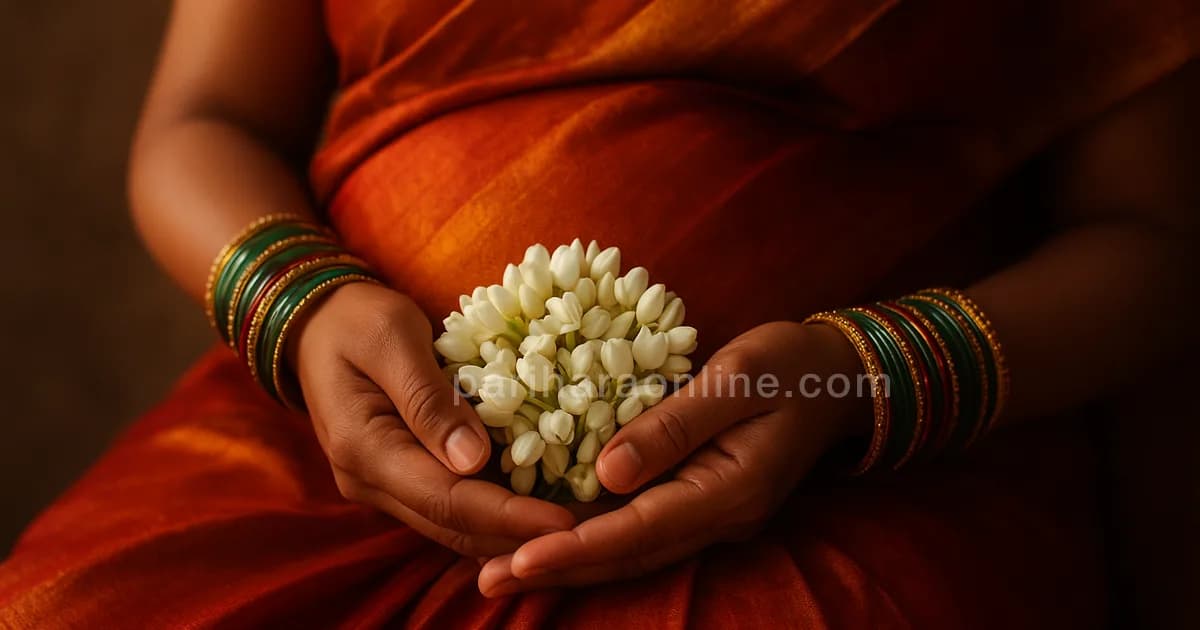
Valaikappu, literally "bangle protection", is the Tamil ceremony; many families say the protection meant is from drishti, the evil eye, a belief traced in what tradition says about drishti. Older women of the family slide glass bangles onto the mother-to-be's wrists, dozens of them, green and red and gold, one arm after the other. It is usually held in an odd month, often the seventh, sometimes combined with the seemantham on the same day. You may hear it called a Hindu baby shower. The comparison is fair, although the focus is less on gifts for the baby and more on care for the mother.
Why bangles, music and rest?
Pay attention to what the body experiences through the day.
Sound. Glass bangles clink with every movement. Tradition says the sound reaches the baby, and whatever you believe about that, it is certainly a sound the mother hears all day: light, bright, constant.
Song. Women sing traditional songs, some teasing, some tender. The mother does not sing; she listens.
Food. Five or seven kinds of flavoured rice, sweets, and whatever she has been craving. The tradition holds that a pregnant woman's cravings should be honoured, not judged. Feed her what she wants.
Stillness. She sits. She is dressed, adorned, blessed with turmeric and kumkum, and asked to stay seated while others move around her.
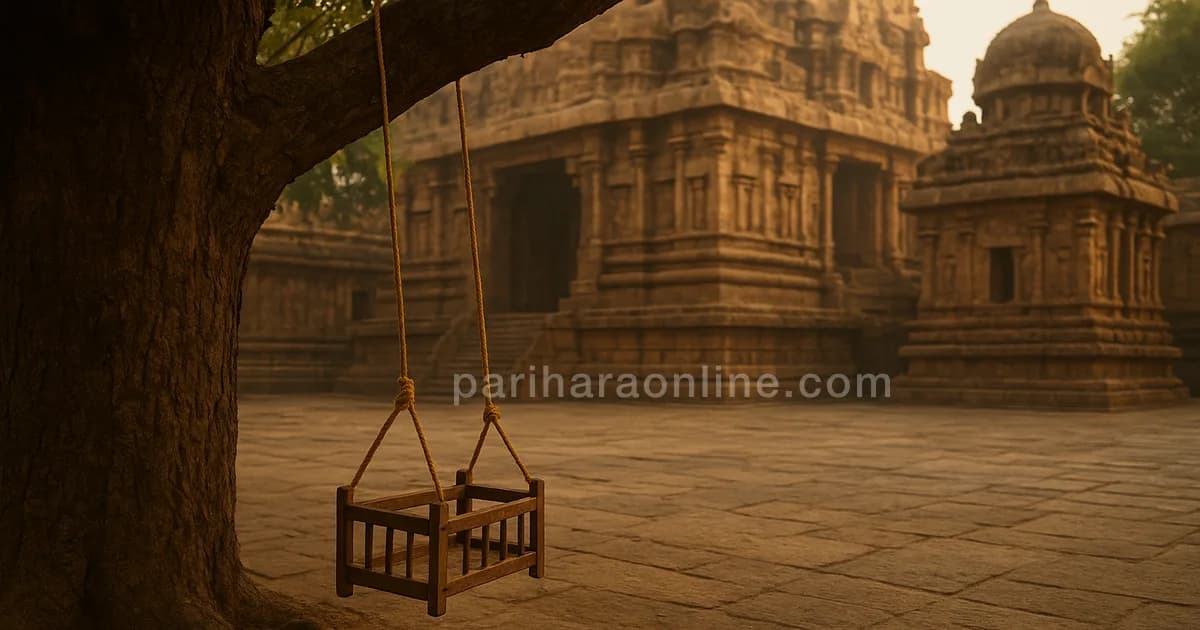
Underneath it all is an old belief that the mother's calm and joy reach the child. Whether you frame that spiritually or simply as common sense about stress and rest, the practice is the same: for one day, everything is arranged around her ease. The prayers that often come before a pregnancy, at temples like the one described in the Garbarakshambigai temple story, find their answer here.
Keeping the ritual simple and safe
Try keeping it short. Two hours is plenty. A pregnant body does not want a six-hour function.
- Seated rituals only. Let the mother sit comfortably, with back support. No long standing, no bending to touch many feet.
- Comfortable clothing. A light silk or cotton saree, loosely draped, or whatever she finds comfortable. Heavy silk in summer is a poor idea.
- Fewer bangles if needed. Swelling in the hands is common later in pregnancy; slide on a few and let the rest be symbolic.
- Always follow medical advice. If her doctor says rest, the ceremony can be tiny or postponed. The ritual serves the mother, not the other way round.
Can you do a simple valaikappu at home? Easily. A few family members, a plate of bangles, turmeric and kumkum, one or two rice dishes, a song. If grandparents are abroad, put them on a video call and let them bless her from the screen; joining a puja across time zones has practical tips for that. Some families also choose the day with an eye on the planets; Guru peyarchi explains why Jupiter, linked with children, is watched closely.
Let her rest
If this pregnancy followed a long wait, the kind described in praying while trying to conceive, the day may carry extra feeling. Leave room for that.
Whatever form the ceremony takes, big or small, Vedic or Tamil or both, let the day end the same way. The mother is resting with her feet up. Someone else is doing the dishes. That, more than any bangle, is the blessing.
Questions people ask
What is the difference between seemantham and valaikappu?
Seemantham, from the Vedic seemanthonnayanam, is a samskara in which the husband ritually parts the wife's hair while mantras bless mother and child. Valaikappu is a Tamil ceremony in which women slip glass bangles onto the mother's wrists and sing. Many families combine both on one day, with local variations in order and detail.
In which month of pregnancy is seemantham done?
Custom varies. Many families perform seemantham or valaikappu in the fifth, seventh or ninth month of pregnancy, often choosing an odd month and an auspicious day from the panchangam. Some families, especially abroad, choose a time that suits the mother's health and travel. Her comfort and doctor's advice should guide the final choice.
Can we do a simple valaikappu at home?
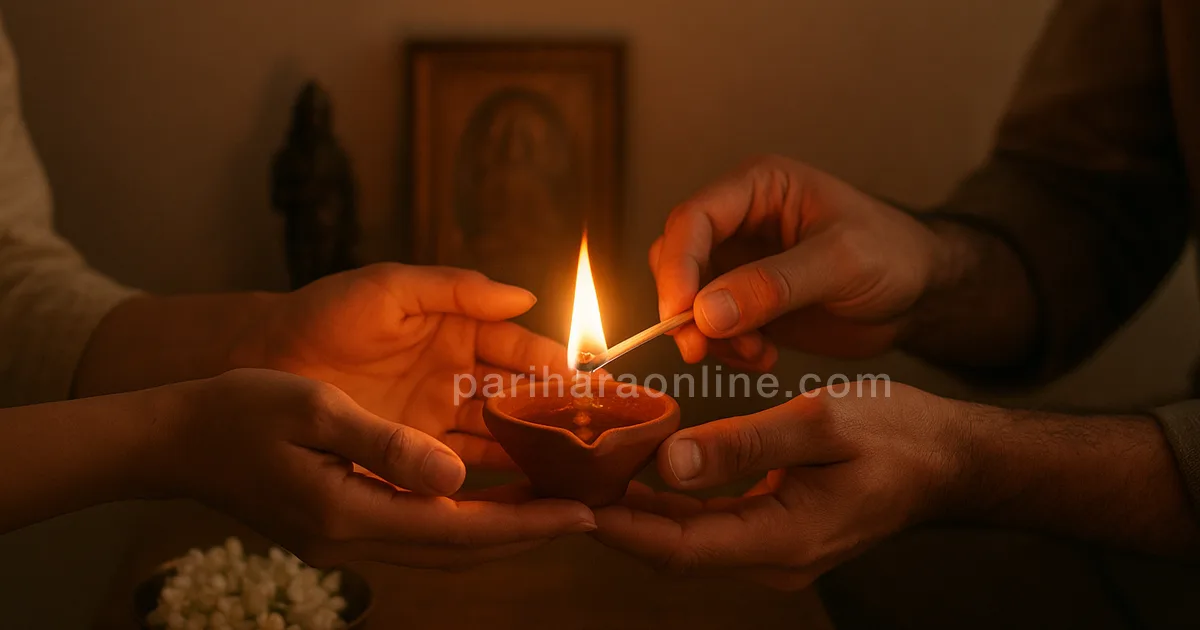
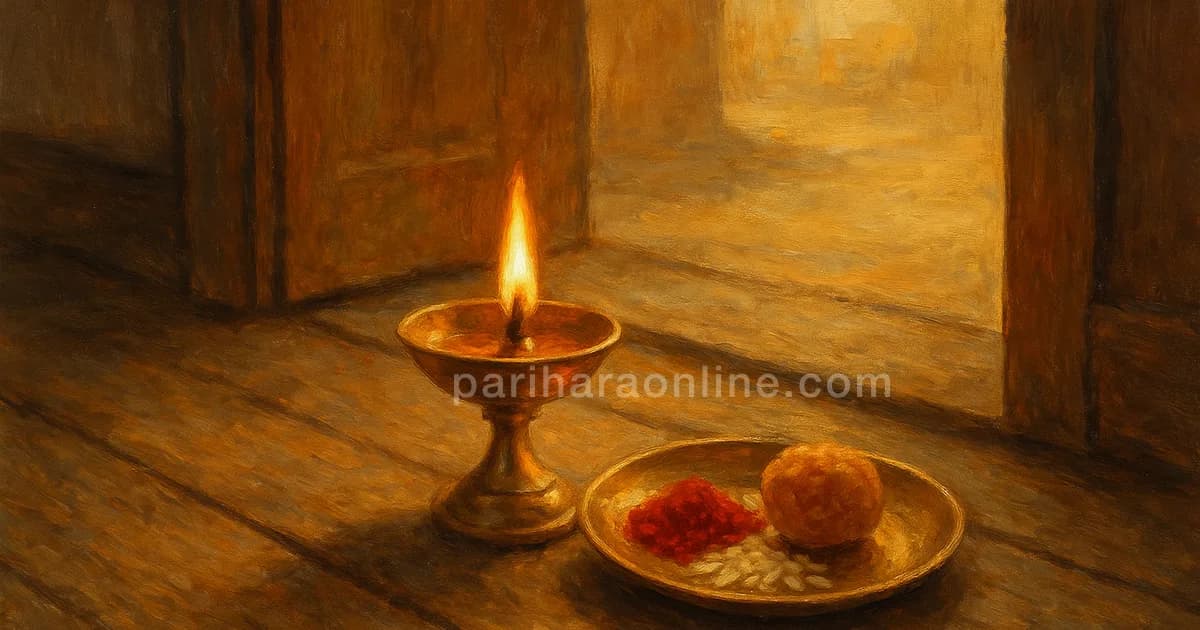
Yes. A simple valaikappu needs a comfortable seat for the mother, glass bangles, turmeric and kumkum, flowers, a lamp and a few favourite dishes. Elders slip on bangles and bless her. Family abroad can join by video call. Keep it short, avoid long periods of standing or fasting, and let her rest afterwards.
Enjoying this?
To get more Pregnancy posts like this, subscribe for free.
Written by
Writes about practice: attention, breath, the body, the lamp
Archana writes about ritual as something you do rather than something you believe: the lamp, the breath, the fast, the few quiet minutes before the day begins. Her pieces usually end with a small practice to try for a week and notice what changes.