Garbarakshambigai Temple: The Goddess Who Guards the Womb
The Garbarakshambigai temple story: how the Goddess protected an unborn child, why couples pray there for conception and safe delivery, and what the ghee means.
· 4 min read
In short
Garbarakshambigai, the Goddess who protects the womb, is worshipped at Thirukarukavur near Thanjavur, where legend says she saved a sage's unborn child.
Couples traditionally pray there for conception and safe delivery, and consecrated ghee or oil prasadam is given to women for those intentions.
Tradition offers the prayer as comfort and hope alongside medical care, never instead of it.
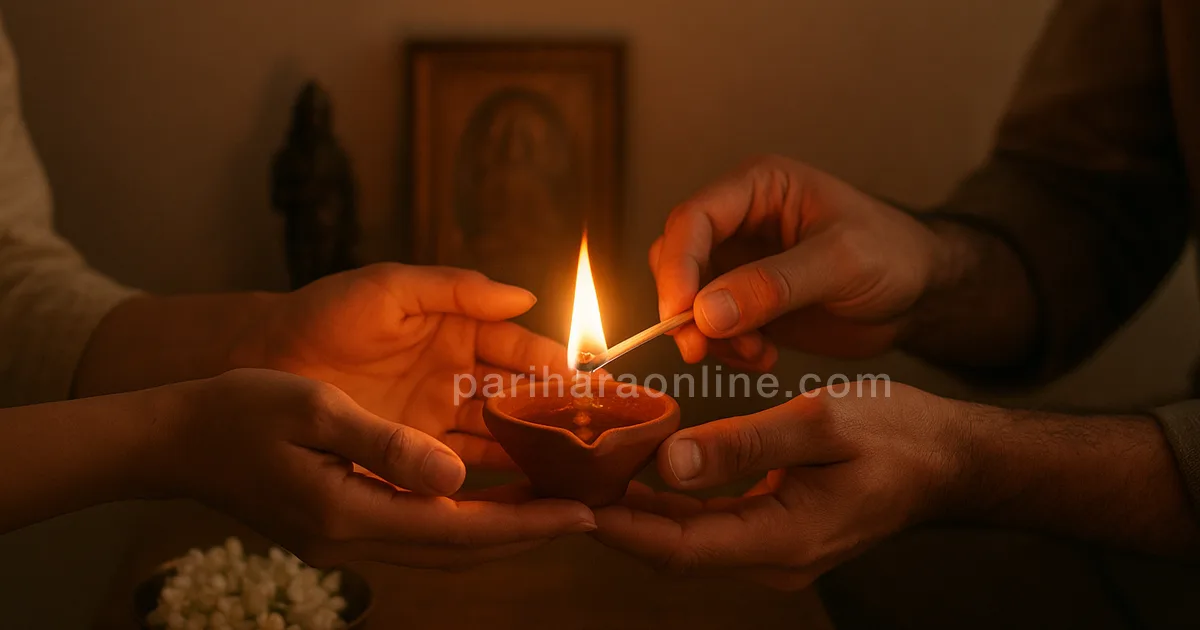
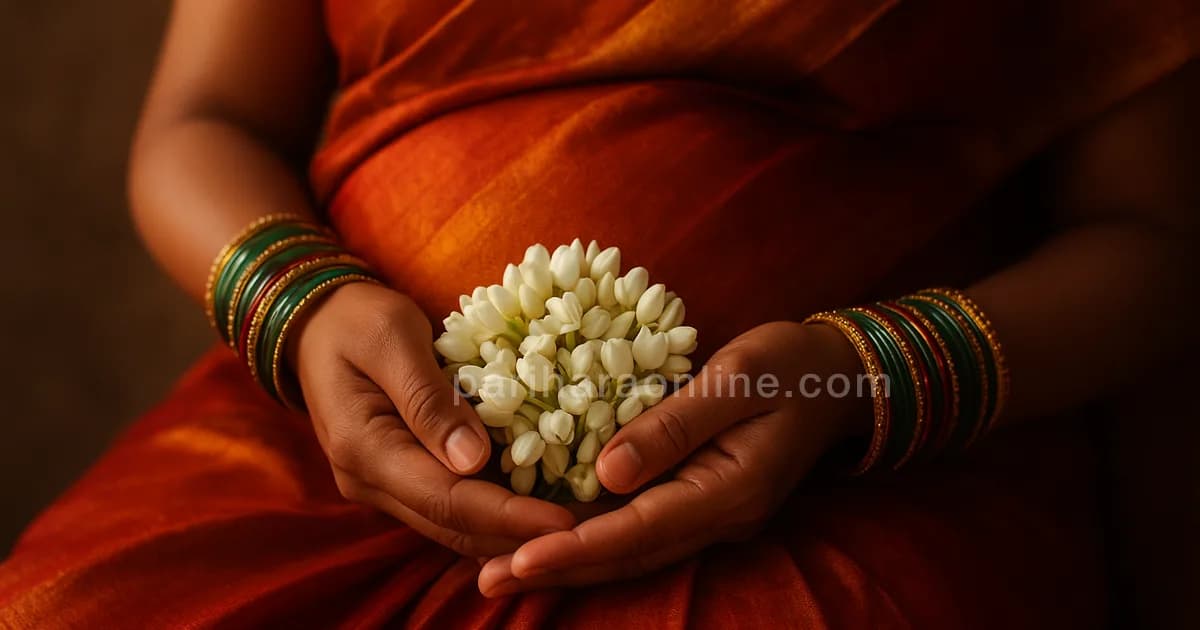
At Thirukarukavur, a village near Thanjavur, the Goddess is named for a single act. Garbarakshambigai means the mother who protects the womb, and the story says she held a sage's wife's unborn child safe when no one else could. Couples have come to the Garbarakshambigai temple ever since, to pray for conception and for a safe delivery. The temple is really a Shiva temple, where he is worshipped as Mullaivananathar, the lord of the jasmine forest, but it is the Goddess's shrine that draws most families, and her story explains why.
The story of Vedhika and Nidhruva
The temple's own tradition tells of a sage named Nidhruva who lived in the jasmine forest with his wife, Vedhika. They had longed for a child for years, and at last Vedhika was pregnant.
One day, while Nidhruva was away, a great sage named Urdhvapada came to the hermitage asking for food. Vedhika was heavily pregnant, exhausted and resting, and she did not hear him, or could not rise in time. Taking her silence as disrespect, the sage cursed her, and the child in her womb was put in danger.
Vedhika prayed to the Goddess of the temple. The Goddess appeared, and she did something no one else could do: she took the unborn child and kept it safe in a sacred pot, a kalasam, until it was ready to be born. The child grew and was born healthy, and he was named Naidhruvan. The story adds that Kamadhenu, the wish-giving cow, came to nurse him.
The grateful parents asked the Goddess to stay at Thirukarukavur forever and protect every mother and child who came to her. She agreed, and she has been Garbarakshambigai ever since.
A curse is undone, yes. But what the story is doing is asking about fear, and about who holds it. Vedhika's terror is the oldest terror a parent knows: that something will happen to the child and there will be nothing she can do. The Goddess does not scold her or explain the curse away. She takes the fear into her own hands, literally, and carries it until it can be put down. A mother's fear, held by a larger mother.
Why do couples pray at the Garbarakshambigai temple?
For generations, couples have prayed there for two things: for a child to be conceived, and for a child already conceived to be born safely.
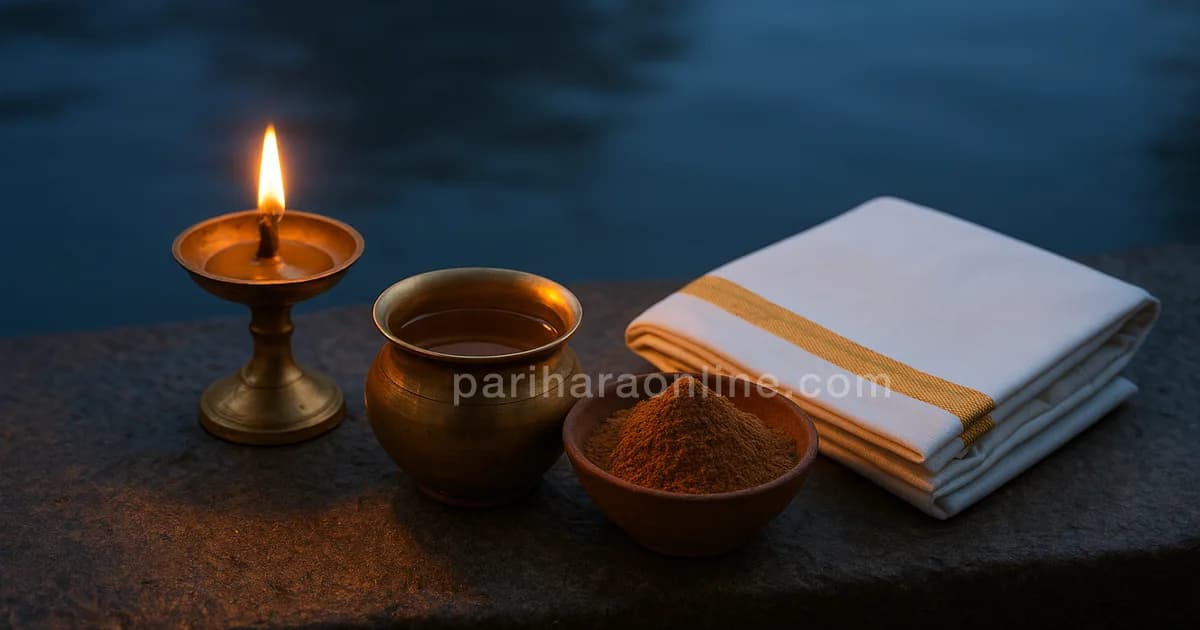
The temple offers prasadam, consecrated offerings, for both intentions. Ghee that has been offered at the Goddess's feet is given to couples praying to conceive, traditionally to be taken with faith over a set number of days. Castor oil, similarly consecrated, is given to pregnant women, who traditionally apply a little to the belly as a prayer for an easy delivery. Many families who cannot travel ask relatives to bring the prasadam back, and what to do with it once it arrives is covered in what to do with prasadam.
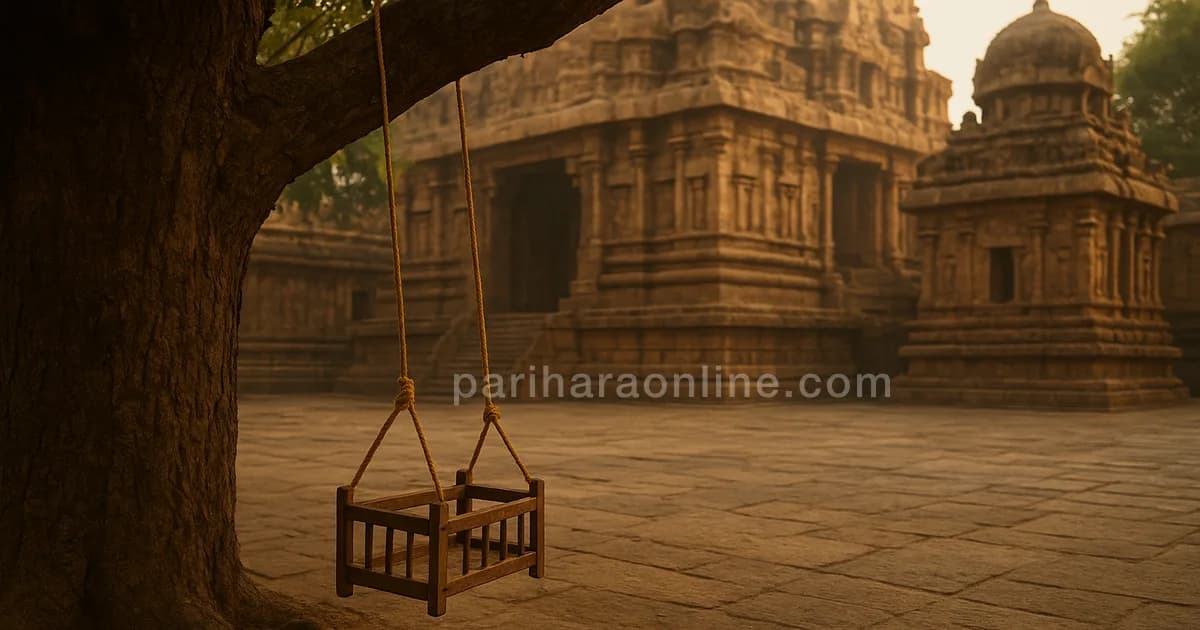
And there is the gratitude afterwards. Couples return with their babies to give thanks. Some offer a small cradle; some offer the baby's weight in something precious to them, such as jaggery or rice. The temple is full of these return journeys, which is its own kind of testimony.
For many families, the next step after a safe birth is a ritual of care for the mother, like the ones described in seemantham and valaikappu.
What the prayer can and cannot do
Tradition is clear-eyed about this, and so should we be. A prayer at Thirukarukavur is devotion. It is companionship through uncertainty, and for many couples it is a great comfort. It is not medicine. It sits alongside medical care, doctors and treatment, never in place of them. The tradition of praying to the healing god Dhanvantari, the physician of the gods, has always held prayer and medicine together, and that is the spirit here too.
If you are in the long middle of trying, the column on praying while trying to conceive speaks to that wait. And if you visit, many families also walk around the nine planets before leaving, as the guide to Navagraha temple worship describes.
A name that means protection
Here is the gentle reframe. The Goddess at Thirukarukavur is not named for granting wishes. Her name is protection. To pray to her is not to make a demand or a bargain. It is to say, honestly, "I am afraid, and I would like someone to hold this with me." That is itself an act of hope, and hope, carried carefully, is something every waiting parent deserves.
Questions people ask
What is the story of Garbarakshambigai temple?
The temple legend tells of Vedhika, wife of the sage Nidhruva, who was harmed by a sage's curse while pregnant. She prayed to the Goddess, who protected the unborn child in a sacred vessel until birth. The Goddess came to be known as Garbarakshambigai, she who protects the womb, at Thirukarukavur in Tamil Nadu.
What is Garbarakshambigai ghee prasadam used for?
Ghee consecrated at the temple is traditionally given to women hoping to conceive, to be taken with prayer for a set number of days, while castor oil prasadam is associated with safe delivery. These are devotional practices. They accompany, and should never replace, guidance from a doctor, and anyone with medical conditions should check with their physician first.
Can I get Garbarakshambigai prasadam if I cannot visit?
Yes. Many families living far away arrange for poojas to be performed at the temple in their name, using a sankalpam with their name and birth star, and receive the prasadam by post. PariharaOnline is one service that arranges this. The prayer is considered just as sincere when offered from a distance.
Enjoying this?
To get more Garbarakshambigai posts like this, subscribe for free.
Written by
Reads the old stories for what they still mean
Hariharan writes about the myths, symbols and festival stories that most of us grew up hearing but were rarely asked to think about. He tells the story first, then asks what it is really about, and leaves the conclusion to you.