Pooja for Conceiving: Hope and Patience While Trying
A pooja for conceiving a baby can hold hope during a hard wait. A gentle column on prayer, patience and care for couples trying to conceive, beside medicine.
· 4 min read

In short
Couples trying to conceive often turn to prayers such as the Santana Gopala mantra or poojas at Garbarakshambigai temple for comfort and hope.
Prayer accompanies medical care and never replaces it; tradition offers no guarantee of conception.
A small ritual shared by both partners can ease the loneliness of the monthly wait.
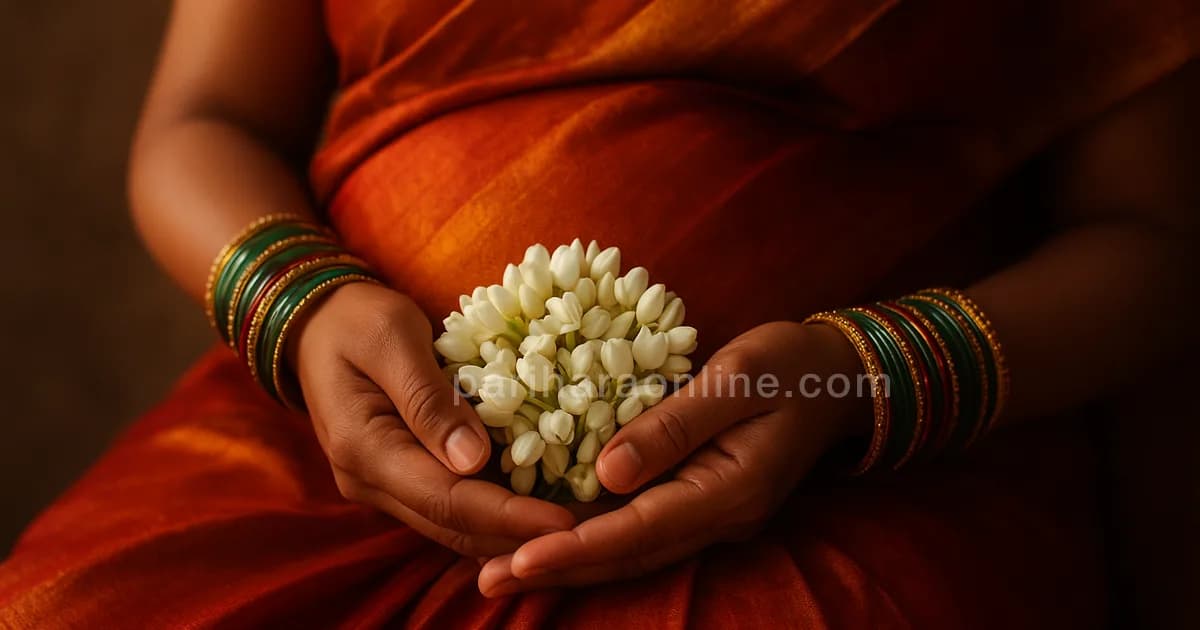
The fertility clinic had a waiting room with pale green chairs and a television nobody watched. Across from us sat a couple who did not speak for forty minutes. When the woman opened her wallet to find her card, I saw a small, worn photograph of the Goddess tucked behind it. A pooja for conceiving a baby often begins like that, long before anyone says it aloud: a picture in a wallet, a whispered name, a lamp lit quietly at home. For many couples, the pooja is less about a promised outcome and more about not carrying the wait alone.
What a pooja for conceiving a baby offers
My wife and I spent a long stretch in rooms like that one. Relatives suggested prayers, and at first I resisted them, the way you resist advice when you are tired. Later I understood what they were offering.
There are a few prayers families usually turn to. Many pray to Garbarakshambigai, the Goddess who guards the womb, at her temple in Thirukarukavur; her story, of a mother whose unborn child she held safe, is told in the Garbarakshambigai temple story. Many chant the Santana Gopala mantra, a prayer to Krishna as a child, which asks simply: son of Devaki, Govinda, lord of the world, give us a child; we come to you for refuge. And in some families an astrologer suggests a Rahu Ketu parihara, a remedial ritual, when the chart points to those shadow planets; Rahu Ketu dosha explained describes what that means.
But what a pooja for conceiving offers, above all, is the comfort of doing something together. Treatment happens to you. Prayer is something you do.
How do you hold hope without being crushed by each month?
This is the question nobody warns you about. Each month is its own small cycle of hope and grief. You learn to dread certain days. You learn not to check your phone at certain times.
There is a verse in the Bhagavad Gita that I had heard all my life without really hearing it. Krishna tells Arjuna: your right is to the action alone, never to its fruits; do not let the fruit be your motive, and do not cling to inaction either. I used to think it was about work. In that clinic, it began to sound like it was about us. We could do our part: the appointments, the medicines, the care for each other, the prayer. What came of it was not ours to hold every single day.
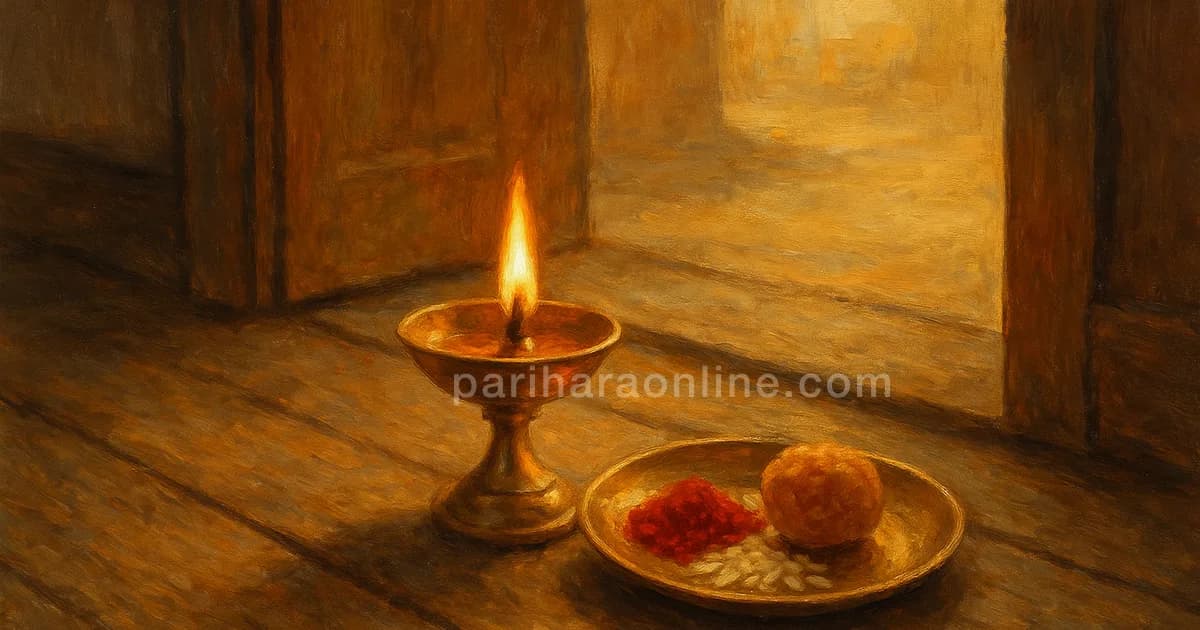
That did not make the hard days easy. But it gave us somewhere to put them down. We made a small shared ritual: one lamp, lit together once a week, a single line of the Santana Gopala mantra said by both of us, and then no talk of dates for the rest of the evening. On the days when even that felt too heavy, the practices in rituals for anxious days helped one of us hold steady for the other.
Prayer beside medicine, never instead
It needs saying plainly. Prayer accompanies medical care; it never replaces it. Tradition promises no outcome, and nobody who loves you should suggest otherwise.
Let the doctors lead. Ask questions. Seek a second opinion if something does not feel right. Take the treatment seriously, and take care of your bodies through it: sleep, food, rest, and each other. Many couples find that the prayer makes the medicine easier to bear, not the other way round. The tradition of Dhanvantari and healing has always kept the physician and the prayer side by side.
And if someone tells you a pooja will fix it, thank them, and keep your appointments.
If a pregnancy does come, the rituals of care that follow are gentle and beautiful; seemantham and valaikappu describes them.
One lamp, one line
Here is the one small thing to carry into your week. Light a lamp together, once. Say one line: the Santana Gopala mantra, or the Goddess's name, or simply "please." Then go to bed without discussing the calendar. Not a word about dates or results. Let the lamp be the last thing you shared that day.
Questions people ask
Which pooja is done for conceiving a baby?
Common choices include prayers and poojas at the Garbarakshambigai temple in Tamil Nadu, chanting the Santana Gopala mantra dedicated to Krishna, and, where an astrologer sees Rahu or Ketu influences, a parihara pooja. Families choose based on custom and advice. These are devotional practices that support hope, alongside medical care, without promising conception.
What is the Santana Gopala mantra?
The Santana Gopala mantra is a prayer to Krishna as Gopala, the divine child, traditionally chanted by couples wishing for children. Santana means offspring. Some chant it a fixed number of times daily, others for a set period. It is a prayer of longing and trust, and many couples find it gives shape to a difficult wait.
How can we cope with the stress of trying to conceive?
Talk honestly with each other, and set limits on how much the calendar dominates conversation. Seek a good doctor and ask questions freely. Many couples find a short shared ritual, such as lighting a lamp together, restores closeness. Counselling can help too. Prayer can steady the heart, while medical guidance leads treatment decisions.
Enjoying this?
To get more Pregnancy posts like this, subscribe for free.
Written by
The Sunday column: festivals and rituals meeting ordinary weeks
Manikandan writes the Sunday column, where festivals and rituals meet commutes, hospital corridors and video calls with parents far away. Each piece closes with one small thing to carry into the week ahead.