Puja Items List for a Home Altar Abroad
A puja items list for a home altar abroad: the essentials to start with, what to buy at an Indian store, easy substitutes, and tidy storage for small spaces.
· 4 min read
In short
A beginner's home altar needs only a lamp, an image or idol, flowers, incense and a small plate; everything else can come later.
Most puja items are sold at Indian grocery stores and temple shops across the US, and local flowers are perfectly acceptable.
Keeping everything in one box makes daily puja quicker in small homes.
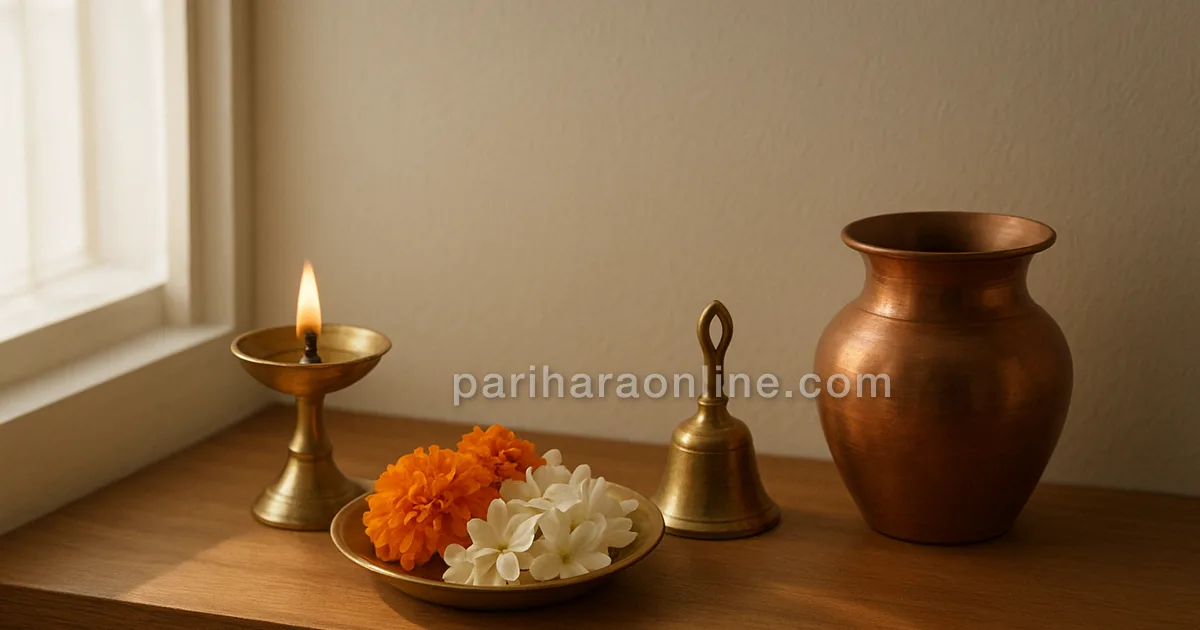
The puja items list for a first home altar abroad can start with just five things: a lamp, a picture or small idol, a few flowers, incense, and a bell or small plate. That is enough for a real daily practice. Try it that way for a month before you buy anything else. Most people who start with a full shopping bag end up with a drawer of things they never use, and a practice that feels like maintenance rather than a quiet few minutes each morning.
The essential puja items list
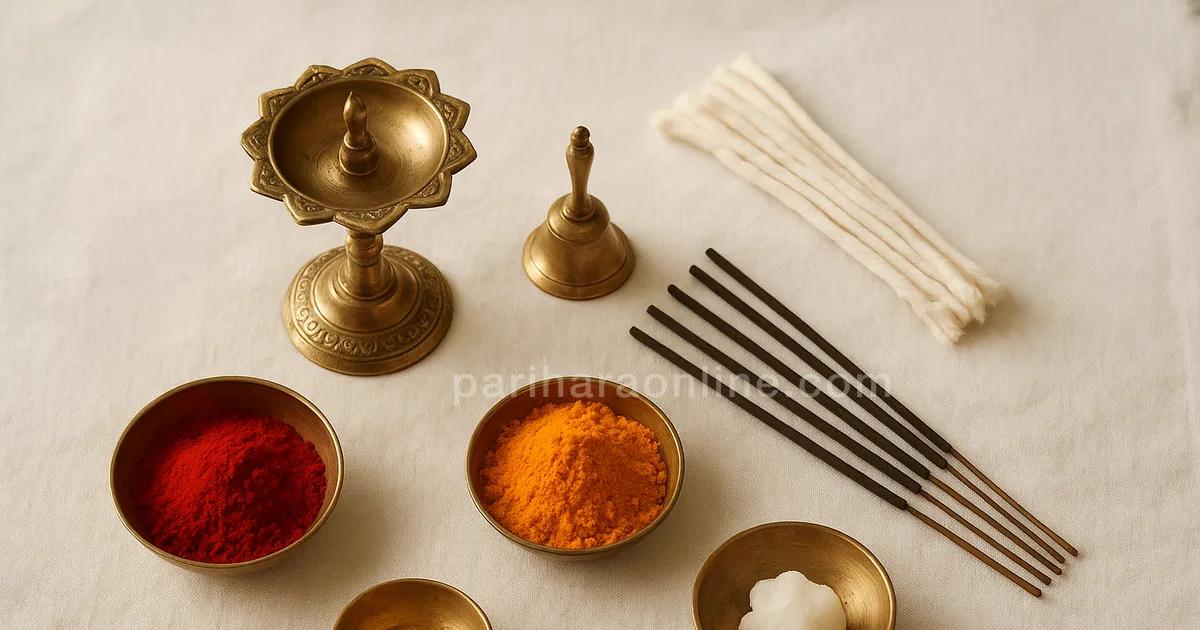
Once the five basics feel natural, this is the fuller puja samagri list for home, the set most families gradually settle into. Samagri simply means the materials used in worship.
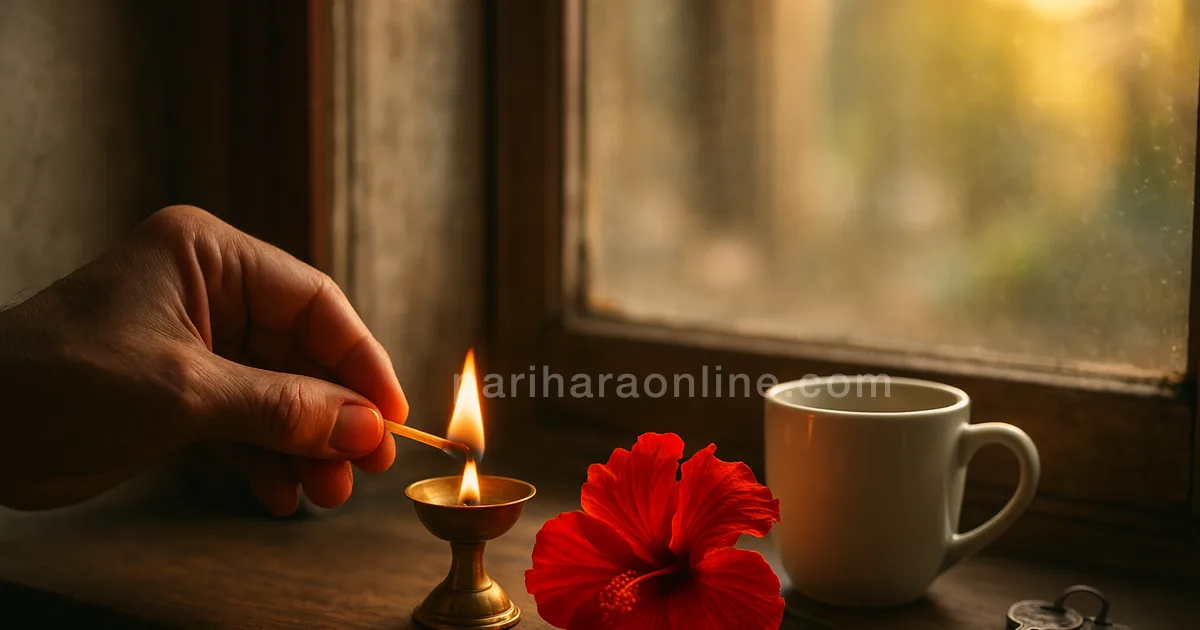
- Lamp and wicks. A small brass or clay diya, with cotton wicks. Round wicks for ghee, long ones for oil. The details of how to light a diya cover direction and placement.
- Ghee or oil. Ghee or sesame oil are traditional. If you are unsure which suits you, ghee lamp or oil lamp explains what tradition says about each.
- An image or idol. One is plenty. A framed picture works as well as a metal murti, the consecrated image of a deity.
- Kumkum and turmeric. Red kumkum and yellow turmeric powder, for marking the image and your own forehead.
- Camphor. Small tablets of edible-grade camphor for aarti, the waving of flame at the end.
- Incense. Sticks or cones, with a holder that catches ash.
- A small plate. A steel or brass plate to hold the lamp, flowers and offerings, and to carry the aarti.
- A water vessel. A small tumbler or kalasam with a spoon, for offering water and for sipping at the start.
These are the basic pooja items for beginners. Anything beyond them, a conch, a sandal paste stone, a bell stand, silk cloth for the deity, can come later when you feel the lack.
Where do you buy puja items in the USA?
Most of it is closer than you think. Indian grocery stores in most American cities carry wicks, kumkum, turmeric, camphor, incense and ghee, usually in one aisle near the back. Temple shops are often the best source for lamps, idols and kalasams, and the people behind the counter tend to know what goes with what. If you are visiting India, a lamp, a small idol and a good bell travel well in checked luggage, wrapped in clothes.
Buy fresh locally: flowers, fruit, betel leaves if you can find them, and ghee. Do not ship perishables. And ignore anyone who tells you only one brand or one shop is correct. The tradition cares about care, not provenance.
Substitutes and small-space storage
Your practice has to fit your life, so adapt freely.
- Tealights. If an open oil lamp is not allowed in your building, a tealight in a glass holder or even a small electric diya holds the place. Many people find the eye still settles on it.
- Local flowers. Jasmine and marigold are lovely but not required. Roses, carnations, a sprig from the garden, or a single leaf all count. Offer what is fresh and in season where you live.
- The puja kit. In a small apartment, keep everything in one drawer or a lidded box: lamp, wicks, oil, kumkum, camphor, matches. Take it out, set it up, put it away. The ritual of unpacking becomes its own threshold into the practice. For ideas on a permanent spot, see a small puja corner for an apartment.
- Smoke alarms and camphor. Camphor burns hot and fast and sets off detectors. Light a small piece on the plate, away from the alarm, and never leave it unattended.
If your practice grows into the full sixteen-step form, the sixteen steps of puja shows what each item is for. And if you are curious how a fire ritual differs from what you are doing at home, homam vs puja explains the difference.
Five things, thirty days
This week, assemble only the five essentials. Use them every day for a month at the same time, even for three minutes. Keep a note of what you reach for and do not have. At the end of the month, buy only those things.
You will end up with a smaller kit than most shopping lists suggest, and every item on it will have earned its place.
Questions people ask
What are the basic puja items needed at home?
The core items are a lamp with cotton wicks and ghee or oil, an image or small idol of your chosen deity, kumkum and turmeric, incense sticks, camphor, a small plate, a bell and a vessel of water. Fresh flowers and a fruit or sweet for offering complete a daily setup. Start small and add items as needed.
Where can I buy puja items in the USA?
Most Indian grocery stores carry wicks, camphor, kumkum, incense and brass lamps, and many Hindu temples run a small shop. Items like copper vessels or specific idols can be ordered from India or bought during a visit. Flowers, fruit and even marigolds are usually easy to find at local florists and farmers markets.
What can I use instead of a traditional diya?
A tealight in a small brass or ceramic holder is a common substitute in apartments, and many families use electric lamps where open flames are restricted. Tradition values the flame as an offering of light, so a real lamp is preferred when safe, but a sincere offering with what is available is always acceptable.
How do I store puja items in a small apartment?
Keep a single box, drawer or basket as your puja kit, with the lamp, wicks, oil, camphor, kumkum and incense together. A small shelf or wall-mounted unit can hold the image and a plate. Store matches safely, keep camphor sealed, and place the lamp away from curtains and smoke detectors.
Enjoying this?
To get more Puja At Home posts like this, subscribe for free.
Written by
Writes about practice: attention, breath, the body, the lamp
Archana writes about ritual as something you do rather than something you believe: the lamp, the breath, the fast, the few quiet minutes before the day begins. Her pieces usually end with a small practice to try for a week and notice what changes.